
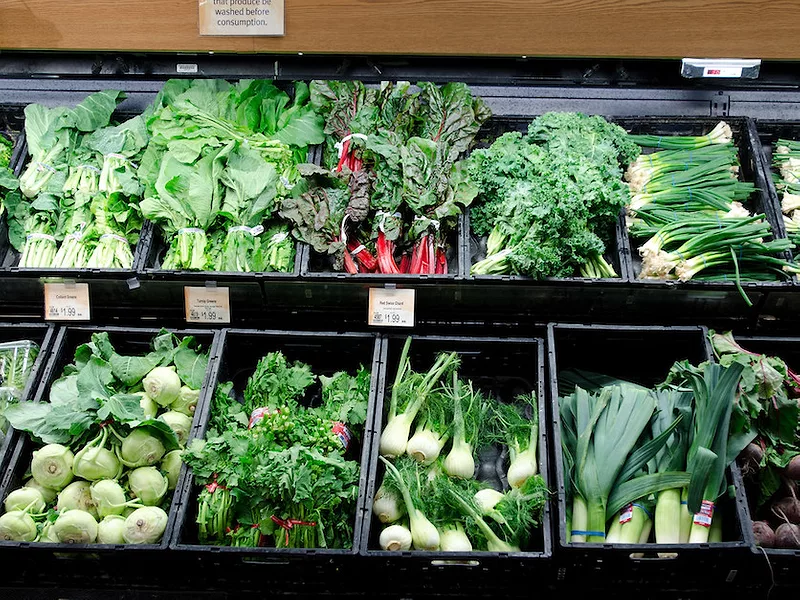
The push to put nutrition at the forefront of hospitals, schools and farms throughout the U.S. has been a rare point of agreement between the Trump White House and its Democratic predecessor, but some political cracks are showing.
The focus is "Food is Medicine,” or FIM, a movement that goes by various names and widely refers to placing nutrient-dense foods at the center of policies meant to prevent, manage and treat a crisis level of chronic disease among Americans. Some 25 million senior citizens are now getting FIM options under Medicare Advantage plans, one of the movement's biggest achievements.
Food is Medicine got a major profile boost in 2022, when then President Joe Biden made it part of a strategy to tackle diet-related ailments. Another big win came this year as President Donald Trump gave Health and Human Services Secretary Robert F. Kennedy Jr. the green light to pursue a "Make America Healthy Again" agenda. MAHA's vast number of goals include pursuing "Food as Health" treatments and research. On Capitol Hill, several bipartisan bills were introduced this year, including Senate legislation giving seniors access to medically crafted meals to treat certain illnesses.
"Food is Medicine within health care, like food as prescriptions and medical tailored meals, is happening through waivers and pilots and special supplemental benefits rather than standard medical care," Dariush Mozaffarian, director of the Food Is Medicine Institute at Tufts University in Massachusetts, said in an interview. "I think five years from now there will be for the right patients approved food is medicine treatments."
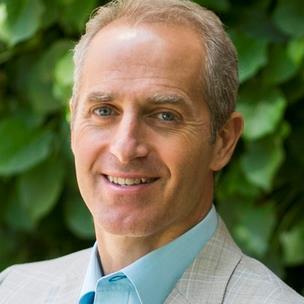 Dariush Mozaffarian (Tufts University photo) RFK Jr. and Mehmet Oz, administrator for the Centers for Medicare and Medicaid Services, have made clear that FIM is a priority, according to Mozaffarian.
Positive developments include moves to include healthy foods at VA hospitals, school meals that contain whole foods and nutrition education for doctors, he said.
“These were all things of interest to the Biden administration and this administration is really continuing and accelerating in positive ways."
But some FIM advocates are alarmed by recent spending cuts enacted by the One Big Beautiful Bill, the domestic policy law signed in July.
"We have 10 million people who are going to lose health insurance over 10 years," Colin Schwartz, senior advocacy adviser for "Health Care by Food" at the American Heart Association, said at a recent FIM conference at Tufts. "So, what's the future of the waivers and Food is Medicine in states when you don't have a Medicaid program or a significantly weakened one?"
In North Carolina, the Healthy Opportunities Pilot, the first U.S. program to use federal Medicaid money for non-medical services, including food, for improving health outcomes, has been paused due to lack of state funding. The federal Centers for Medicare and Medicaid Services had given the OK for the program to be expanded statewide, but the funding wasn’t included in the latest state budget, and lawmakers cited cuts in federal healthcare spending.
Cut through the clutter! We deliver the news you need to stay informed about farm, food and rural issues. Sign up for a FREE month of Agri-Pulse here.
"We are seeing states continue to act with enthusiasm in this space, but we're also in this moment of uncertainty too, because of federal pressures," said Katie Garfield, director of Harvard Law School's Whole Person Care Center for Health Law and Policy Innovation.
Rep. Chellie Pingree, a Maine Democrat, said there are encouraging signs from MAHA, like getting rid of harmful dyes and additives and putting better food labels on ultra-processed foods.
"Unfortunately, by slashing SNAP by nearly $200 billion, eliminating local food for school programs and illegally freezing funding to small farmers, these kinds of sweeping, indiscriminate cuts will only hinder the ability to get healthy foods to the people who need it most," she said.
 Rep. Chellie Pingree (Office photo)
Another challenge is how to get a food industry that's largely been built over many decades on processed ingredients to fully embrace Food is Medicine.
"You need Food is Medicine to be profitable and that's where we have to figure out that model in partnering with the private sector," said Kyu Rhee, CEO of the National Association of Community Health Centers.
The role of more sustainable farming is also gaining increasing attention within the FIM movement.
"Where does healthy food come from? In my opinion, it comes from healthy soil," said Republican Sen. Roger Marshall of Kansas, a physician by training who comes from a fifth-generation farming family. Marshall, who last year spearheaded formation of the Congressional MAHA Caucus to focus on nutrition and affordable access to healthy food, also stressed growing more through precision agriculture with less fertilizer and chemicals and in turn creating healthier soil.
Another agriculture issue that frequently comes up is how nearly a century of U.S. agriculture policy built around getting as many calories into people as possible squares with now working to encourage more nutrient-rich foods.
Mozaffarian said he's not worried.
Federal funding of agriculture through USDA is about $20 billion a year versus almost $5 trillion for health care, $100 billion for SNAP and $50 billion for NIH.
“Farms grow what the consumers are buying," Mozaffarian said. "So if we are using all of these hundreds of billions of dollars to buy healthy food, we are going to shift the food system."
.webp?t=1762183428)
