
Food and agriculture groups say the Trump administration’s attempt to define “ultraprocessed” foods and reduce their consumption isn’t justified by the science and could sweep up healthful foods like yogurt and whole grain foods.
In formal comments filed with the Food and Drug Administration (FDA), the groups note there’s a lack of scientific consensus on how the term should be defined and even whether ultraprocessed foods are necessarily harmful.
“The term ‘ultra-processed food’ is not suitable for definition because it fails to differentiate based on nutrient content, lacks a scientific basis to isolate particular ingredients or processing steps, and its use would result in significant unintended consequences,” says the Consumer Brands Association, which represents food manufacturers such as Campbell’s, Conagra, General Mills, Kraft Heinz, Nestlé and Tyson Foods.
A coalition called The Grain Chain that represents millers, baking companies and wheat, rice and sorghum farmers says the amount of processing needed to produce a food doesn’t “indicate the nutritional composition or value of foods and therefore should not be used in dietary guidance.”
Ultraprocessed foods, or UPF, are a major target of Health and Human Services Secretary Robert F. Kennedy Jr. and his Make America Healthy Again movement. The effort starts with determining exactly which products should be the focus of research and policy recommendations. The need for a UPF definition was included in the MAHA Commission report released in September.
In a notice requesting comments on how ultraprocessed foods should be defined, FDA said scientists have “found links between consumption of these foods and a range of negative health outcomes, including cardiovascular disease, obesity, and certain cancers.”
"Ultra-processed foods are driving our chronic disease epidemic," Kennedy said in a statement. "We must act boldly to eliminate the root causes of chronic illness and improve the health of our food supply.”
Cut through the clutter! We deliver the news you need to stay informed about farm, food and rural issues. Sign up for a FREE month of Agri-Pulse here.
One commonly used classification system for foods, called Nova, considers foods ultraprocessed if they are industrial formulations that include additives such as colorings or emulsifiers that aren’t natural.
By the Nova definition, Americans get 55% of their calories from ultraprocessed foods. Among youth, the top five sources of ultraprocessed foods are sandwiches and burgers, sweet bakery products, savory snacks, pizza and sweetened beverages, according to a study released in August by the Centers for Disease Control and Prevention.
People in the highest income groups tend to consume ultraprocessed foods the least, the study found.
In the request for information, FDA says it wants to avoid the “unintended consequences of an overly inclusive definition of UPFs that could discourage intake of potentially beneficial foods.”
Advocacy groups suggest definitions
Consumer advocacy groups believe the administration is on the right track.
In its comments, Consumer Reports says the administration should start with the Nova classification and focus on a “subset of processed foods that scientific evidence shows are clearly linked to health concerns, using evidence-based nutrition, ingredient, and food category criteria. ‘UPF’ should include processed foods that contain high unhealthy nutrient density, high calorie density, processed meat, sweetened beverages, processed refined carbohydrates, or ingredients strongly linked to cancer or other serious health concerns.”
But Consumer Reports says the amount of processing a food undergoes doesn’t necessarily mean it's unhealthful and suggests the government come up with a different term.
“Once the agencies finalize their definition, the government should explore taxes, marketing restrictions, warning labels, and federal procurement restrictions on harmful UPF,” the group says.
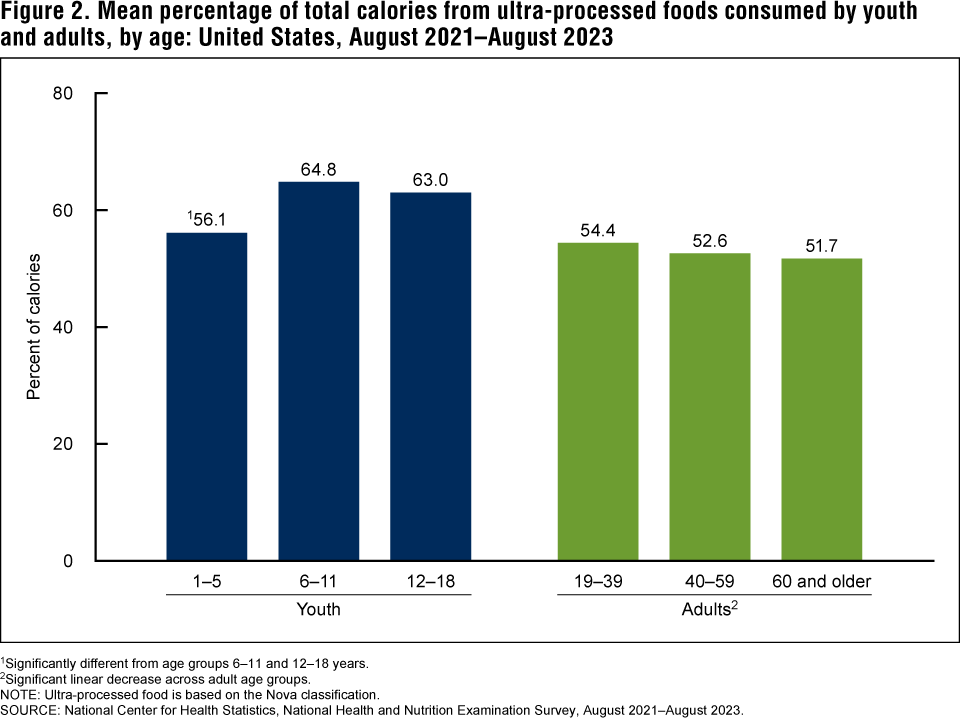 Centers for Disease Control and Prevention graphic
The Environmental Working Group (EWG) offers a fairly simple definition in its comments: “UPFs are foods that contain one or more cosmetic additives and are high in saturated fat, added sugar, or sodium (HFSS) or contain a non-nutritive sweetener (NNS).”
EWG says excluding “cosmetic additives from the definition of UPFs would be to discard the most useful tool available to approximate the extent and purpose of food processing.”
Industry groups say wide range of products at risk
Industry groups stress that they don’t believe the level of processing a food receives is indicative of its healthfulness.
The groups note repeatedly throughout their comments that the government’s latest Dietary Guidelines Advisory Committee found there was insufficient evidence to link health issues, including the risk of obesity, with ultraprocessed foods.
“Available science does not … support processing alone as the basis for determining whether a food is nutritious or contributing to chronic disease,” says the International Dairy Foods Association (IDFA). “The nutrient profile of a food, within the context of the total diet, should be the primary consideration for dietary recommendations and developing policies to reduce food related chronic disease.”
The American Frozen Food Institute asserts that scientists have “unsuccessfully linked consumption of ‘UPFs’ to a variety of health outcomes.”
The groups repeatedly cite concerns that a definition of ultraprocessed would improperly identify healthful foods and discourage innovation.
The Consumer Brands Association says under the Nova classification system “beef jerky, whole grain bread, pickles, canned tomato products, candy bars, high fiber cereal, guacamole, frozen healthy meals, ice cream, and countless other foods” would all be considered ultraprocessed.
IDFA expresses concern that cottage cheese and American cheese as well as yogurt could be tarred as ultraprocessed under a government definition.
The Grain Chain worries about the impact on baked goods. “Both refined and whole grains contribute nutrients, including fiber, iron, B vitamins, and magnesium, with enrichment and fortification of grains playing a critical role in addressing nutrient gaps and supporting health across the lifespan,” the coalition says.
The Corn Refiners Association says a definition of ultraprocessed could snag salad dressings and sauces that “encourage consumers to eat more vegetables (e.g., in salads and stir fry).”
Among other unintended consequences, the Sugar Association argues that including added sugars in the definition of ultraprocessed foods could drive companies to substitute artificial sweeteners.
One industry group that is cheering on the administration’s effort is the International Fresh Produce Association.
“A study released in 2025 estimated 70% of foods available in grocery retail could be considered UPFs. Yet, dietary guidance indicates that fruits and vegetables alone should make up approximately 50% of the diet. Only one in ten Americans meet this target,” IFPA says in its comments.
Still, IFPA has concerns about an overly broad definition, noting that the original text of a new California law would have hit fruits and vegetables treated with “washes or surface finishing agents such as carnauba wax,” which is used to reduce water loss and prolong freshness.
The new law bans ultraprocessed foods from school meals. But the state Department of Public Health will be required to establish scientific criteria for defining “ultra-processed foods of concern,” based on evidence linking them to health risks such as obesity, Type 2 diabetes, and metabolic or behavioral disorders.

