

A federal judge in Rhode Island has ordered USDA to use its Supplemental Nutrition Assistance contingency fund to make payments to the approximately 42 million Americans who lost SNAP benefits on Nov. 1.
U.S. District Judge John McConnell Jr. ruled from the bench Friday that the government must provide the benefits. Responding in a written order on Saturday to the government’s request Friday to put his order in writing, McConnell said, “There is no question that the congressionally approved contingency funds must be used now because of the shutdown” and noted that during President Donald Trump’s first term USDA had issued guidance “indicating that these contingency funds are available if SNAP funds lapse due to a government shutdown.”
Those funds would partially cover the approximately $8.6 billion needed to fund SNAP in November.
President Trump posted on Truth Social Friday that the government would be seeking guidance from the court. “[I] ask the Court to clarify how we can legally fund SNAP as soon as possible. . . . If we are given the appropriate legal direction by the Court, it will BE MY HONOR to provide the funding.”
McConnell said about Trump’s post that “the court greatly appreciates the president’s quick and definitive response to this court’s order and his desire to provide the necessary SNAP funding.”
He added the government “should, within its discretion, find the additional funds necessary (beyond the contingency funds) to fully fund the November SNAP payments.” The judge said USDA can transfer money from its Section 32 commodity procurement program, which he said contained more than $23 billion as of Oct. 8.
He left it to the government’s discretion whether to fully fund SNAP, but also said the government needs to explain its funding plan today.
Separately, a federal judge in Massachusetts came to the same conclusion as McConnell but said she would allow administration officials “to consider whether they will authorize at least reduced SNAP benefits for November, and report back to the court” today.
Rollins maintains offensive: Meanwhile, Ag Secretary Brooke Rollins says SNAP is bloated, and called on Democratic lawmakers to vote to end the shutdown.
On Fox News on Sunday, Rollins said USDA had uncovered “thousands” of instances of illegal use of EBT cards and that the department had moved 700,000 people off the SNAP rolls since Trump took office.
Don’t miss a beat! It’s easy to sign up for a FREE month of Agri-Pulse news! For the latest on what’s happening in Washington, D.C. and around the country in agriculture, just click here.
Agri-Pulse photo
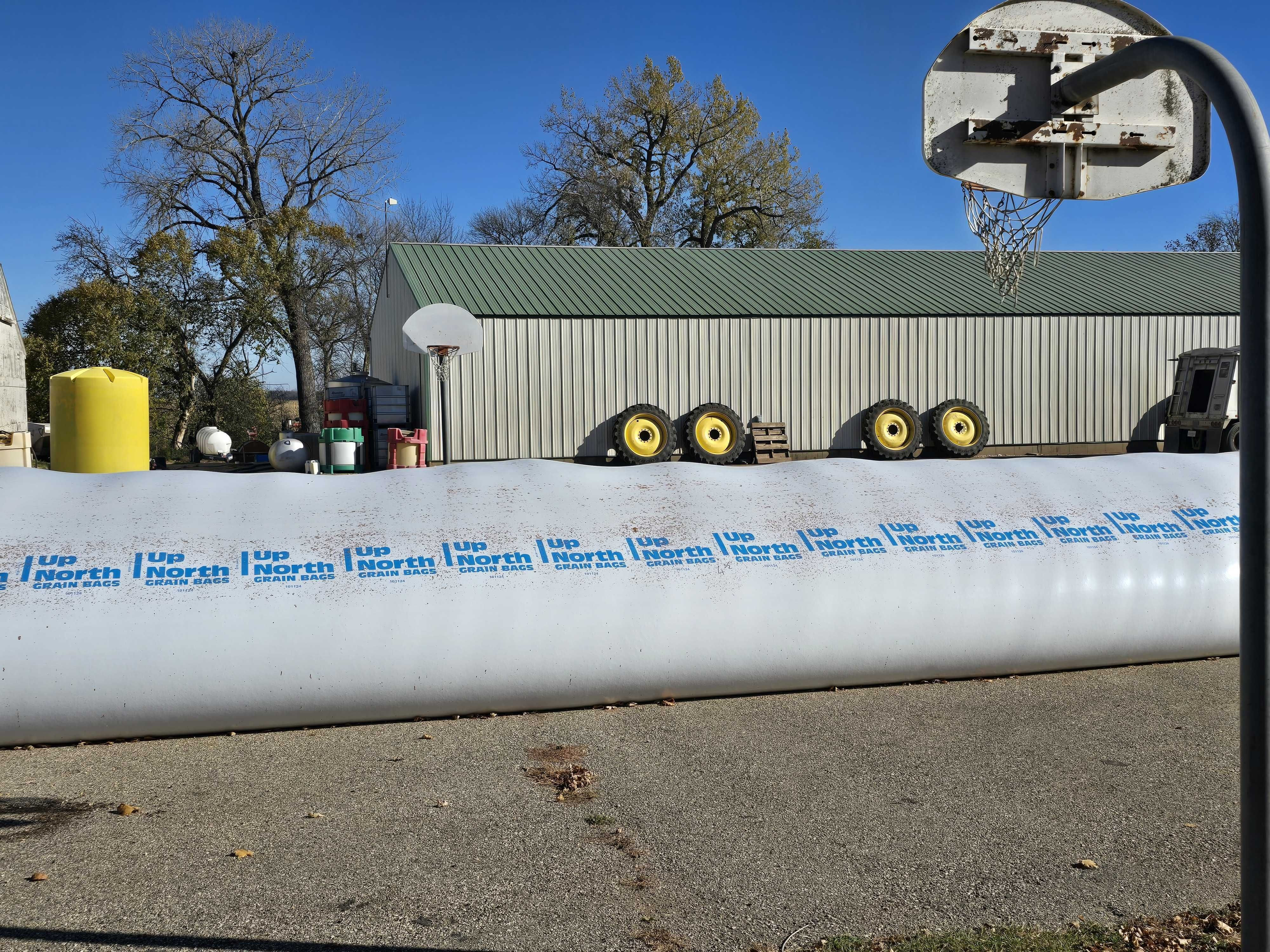 Bagged corn sits atop a community basketball court in Sinai, S.D. Limited storage capacity amid a strong harvest has forced elevators across the Midwest to resort to bagging grain or piling it on the ground. (Agri-Pulse photo: Noah Wicks)
The White House on Saturday issued a fact sheet on U.S. negotiations with China last week. It says China has agreed to lift all retaliatory tariffs on U.S. ag products imposed during Trump’s second term.
“This includes tariffs on a vast swath of U.S. agricultural products: chicken, wheat, corn, cotton, sorghum, soybeans, pork, beef, aquatic products, fruits, vegetables, and dairy products,” the fact sheet reads.
China responded to new U.S. tariffs in March with a 20% retaliatory tariff on U.S. soybeans and other agricultural products. Lifting those tariffs puts U.S. soybean rates at the same level as Brazil’s.
In return, the U.S. said it would cut its 20% fentanyl tariffs on China to 10%.
The fact sheet also clarifies China’s soybean purchase commitments. It said China will buy 12 million tons in the last two months of 2025, and 25 million tons in the three subsequent calendar years.
Analysts warn, however, that logistics may not be in place to meet the 12 million-ton target after several months of no sales.
Take note: U.S. officials have been the only ones to detail the deal’s contents. China has provided few specifics, particularly about agriculture. The Ministry of Commerce only says that the two sides agreed to expand agricultural trade.
Top EU trade official wades into pasta spat
The European Commission’s top trade official says he’s raising European pasta-makers’ concerns with U.S. counterparts.
The U.S. Commerce Department earlier this month accused two Italian pasta companies of selling products in the U.S. below market value. In response, it proposed more than 90% tariffs on EU pasta exports, in addition to the 15% baseline tariff rate on most EU products beginning in January.
“We believe that this decision, as it was reached, was not based on the full facts and figures, and we are doing our utmost to present this to them,” EU Trade Commissioner Maroš Šefčovič said from Rome on Friday.
Šefčovič said he pressed the issue with Commerce Secretary Howard Lutnick last week.
It is “clearly something which is not acceptable,” he added.
Connecticut probe into rising grocery costs finds no evidence of price gouging
The Connecticut attorney general’s office “cannot conclusively determine” that grocery stores in the state have engaged in price gouging or illegal profiteering since 2020, the office’s chief counsel told food retailers late last week.
Reporting on the initial results of the state’s probe into rising food prices, Matthew Fitzsimmons said he’ll now focus on “other entities ‘upstream’ in the distribution supply chain.” His office will try to figure out why food prices “have remained stubbornly high long after the end of the pandemic and determine whether potentially illegal activity is contributing to these high prices," he said in the letter.
In a separate letter to state legislators, Fitzsimmons said grocery store data show that retailers continue to follow a low profit-margin business model and generally see margins of between 1% and 3%. He also found that pandemic-related supply shocks led to contract disputes that forced grocers to find new suppliers, leading them in some cases to pay more for products to stock their shelves.
Final Word:
“He also understands now – if he didn’t before, he does now – that look, American beef itself, the herds are down, the infrastructure needs some help … we’ve had drought over the last few years, and the herd size is down.” – Rep. Ryan Zinke, R-Mont., on the president’s awareness of why beef prices are high. Zinke served as interior secretary during the first Trump administration.
Oliver Ward and Noah Wicks contributed to today’s Daybreak.


