

The Trump administration's demands for state data to carry out its investigation of waste, fraud and abuse in the Supplemental Nutrition Assistance Program are meeting resistance both from Democratic-led states and from Democrats in Congress.
Some state officials also say they are puzzled by estimates of SNAP fraud that USDA has released.
In federal court in California, 21 states and the District of Columbia are fighting the administration’s attempt to force states to provide data on SNAP recipients. Agriculture Secretary Brooke Rollins has said – based on data provided by the remaining states – that nearly 200,000 dead people were receiving SNAP benefits and a half million were getting double benefits. Only one of the 21 states, Nevada, has a Republican governor.
And last week, House and Senate Democrats introduced a bill to undo changes made to the program in the One Big Beautiful Bill Act.
The states got a court order in October to block USDA’s withholding of SNAP funds due to their lack of compliance with multiple department directives to provide detailed records on recipients. U.S. District Judge Maxine Chesney in California issued a preliminary injunction after finding the states were likely to prevail on their claims that the request violates the SNAP Act.
Rollins has said in numerous interviews that the program is rife with fraud and corruption but hasn’t shared the department’s analysis of how it came up with the figures.
A USDA spokesperson said Rollins “wants to ensure the fraud, waste, and incessant abuse of SNAP ends. Rates of fraud were only previously assumed, and President Trump is doing something about it. Using standard recertification processes for households is a part of that work. As well as ongoing analysis of State data, further regulatory work, and improved collaboration with States.”
On Newsmax Nov. 13, Rollins said based on information from “mostly red states,” close to 186,000 “deceased men and women and children in this country are receiving a check. Now, that is what we're really going to start clamping down on.”
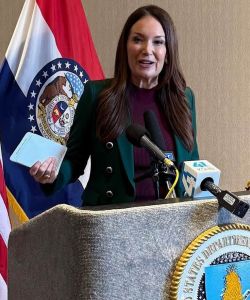 Brooke Rollins (Agri-Pulse photo)
She also said 500,000 were receiving double payments and said, “Can you imagine, when we get our hands on the blue-state data, what we're going to find? It's going to give us a platform and a trajectory to fundamentally rebuild this program.”
States provide a counterpoint
State officials, however, say there are explanations for why deceased individuals may be on the books. They also say that without more detailed information, it’s hard to know exactly what Rollins is discussing.
“Without actually seeing the data that was reviewed and what criteria they're using …, it's hard to say whether or not they would fit into that category of being identified as deceased,” said Daniel Giacomi, director of the program oversight and grants administration in Connecticut's Department of Social Services. The state is among those challenging USDA’s request for SNAP data files.
He said there also can be a lag between when people apply for SNAP benefits in the state and the state confirms that they are not receiving benefits elsewhere.
Don’t miss a beat! It’s easy to sign up for a FREE month of Agri-Pulse news! For the latest on what’s happening in Washington, D.C. and around the country in agriculture, just click here.
If the state determines the person is getting benefits from another state, then they would be told to “close out that case” if they want to get benefits in Connecticut, Giacomi said.
He said his understanding is that USDA developed on its own the estimates for dead individuals and people getting unauthorized benefits.
“I have not heard from any other states that they've received outreach or data back from the USDA regarding the individuals from their states that fall into these categories,” he told Agri-Pulse. “I also know that states gave varying levels of information to the USDA.”
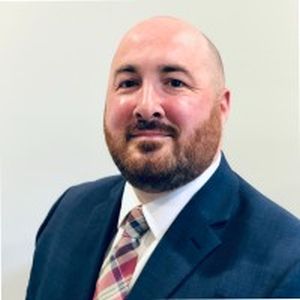 Daniel Giacomi (LinkedIn photo)
“So, to say that every state provided the same sort of information, and you're able to make declarative statements without first gathering additional responses from the states, in my mind, would be a difficult thing to do,” he said.
Regarding fraud, Giacomi points to a Congressional Research Service report that calls SNAP fraud “rare, according to available data and reports, but there is no single data point that reflects all the forms of fraud in SNAP.”
The CRS report also notes that the “error rate” in SNAP does not equate to fraud.
“Errors are not the same as fraud,” the report said. “Fraud is intentional activity that breaks federal and/or state laws, while errors are mistakes.”
The national payment error rate, which includes both overpayments and underpayments, was 11.68% in fiscal 2023 and has risen steadily since fiscal 2018, when it was 6.8%. Retailer trafficking fraud, which CRS called “a major form of SNAP fraud [that does not reflect all forms of fraud,” was 1.6% from fiscal years 2015-2017.
USDA says 300,000 deceased potentially on SNAP rolls
State officials also said in court declarations that there are explanations for why USDA might have come up with the numbers it did.
Responding to a declaration filed by Shiela Corley, chief of staff to the deputy USDA undersecretary for food, nutrition, and consumer services, Illinois Department of Human Services official Kaye Reagan said in her own declaration, “[I]n my experience it is completely reasonable to expect that any significant sample of benefits cases will turn over some deceased individuals, because of the inevitable delays in reporting and subsequent verification.”
Once IDHS is made aware of a death, whether through the department’s monthly query or through a household reporting, “we take immediate action,” she said. “When the source of the notification of death is not considered verified upon receipt, a notification is sent to the household prior to cancellation to verify the death has occurred. If no response is received, the benefits are cancelled.”
A California official agreed. Alexis Fernández Garcia of the California Department of Social Services said in a declaration that Corley’s conclusions – which included “300,000 potential instances of deceased individuals actively enrolled in the program” – “do not demonstrate that any benefits were fraudulently issued and used while any person was deceased.”
Benefits “could have been issued while a person was alive and remain available on their account after they later became deceased. Further, to the extent that benefits may have been issued to a person who may ultimately be verified as deceased, the state may have done so while following all related regulatory requirements," Garcia said.
Both Reagan and Garcia said USDA hasn’t provided enough information to verify its claims. “Even if 300,000 of those participants were deceased, that would only represent 1.6% of the total participant population” in those states, Garcia said. “However, … without additional information, these statistics are virtually meaningless.”
Reagan said Illinois uses the federal Public Assistance Reporting Information System (PARIS) to check for instances where people are getting SNAP benefits from multiple states. However, that process operates quarterly, and “may take as long as a month from submission before we receive a response. The delay and potential for outdated information to match makes it difficult to take correct action.”
The state also uses the National Accuracy Clearinghouse, which was created in the 2018 farm bill. “The NAC has created an instantaneous process for checking for duplicate assistance among NAC-participating states,” Reagan said, but all states won’t be participating in it until 2027.
Rollins also has said recipients would have to “reapply” for the program, but state officials have noted that recipients already have to be “recertified” regularly, either one or twice a year.

