
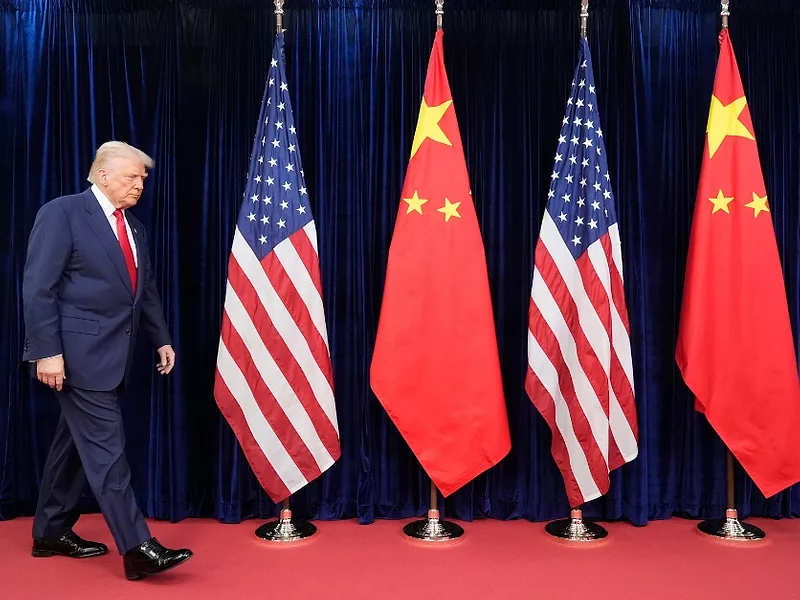
A Commerce Ministry spokesperson refused to confirm that Chinese purchase commitments of U.S. soybeans were part of a trade deal agreed to late last month.
During a regular press conference on Thursday, a reporter asked He Yadong to confirm the White House’s insistence that China will buy 12 million tons of soybeans this year and 25 million annually after that. But He demurred.
He directed the reporter to previous information about the arrangement, which he said outlined “the main achievements and consensus reached, including on agricultural trade.” Notably, Chinese documentation and officials’ statements have not yet referred to the purchase commitments.
“China is an important participant in global agricultural trade and will continue to uphold an open and cooperative attitude,” He added, according to an unofficial translation.
Former USDA economist Fred Gale told Agri-Pulse “it seems like they're being intentionally vague.”
But, but, but: Gale added that hazy commitments are “not out of character” for Beijing.
More alarming than what China says, Gale said, is what buyers have – or haven’t – done. At a major annual trade fair in Shanghai last week, China bought more Brazilian soybeans. But no buys of U.S. soybeans have been reported.
The Chinese embassy in Washington did not respond to Agri-Pulse’s request to clarify He's comments.
WASDE and sales reports due out today after shutdown
Ag commodities traders are in for a double whammy of data today, with USDA putting out its first global outlook in two months along with a backlog of export "flash sales," after the government shutdown stalled release of the closely watched data.
Market watchers expect slight declines in yields for 2025 U.S. corn and soybean harvests versus the September forecast. Traders also will be on alert for any changes in export estimates for domestic corn and soybeans, America’s two biggest crops, in USDA’s WASDE report due out at noon.
"Everyone is working blind right now on what the U.S. has been able to sell," Frayne Olson, a crops economist at North Dakota State University, said in an interview on Thursday at an American Bankers Association ag conference in St. Louis.
“Flash sales” are typically made public outside standard weekly reports if they meet certain thresholds, such as sales of 100,000 metric tons or more of a commodity sold in one day to a single destination, except for soybean oil.
Olson expects U.S. corn exports to go up "a smidge," and soybeans to land a bit lower than the last export estimate in September, which was 1.7 billion bushels.
On wheat, Olson said he’ll be looking at production and export estimates for Russia, the world's largest shipper, and two other U.S. rivals, Argentina and Australia.
"Heading into Friday's oddball report, we have more questions than answers," said No Bull Ag founder and analyst Susan Stroud. On corn and soybeans, "it’s clear the market has no idea where yields will land, only that they should be lower, broadly speaking.”
Key U.S. crop estimates for 2025-26 (Reuters):
- Corn production: 16.6 billion bushels (USDA Sept. est.: 16.8 billion bushels)
- Corn yield: 184 bushels per acre (USDA Sept. est.: 186.7 bushels per acre)
- Soybean production: 4.3 billion bushels (USDA Sept. est.: 4.3 billion bushels)
- Soybean yield: 53.1 bushels per acre (USDA Sept. est.: 53.5 bushels per acre)
- Corn ending stocks: 2.1 billion bushels (USDA Sept. est.: 2.1 billion bushels)
- Soybean ending stocks: 304 million bushels )USDA Sept. est.: 300 million
- bushels)
- Wheat ending stocks: 867 million bushels (USDA Sept. est.: 844 million bushels)
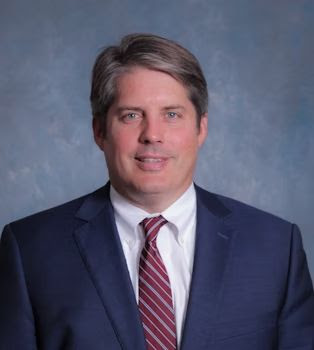 Tom Sell (Combest, Sell photo)
Sell enters race for Arrington’s seat in Texas
Tom Sell, who co-founded Washington, D.C., lobbying firm Combest, Sell & Associates, is joining the race to fill the seat of departing Republican Rep. Jodey Arrington of Texas.
Sell, a former staffer for Rep. Larry Combest, R-Texas, said in a news release that “our country is in serious trouble right now, with the radical left trying to hijack everything we as Americans have worked so hard to build over the course of nearly 250 years. President Trump is working overtime to turn our country around and to put America First — but he needs our support."
Rollins goes after Dems and ‘radical left’ judge in interview
Agriculture Secretary Brooke Rollins blamed Democrats and criticized “a radical left judge” for ordering USDA to provide full benefits to SNAP recipients before the end of the government shutdown.
Those benefits should begin going to recipients in the next few days, Rollins also said in an interview with CNN’s Pamela Brown. But she blamed congressional Democrats for the lapse in SNAP benefits because they did not vote to re-open the government.
She called SNAP “a broken program” that is “full of corruption,” saying USDA found 186,000 people on the SNAP rolls who are deceased based on data submitted by states.
Rollins insisted USDA did not have the authority to transfer Section 32 funding, which provides money for child nutrition programs. U.S. District Judge John McConnell Jr., whom Rollins criticized, had ordered the department to use that money,
“That money is authorized for a different set of facts. If we had used that money, it would have taken food out of the mouths of schoolchildren.”
Interested in more news on farm programs, trade and rural issues? Sign up for a four-week free trial to Agri-Pulse. You’ll receive our content - absolutely free - during the trial period.
Plaintiffs in the SNAP case before McConnell argued, and he agreed, that there was enough money to cover school meals well into spring.
Take note: USDA is trying to fire a Food and Nutrition Service employee who discussed potential issues with SNAP funding in an Oct. 2 interview on MSNBC The Washington Post reported.
According to documentation reviewed by the newspaper, USDA told Ellen Mei the day after the interview ran that she had discussed USDA programs and funding “without prior approval” and that she would be let go 30 days after the shutdown ends.
Mei spoke in the interview as a union representative. She is president of National Treasury Employees Union’s Chapter 255.
In a statement, NTEU National President Doreen Greenwald said, “Union leaders are well within their First Amendment rights, on non-work time, to share their views about how employees represented by NTEU are dealing with the shutdown, which disrupts government services and stops their paychecks.”
She continued: “Retaliating against them for speaking up is a contract violation and an outrageous attack on federal employees and their union rights. NTEU will continue to stand with all our union leaders as they exercise their rights and inform the public on the importance of their work and the work of their colleagues.”
In a statement, a USDA spokesperson said, “During a lapse in appropriations, furloughed USDA employees are not authorized to perform any official duties, including speaking on behalf of the Department. The USDA does not comment on individual personnel matters.”
Arizona officials ask Interior to include Upper Colo. River states in cuts under new framework
Arizona’s governor and top state legislative leaders want the Interior Department to include states from the Upper Colorado River Basin in future water cutbacks as the agency works to craft post-2026 guidelines for managing the river.
Arizona Governor Katie Hobbs, Arizona State Senate President Warren Petersen, and Arizona House Speaker Steve Montenegro have all written to Interior Secretary Doug Burgum asking that he use his authorities “to ensure that whatever alternative” is considered by the department include conservation requirements for the Upper Basin.
The upper basin states are Colorado, Wyoming, New Mexico and Utah.
Take note: All seven Colorado River states have missed their deadline for coming up with a new proposal. The lower basin states — Arizona, California and Nevada — have argued that the four upper basin states need to agree to further cuts. The upper basin states disagree, saying they already use a limited amount of water and less than what they are obligated under the Colorado River compact.
Final Word
Distributing $2,000 tariff checks to Americans “will require legislation…. We're actively studying the matter and getting the numbers straight so the president has all the choices he needs to decide what to do.” – National Economic Council Director Kevin Hassett.
Kim Chipman, Oliver Ward and Noah Wicks contributed to today’s Daybreak.
.webp?t=1762183428)


