
Nine years ago, lawmakers thought they had settled the issue of GMO labeling. A law passed in the summer of 2016 after months of negotiation shut down state labeling requirements and gave companies a way to keep biotech information off food labels.
But a protracted legal battle is forcing USDA to rework key aspects of the labeling regulations.
The 9th U.S. Circuit Court of Appeals has ruled USDA improperly excluded highly refined ingredients such as corn, soybean and canola oil from labeling regulations for “bioengineered” food products. The court also struck down regulations that allowed the use of electronic and text-message disclosures, agreeing with a lower court that such methods were inadequate.
George Kimbrell, co-executive director and legal director for the Center for Food Safety, an advocacy group that has been battling USDA for years over biotechnology regulation, said the 9th Circuit decision was a victory for “the public's right to know how food is made and what the ingredients are in the food.”
Compliance with USDA’s disclosure regulations became mandatory June 23, even though they haven’t been rewritten yet to line up with court rulings that have gone against USDA.
Congress passed the 2016 law to preempt state labeling laws, including one in Vermont, and protect food companies from having to disclose biotech ingredients directly on labels. Advocates of agricultural biotechnology feared such labeling would deter the development and use of genetically engineered crops.
 QR code on Coke bottle (Agri-Pulse photo)
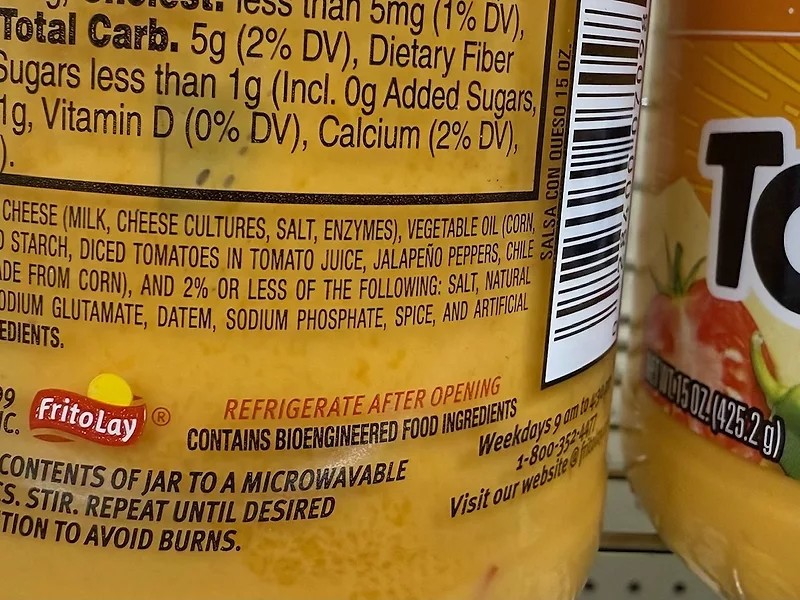
As it happens, GMO labeling is now common on foods, using the USDA-prescribed wording that was developed after passage of the 2016 law: “Contains bioengineered food ingredients.”
At a Target store in Arlington, Virginia, boxes of Betty Crocker cake mix, which are products of General Mills Inc., say, “Contains Bioengineered Food Ingredients” Bertolli Creamy Basil Alfredo sauce, a product of Mizkan Americas, and Campbell’s tomato soup, for example, say, “CONTAINS A BIOENGINEERED FOOD INGREDIENT” on the ingredient panel.
Packages of Goldfish crackers, produced by The Campbell Soup Co. and its Pepperidge Farm subsidiary, says, “Contains bioengineered food ingredients. The ingredients from soy, sugar and canola in this product come from genetically modified crops.”
A Tostitos dipping sauce, a product of Frito-Lay, a unit of PepsiCo Inc., says, “CONTAINS BIOENGINEERED FOOD INGREDIENTS.”
Some products that don’t contain biotech ingredients make note of that fact: Cans of Del Monte fruit cocktail say, “Ingredients of the types used in this product are not genetically modified.”
It’s easy to be “in the know” about what’s happening in Washington, D.C. Sign up for a FREE month of Agri-Pulse news! Simply click here
Surveys suggest “relatively few consumers care about GMOs in their food," said Joseph Balagtas, an economist who directs Purdue University’s Center for Food Demand Analyst and Sustainability.
A monthly survey of consumers by Purdue asks shoppers how often they check for GMO ingredients. The average response is between rarely and sometimes, and there has been little fluctuation over the last four years, he said. “It’s not a big concern for them,” Balagtas said.
Still, the 9th Circuit agreed with a district court that USDA’s Agricultural Marketing Service (AMS) adding a text-messaging option to the menu of electronic disclosure wasn’t adequate to inform consumers. USDA added the text-messaging option after determining through a study that a digital link was inadequate.
The Biden administration had started work in 2024 on revisions to the list of disclosure methods to comply with the district court’s decision. The Trump administration has continued the work, setting a December target for releasing a notice of proposed rulemaking. The proposal “may provide clarity on USDA’s current thinking on the methods of disclosure available to food manufacturers to be in compliance with the law,” according to lawyers with Wiley, a Washington, D.C., firm.
According to the administration’s latest regulatory agenda, AMS is proposing to delete the standalone text-messaging option and require packages to have either the USDA-approved bioengineered food symbol or the approved wording when a digital link is used.
Kimbrell believes the “practical result” of the ruling “is that companies will have to now add some other on-package disclosure … besides just the QR code labeling … I think that's a really significant victory for the public right to know.”
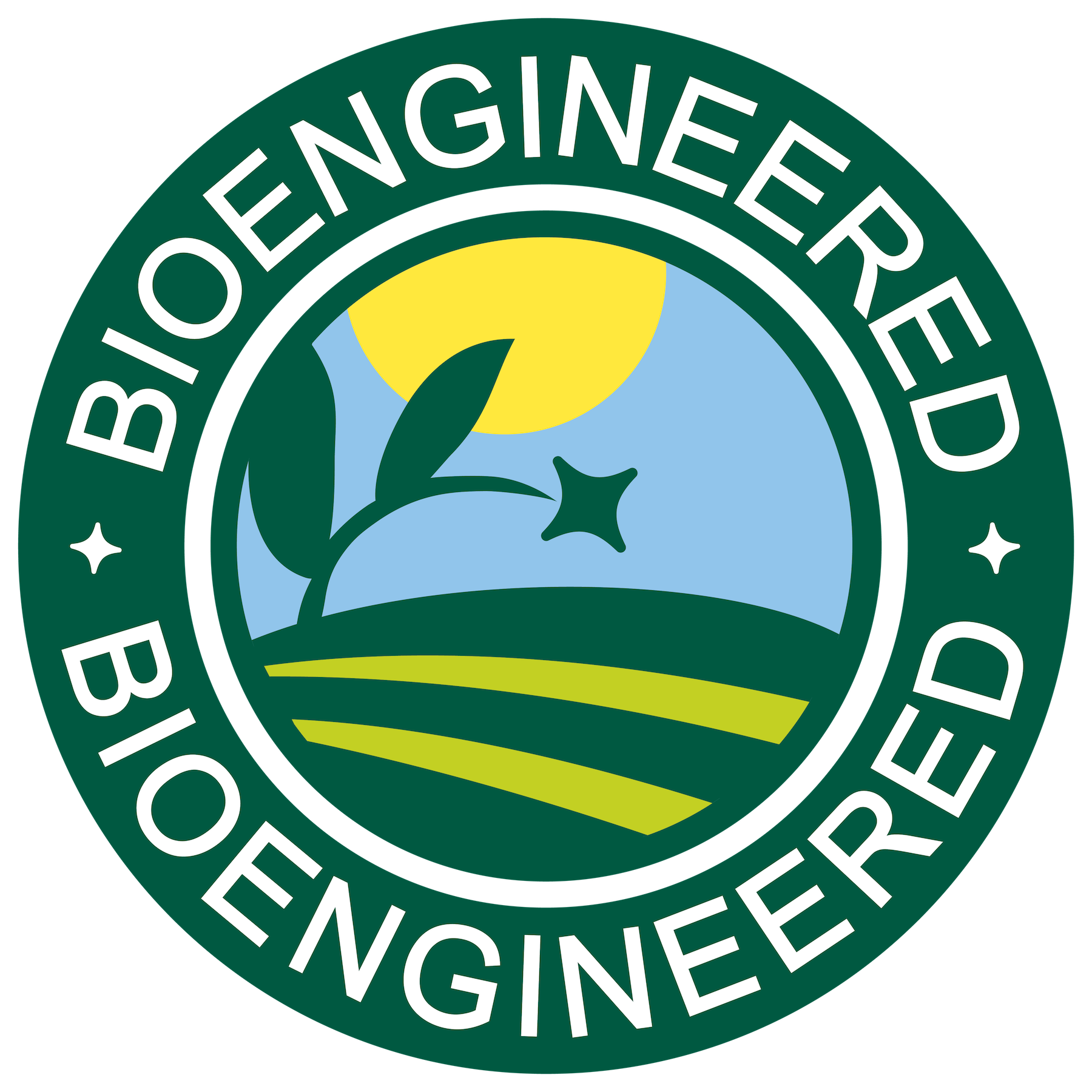 USDA-approved bioengineered symbol
The 9th Circuit also rejected the position of AMS that a food didn't "contain" biotech ingredients and was therefore exempt from the regulations, if the manufacturer said bioengineered genetic material wasn't "detectable" in the product.
But the court suggested AMS could have used a different section of the law to implement a similar exemption. “This leaves open the possibility of USDA adopting a threshold amount of bioengineered substance that may be present in the food to subject it to the disclosure requirements,” the Wiley lawyers wrote.
John Dillard, a lawyer who specializes in USDA issues for OFW Law, told Agri-Pulse, “AMS has the opportunity to go do a rulemaking to kind of fix this issue.”
A USDA spokesperson declined to comment on the department’s next steps, referring questions to the Justice Department, which didn’t respond to a request for comment.

