
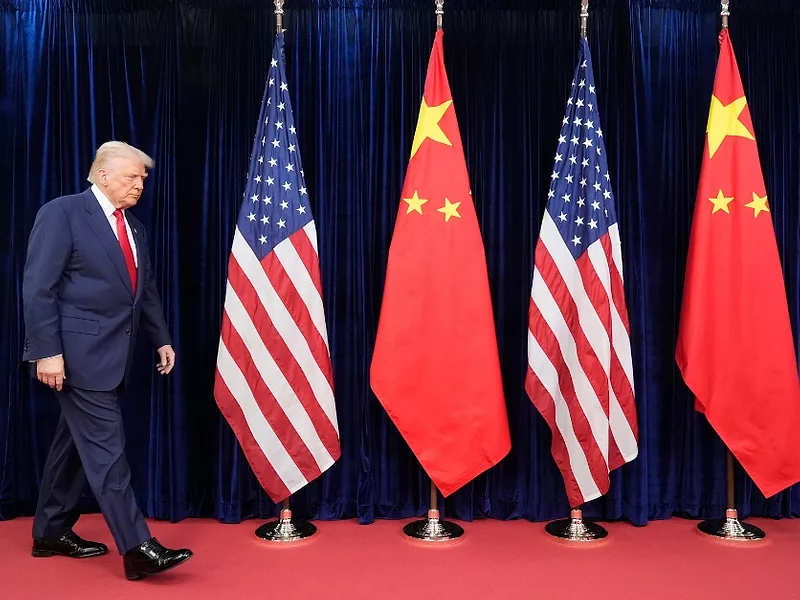
A top USDA official says the Trump administration is still evaluating the need for trade assistance payments to farmers. “If we do something, when we do something, we want it to be reflective of what’s actually happening in the marketplace,” Richard Fordyce, USDA’s undersecretary for farm production and conservation, says in an interview for this week’s Agri-Pulse Newsmakers.
“The president was able to secure some agreement with China on some purchases. Since that time, you know, we’ve seen an uptick in [the price of] soybeans.”
He says the USDA chief economist’s office is analyzing the market impacts to “present a real-time picture of where we are.”
Newsmakers featuring Fordyce will be available later today at Agri-Pulse.com.
Chinese ag purchases spark hope
The U.S. sorghum and wheat industries are hopeful after landing fresh orders in recent days.
Commodity groups are looking for signs of exports to China after last month’s leaders meeting. An unknown buyer bought more than 100,000 tons of sorghum this week, and USDA reported a more than 130,000-ton sale of white wheat.
“Hopefully [the unknown destination] for us, means China, and hopefully that's the start of what is many more to come,” Tim Lust, CEO of the National Sorghum Producers, told Agri-Pulse Thursday.
China has bought over 80% of U.S. sorghum in recent years. But exports dropped 97% this summer as buyers paused over escalating bilateral trade frictions.
A sale of 125,000-130,000 tons, Lust said, is a “good start.” But “for a commodity that over the last 10 years has averaged about 5 million metric tons of trade with China, we’ve got a long ways to go.”
Similarly, Brian Liedl, U.S. Wheat vice president of overseas operations, said the wheat sales were “encouraging.”
But, but, but: Soybean farmers remain anxious, even as China continued its gradual U.S. buys on Thursday, with USDA reporting a new order of more than 450,000 tons.
“It's a concern whether they will stick with what they actually agreed to do,” said Scott Metzger, American Soybean Association vice president.
Stay up to date with China’s soybean buys with Agri-Pulse’s new tracker.
Canadian ag leaves Washington reassured by lawmakers’ USMCA support
Canadian ag industry reps were in Washington this week to tout a North American trade pact for cross-border ag trade.
Michael Harvey, executive director of the Canadian Agri-Food Trade Alliance, tells Agri-Pulse that he noticed a shift in rhetoric in the approximately 40 meetings from an earlier visit in April.
It’s easy to be “in the know” about what’s happening in Washington, D.C. Sign up for a FREE month of Agri-Pulse news! Simply click here
Back then, Harvey said, in closed-door meetings Republicans indicated they were willing to give the president a lot of leeway on Canada tariffs. But this time he heard more concern.
Harvey said ag-state senators, representatives and staffers had also taken note of a recent letter sent by more than 120 U.S. ag groups urging the administration to renew the U.S.-Mexico-Canada Agreement at an upcoming review.
“The people who really know ag trade are very clear how important the agreement is,” Harvey said, adding that he saw “overwhelming” support for the deal from both parties.
Tariff revenues could cut deficit by $3 trillion, CBO says
In its latest analysis of the budgetary impact of the president’s tariff policy, the Congressional Budget Office estimates that current tariffs, if left in place, could reduce the deficit by $3 trillion over 11 years.
The calculation includes $500 billion in savings on interest payments. CBO’s August estimate predicted a $4 trillion reduction, but since then, the administration has reduced tariffs on China, the European Union and Japan.
That said, the effective U.S. tariff rate across all imports remains 14 percentage points higher than it was before Trump took office.
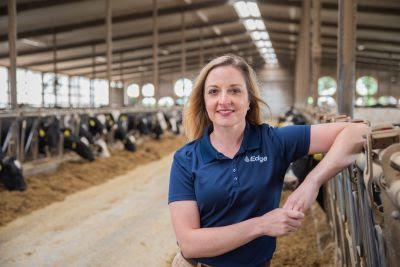 Heidi Fischer, president, Edge Dairy Farmer Cooperative. (Edge Dairy Farmer Cooperative photo)
Dairy leader sees value in year-long visa program
Dairy producers’ big issues are tariffs, trade and labor.
So says Heidi Fischer, president of Edge Dairy Farmer Cooperative. who spoke to Agri-Pulse at NAFB Trade Talk in Kansas City, Missouri.
On immigrant labor, Fischer says dairy producers need a new work visa program.
“I think it would definitely be a winning hand for producers if they could come up with something that would be a year-long visa,” she said. “It would give everybody – farmers, business owners – reassurance, and it would help keep the cost of groceries down and keep products on the shelf.”
The H-2A seasonal visa program does not cover dairy workers.
Fischer, a central Wisconsin dairy farmer, says tariffs on foreign parts in equipment are increasing costs for producers. “Any of the aluminum components that came from out of Denmark, those were impacted by tariffs, and that was kind of an unexpected additional cost to already very expensive equipment,” she says.
On the trade deal front, Fischer says there is a huge opportunity for exporting dairy products. “Whether it be powdered whey products or milk products, or even exporting cheese, because we have a safe, reliable product, and it's highly regulated and I think there are markets out there that we can expand into,” she says.
USDA opens applications for ‘America First’ trade promotion program
USDA’s Foreign Agricultural Service is accepting applications from ag groups for funding to develop overseas markets as part of its new “America First Trade Promotion Program.”
The program’s $285 million was allocated under the One Big Beautiful Bill Act and is designed to complement other programs. The deadline for applications is Jan. 23.
Final word
"I think that my family farmers, they've sold their corn at low prices to make room in the bin for soybeans, because there's literally nowhere to sell them right now.” – Rep. Angie Craig, D-Minn., speaking to reporters after a press conference on Democratic legislation to reverse changes to SNAP made in the One Big Beautiful Bill.
Correction: The item on Chinese purchases has been corrected to include the right numbers for sorghum. A corrected email was also sent to subscribers at 9:56 a.m. on Friday.
Kim Chipman, Bob Ellison and Oliver Ward contributed to today’s Daybreak.
.webp?t=1762183428)


