
|
USDA and blue states aren’t giving an inch in their continuing battle over SNAP data, as Agriculture Secretary Brooke Rollins continues to blast the program as rife with fraud, waste and abuse.
Meanwhile, as participation rates plunge, in part due to the enactment of changes in the One Big Beautiful Bill Act, states are trying to bring their error rates down to avoid paying a share of Supplemental Nutrition Assistance Program benefits, or at least keep those costs as low as possible.
At the same time, advocacy groups, governors and local governments are all backing an effort to delay the cost-shifting provisions in the OBBBA that are scheduled to increase administrative costs for states and counties that run the program starting in October.
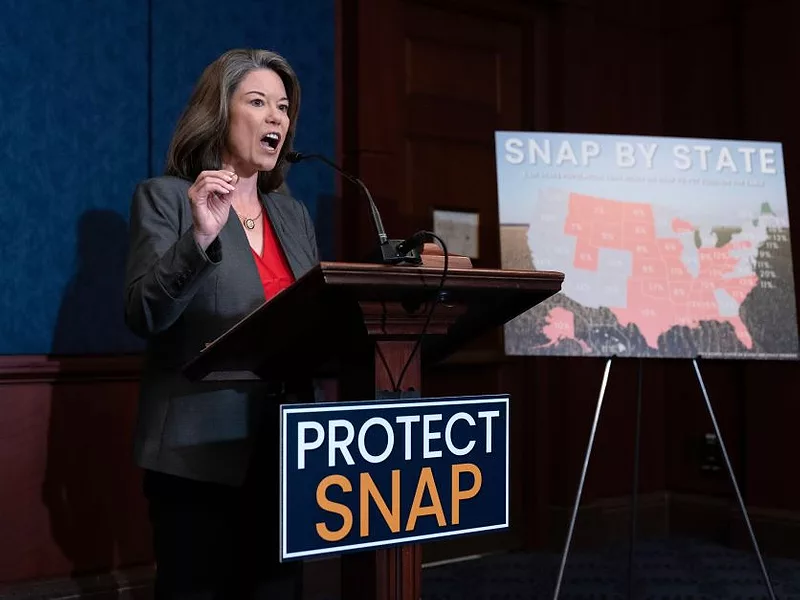
The fight over SNAP was highlighted at a recent House Agriculture Committee hearing where Ranking Member Angie Craig, D-Minn., harshly criticized Rollins over SNAP.
“Over the last year, I've watched you brag about taking food away from millions of Americans,” Craig said in her opening statement, directed at Rollins. “You put on some big show about this golden age in agriculture. Honestly, it's disgusting.”
Rollins, however, said in her opening statement that “restoring the integrity” of USDA programs, including SNAP, “is very, very important to this administration and to our USDA.” She said the administration has “made over 900 arrests in the SNAP program” and secured more than 120 convictions and $132 million in restitution.
“And this is just the tip of the iceberg,” Rollins said. “Only the Republican states have shared their data with us, so most of this fraud we have found is actually in the red states. We are obviously in litigation with all the blue states to get that data, and to hopefully at some point be able to partner with them to root out more fraud.”
At the hearing, Craig said the government’s own data shows SNAP has a fraud rate of only 1.6%, a statistic that had Rollins scoffing and extolling “the righteousness of work” as she and Craig talked over one another.
Cut through the clutter! We deliver the news you need to stay informed about farm, food and rural issues. Sign up for a FREE month of Agri-Pulse here.
Rollins was referring to the administration’s attempt last year to obtain personally identifiable information from all 50 states, the District of Columbia, and Guam. Compliance has been mostly divided along political lines, with 28 states and Guam providing data while 22 states and the District of Columbia did not.
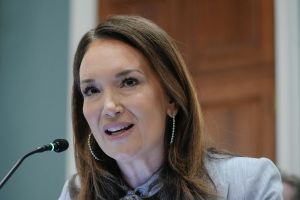 Brooke Rollins (AP photo)
The blue states, however, filed a lawsuit in federal court in California last year to fight the administration’s attempt to obtain data. They won an injunction blocking enforcement of a July demand for information.
That litigation is continuing. A magistrate judge in the case has ordered the two sides to engage in mediation to resolve their differences, further delaying resolution of the matter.
Meanwhile, efforts continue to delay the impact of the OBBBA changes, which would change the current 50-50 split in administrative costs between states and the federal government by requiring the states to pay 75% starting in fiscal 2027. In fiscal 2028, states with payment error rates of 6% or more would pay between 5% and 15% of the benefits in their state. SNAP has been a fully federally funded program.
The OBBBA includes about $187 billion in cuts to SNAP over 10 years,” according to the Congressional Budget Office.
A wide range of groups, including the National Governors Association, National League of Cities, National Association of Counties, and state SNAP administrators have been pushing for a two-year delay in implementation of the OBBBA provisions.
Sen. Amy Klobuchar, D-Minn., ranking member of the Senate Agriculture Committee, has been urging Sen. John Booozman, the chair of the committee, to include a delay in the upcoming Senate farm bill. Boozman has consistently opposed including any such language in the bill but has also said he’s willing to listen, and Klobuchar has said she and Boozman have a good relationship.
“He is carefully saying he's open to consideration,” says Karen Ehrens, U.S. policy manager at the Alliance to End Hunger. “So, a lot of groups are bringing constituents, they're organizing meetings with staff, they're organizing briefings on the Hill” to elevate the issue.
 Karen Ehrens (Alliance to End Hunger photo)
Ehrens also emphasizes, as state SNAP administrators have been doing, that the error rate is not the equivalent of fraud, but can include simple mistakes on an application for benefits.
“An error rate is based on mistakes that were made during the process unintentionally,” she says.
“There's a lot of points where an honest mistake can be made,” she says. “For example, is the person paid twice a month, or are they paid biweekly? Do they receive a paycheck 24 times or 26 times during the year?”
States are focused on reducing error rates now because the percentage of benefits they will have to pay in the future will be based on error rates being established now.
“To minimize the amount they will be required to pay under [OBBBA’s] cost-shift provisions, states are incentivized to adopt policies that will reduce error rates quickly,” the Center on Budget and Policy Priorities said in a report issued last month. “Error rates are measures of states’ over- and under-payments in SNAP, mostly resulting from unintentional mistakes by state agencies and households, not fraud. The states’ error rates in fiscal years 2025 and 2026 will determine how much they pay in fiscal year 2028, the first year the cost-shift provision is in effect.”
Gina Plata-Nino, SNAP director at the Food Research & Action Center, says FRAC is “concerned that some states may not necessarily be able to continue in the program.”
She says she’s hopeful Boozman will be willing to include language delaying the OBBBA cost-shifting provisions so states have time to implement eligibility and other mandated changes.
Plata-Nino notes, as Klobuchar also has repeatedly, that states with inordinately high error rates, including Alaska, are not subject to the cost-shifting provision on the same schedule as other states. Any state with an error rate equal to or exceeding 20% gets a two-year delay.
“We just want to make sure that there's parity,” she says. “If you gave it to these states, why can't you apply it for other states that need time to be able to implement this?”
The CBPP analysis shows the participation rate for SNAP has fallen by 3.5 million people, or 9%, between July 2025, when the OBBBA was signed, to February. States are scrambling to implement new OBBBA eligibility provisions and lower error rates.
“Many of the policies the states are already adopting in an effort to lower error rates are likely to result in eligible households losing SNAP food assistance because of administrative burdens,” CBPP says. “This can include policies such as requiring more frequent verification of income and expenses, which may make it more difficult for eligible households to access benefits or result in processing delays. Unfortunately, given the way SNAP error rates are calculated, wrongly denying or delaying benefits to an eligible household is not considered an ‘error.’"
The center says that even before the OBBBA was signed, “SNAP participants in some states already were facing long application delays and call center wait times. The law’s short implementation timeline and cut to the federal investment in state administrative expenses are making it hard for state agencies to adjust their operations.”
The result, CBPP concluded: “SNAP participation may decline faster in the coming months than might be expected from the law’s implementation, resulting in increased poverty, food insecurity, and hunger.”

