
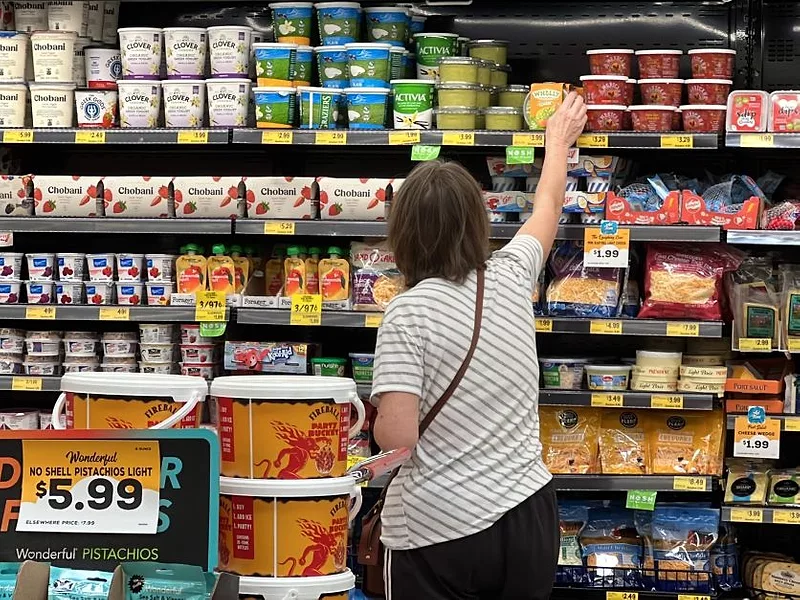
Food manufacturers and a host of trade groups are pushing for a national solution to food labeling as multiple states move toward requiring warning labels and fuller disclosure of ingredients.
A recently formed coalition that includes some of the world’s largest food manufacturers plans to “hit the ground running in January,” lobbyist Randy Russell of The Russell Group told Agri-Pulse. The goal? To come up with federal legislation that would set national labeling standards for food additives and other ingredients.
AFIT is seeking both front-of-pack labeling and QR Code reform, as well as legislative changes to FDA's Generally Recognized as Safe process "to provide a nationally uniform regulatory approach for new ingredients used in food and beverage products," according to the group. AFIT is led by senior advisers Julie Gunlock and Andy Koenig.
“I think what you will see is legislation introduced early next year, starting in the House, that will have federal preemption. We don't call it federal preemption because everybody wants federal preemption these days. We're calling it a national uniform solution.”
Russell's firm is helping run Americans for Ingredient Transparency. Its members include the Corn Refiners Association, Consumer Brands Association, FMI-The Food Industry Association, National Council of Farmer Cooperatives, American Farm Bureau Federation, ConAgra, KraftHeinz and General Mills.
The effort may have taken an important step forward with comments by Health and Human Services Secretary Robert F. Kennedy Jr. last week.
On the sidelines of an event promoting regenerative agriculture, Kennedy told Bloomberg News he is open to a uniform national standard. “It is on the table for discussion,” Kennedy said of a national standard, adding that companies “"don't want to have rules in 50 different markets; that's impossible."
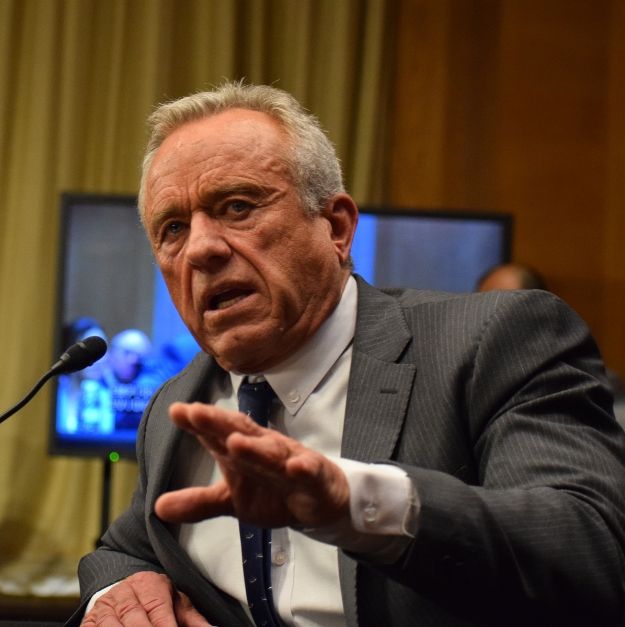 HHS Secretary Robert F. Kennedy Jr. (Agri-Pulse photo)
Russell called Kennedy’s remarks “very significant,” but also urged caution. “We don't know the details. We don't know all that, but I think that's a very important signal.”
The Make America Healthy Again movement whose de facto leader is Kennedy has cheered state legislation in Texas, Louisiana, California, Arkansas and West Virginia requiring more transparency in labeling.
Pressure from the movement’s supporters helped kill federal preemption language in a bill introduced by Sen. Roger Marshall, R-Kan., that would reform the GRAS, or Generally Recognized as Safe, process.
GRAS allows food manufacturers to determine themselves whether a food additive is safe. It has long been called a loophole by consumer groups that want see it changed to allow for transparency in the process. Marshall’s bill would change the process slightly by requiring companies to submit notices of new chemicals to the Food and Drug Administration. However, consumer groups note that the notices would not be made public, and if FDA does not act on the notice, the additive would be approved.
Russell said AFIT plans to work with Marshall on his bill and also wants to “work with the administration to lock in some of the MAHA gains that they've had at the state level.”
National standard is AFIT's goal
However, the coalition wants to “do it in a way that's at the national basis and not at the state level, where there are differences about how they're going about this,” including not just the details of the labeling but implementation dates, Russell said.
Cut through the clutter! We deliver the news you need to stay informed about farm, food and rural issues. Sign up for a FREE month of Agri-Pulse here.
A national standard could be a heavy lift for AFIT given concerns over states’ rights and the 2023 Supreme Court decision upholding California’s Proposition 12, which sets animal welfare standards for eggs and pork sold in the state.
Texas Ag Commissioner Sid Miller, for example, told Agri-Pulse that while “most of the time” it’s good to avoid a “patchwork” of state laws, it’s also important to recognize the Tenth Amendment’s promise of federalism.
The amendment simply says, “The powers not delegated to the United States by the Constitution, nor prohibited by it to the States, are reserved to the States respectively, or to the people.”
“It’s a touchy issue,” Miller said. “There's a lot of things to consider. You have to be careful in that you don't usurp the Tenth Amendment.”
“It's not as easy as it sounds, although that would be the best of all perfect worlds if we could all get on the same page and follow the same rules,” he said.
Miller reaffirmed his support for California’s Prop 12. “I'm not a big fan of Prop 12, but I am a big fan of the Tenth Amendment,” he said. “And I think California was right. The Tenth Amendment g Sarah Sorscher (CSPI photo)uaranteed them the right to regulate that. And if you start taking that away, that’s a very dangerous precedent.”
Consumer groups also are likely to be wary of any Republican attempt to set a uniform standard. The Center for Science in the Public Interest and Environmental Working Group, as well as MAHA supporters, blasted Marshall’s legislation before it was introduced because it contained preemption language.
But once Marshall – who started the MAHA Caucus in the Senate – introduced his bill without the preemption language, a key MAHA supporter got behind the effort. “It’s inspiring to see members of Congress stand up to Big Food,” said Vani Hari, the “Food Babe,” in a news release issued by Marshall and the bill’s co-sponsors, Sens. Katie Britt, R-Ala., and Rick Scott, R-Fla.
“We’re entering a new era where the health of families is coming before corporate profits,” she continued. “I’m grateful for Sen. Marshall’s leadership to hold the food industry accountable.”
CSPI was unimpressed. “The bill is like a lobster trap: Chemicals slide in easily by default, but a ton of process is needed to ban them, ensuring an exhausted FDA will struggle to take effective action,” said Sarah Sorscher, the group’s director of regulatory affairs. “This bill is not meaningful chemical safety reform. It’s a trap to kill a chemical safety movement.”
Not everyone in the food industry thinks a bill can get through Congress, which as Russell noted will be distracted by mid-term elections. Devin Mogler, president and CEO of the National Oilseed Processors Association, told Agri-Pulse that getting legislation passed in the current Congress would be a difficult task.
“We do expect the action to really shift to the states,” he said. “They – RFK Jr. and others – were encouraging that last year. They want to see a patchwork of laws to force action at the federal level.”
NOPA is not part of the AFIT coalition, but “we think what they're doing is a good effort. We are working with a lot of the different state groups, state-serving associations, farm bureaus, etc., to make sure that they're ready if something pops up in the statehouses, because it will," Mogler said.

