
|
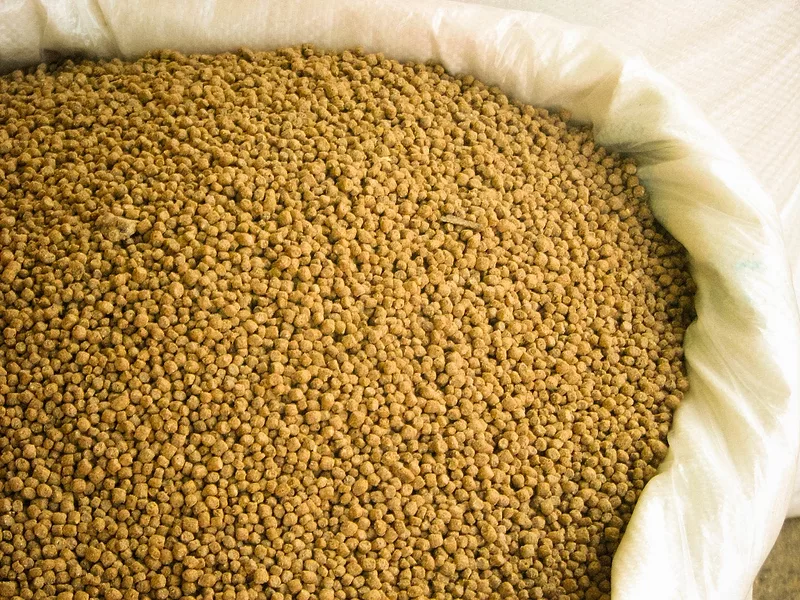
Sheppard Grain has been making organic soybean oil and meal in western New York for three decades. But in mid-2025, company President John Sheppard made the difficult decision to idle the company’s plant.
The operation had cratered from its 2016 peak when it made around $45 million from crushing organic soybeans to $12 million in 2025. One of the final nails in the coffin, Sheppard said, was when a longtime customer based just 10 miles away told him that it would no longer buy his organic products because it could get them cheaper from Canada.
“The Canadians undercut me and can bring a commensurate product down cheaper than I can make it,” Sheppard told Agri-Pulse.
Part of the economic challenge, Sheppard said in a recent submission to the Office of the U.S. Trade Representative, is that Canadian crushers can import organic soybeans from third-party countries, process them in Canada, and sell the finished oil and meal to the U.S. tariff-free under a North American trade pact.
Organic processors like Sheppard based near the Canadian crushing regions of Ontario and Quebec are struggling to compete, he said. The cheaper imported organic soybeans allow Canadian producers to price organic soybean meal $50-80 per ton below Sheppard Grain’s production costs.
“I don't expect to have any organic production revenue in 2026 unless things change real quick,” Sheppard said.
Where are you really from?
Sheppard’s complaint highlights an issue in which the Trump administration has taken a particular interest: how to define the country-of-origin for imported products. Defining the originating country is critical for assessing tariff rates and determining which products should benefit from U.S. free trade agreements.
Traditionally, to qualify under a U.S. free trade agreement, products must undergo “substantial transformation” in the country of origin, according to the Commerce Department – for example, transforming soybeans into soybean oil.
But during the U.S.-Mexico-Canada Agreement negotiations during President Donald Trump’s first term, officials agreed to tighten the rules of origin for auto imports from the USMCA’s precursor deal – the North American Free Trade Agreement. The USMCA sets a firm floor on how much of a vehicle’s content needs to be made in North America to qualify for tariff-free treatment. At least 75% of a car’s value needs to come from parts and processes carried out within North America.
USTR Jamieson Greer has told lawmakers that the U.S. wants to tighten rules of origin in other sectors when U.S., Mexican and Canadian officials meet in July to examine ways to reform the deal.
The Trump administration is also focusing on the issue in other trade discussions. The text of a recent tariff deal with Malaysia included a rules-of-origin subhead that was empty, suggesting further negotiations on the issue. The administration’s pact with Cambodia also includes language that allows for further discussion on rules of origin if third-party countries are benefitting from the deal.
“This is a big, big deal for them,” Simon Lester, a nonresident fellow at the Baker Institute’s international economics program, said of the administration. “It's a complicated technical issue that you need to take some time on.”
Officials “didn't slap together something now,” for the Malaysia deal, Lester noted. “They just put a marker in there and said, ‘we're going to come back to it.’”
 Simon Lester (Bluesky photo)
The challenge, Lester said, is making rules-of-origin provisions restrictive enough to preserve trade deal benefits only for the parties involved but not make them so restrictive that hardly any manufacturers could comply with the deal – thereby eliminating many of the benefits.
The administration’s so-called “reciprocal” tariffs were also designed with a view to clamping down on illegal transshipment – when a product is exported via a third-party country to mask its true country of origin.
The president said in an executive order that any product deemed to have been transshipped would face an additional 40% tariff on top of any other eligible duties. However, the administration has not provided details on how it will be implemented.
China concerns
The renewed focus on rules-of-origin provisions in recent years has stemmed from a rising concern over China’s manufacturing capacity, analysts say. After Trump imposed tariffs on China in his first term, Chinese exporters found ways around them, including shipping goods via Mexico or Southeast Asia, according to a recent Brookings Institution study.
Products may enter the U.S. under the USMCA as a Mexican export, despite a significant portion of the manufacturing and value of the product being created in China, Nazak Nikakhtar, a partner at Wiley Rein law firm, told Agri-Pulse. Nikakhtar was also a Commerce Department trade official during Trump’s first term.
“It's really impacting Canada as well,” Nikakhtar said, adding that Ottawa has ample incentives to agree to tighten the deal’s eligibility requirements.
If the three parties agree to tighter rules of origin across all sectors as part of the forthcoming USMCA review, it could hold opportunities for U.S. food producers like Sheppard.
Negotiators may have specific manufacturing sectors that they want to prioritize for tighter rules of origin, but “at the end of the day, I couldn't see an impediment to rolling it out more broadly,” Nikakhtar said.
Former USTR negotiator Wendy Cutler noted that rules-of-origin negotiations typically occur on a product-by-product basis. Specific industries of interest, like autos, will have highly tailored provisions inserted in a deal to protect their industry’s benefits. But Cutler said she would not be surprised if U.S., Mexican and Canadian negotiators decided to set a floor for how much of a product’s value across all industries must come from North America, which could then be augmented with industry-specific rules.
“I don't think it's going to be limited to industrial products,” she added.
 Wendy Cutler (LinkedIn photo)
A minimum threshold of regional content could help Sheppard compete with Canadian exports. He noted that the crushing and processing of soybeans make up just a fraction of the production costs for organic soybean meal, with the lion’s share coming from the soybeans themselves.
Around $900 of soybean feedstocks are needed to make one short ton of soybean meal, Sheppard said, while processing feedstock into meal costs around $85. Even a relatively low USMCA regional content requirement would render organic soybean meal imports outside the scope of the deal.
Sheppard has kept his certification to produce organic commodities on the off chance the economic climate improves. But he’s not hopeful of a turnaround.
In his region of New York’s Finger Lakes, imports from Canada pose a challenge, but he said organic soybean meal and oil producers are under pressure in many parts of the country from imports from places like Turkey and countries that lack the same stringent requirements for organic labels.
“That part of the business is gone for me,” he said. “The big loser in this whole thing isn't Sheppard Grain,” it’s “the North American farmers. Because now, without me, there's not the demand for their farm production. Without others like me, the demand for domestic North American organic soybeans and organic corn, for that matter, decreases significantly.”

