
|
Key members of the House and Senate committees responsible for trade legislation have talked to colleagues to see if there is an appetite for codifying any of the Trump administration’s trade and tariff deals.
“Ultimately, the president, I assume, will want his policies to last beyond his term of office,” Rep. Adrian Smith, R-Neb., told Agri-Pulse last week. Smith has previously argued that to secure lasting commitments from U.S. trading partners, Congress needs to write the agreements into law.
Smith, who chairs the Ways and Means trade subcommittee, says he has been looking at the deals agreed to date to determine what could deliver “a good win” that can form the basis for discussions with his Republican colleagues.
Similarly, Sen. Mike Crapo, R-Idaho, who chairs the Senate Finance Committee, told Agri-Pulse that “a lot of people” have talked about codifying the trade deals, although he's not currently drafting any legislation.
The Trump administration has announced completed deals with Japan, South Korea, Malaysia, Cambodia, China, Taiwan, the United Kingdom and the European Union – although whether the latter two will survive fresh trade tensions over Greenland is still uncertain.
Deals with almost a dozen additional countries have been announced but are still being finalized – including an Indonesia pact that sparked optimism among U.S. agriculture.
Smith told Agri-Pulse that many of his Republican colleagues share his interest in putting the deals to Congress to ensure the negotiated terms survive beyond 2028.
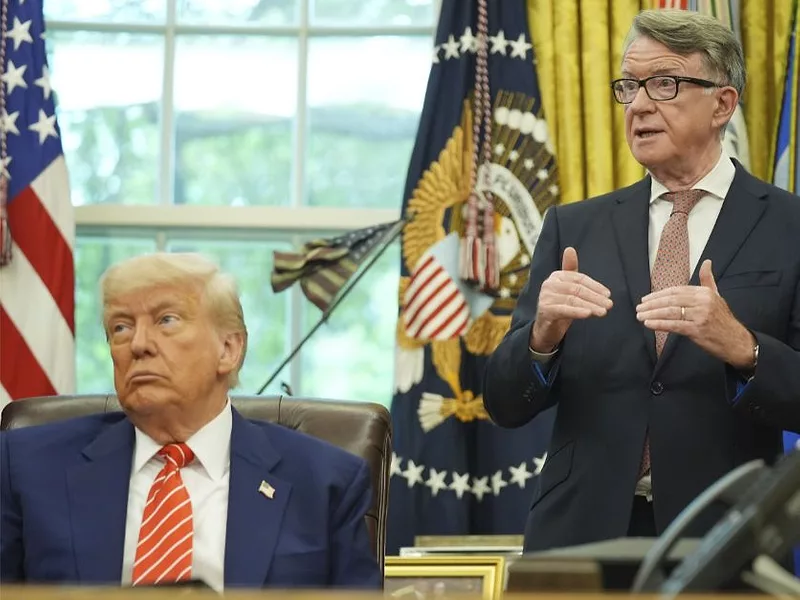
 Rep. Adrian Smith (Agri-Pulse photo)
Ways and Means Chair Jason Smith, R-Mo., told Agri-Pulse that “everything is on the table” when it comes to codifying aspects of Trump’s trade agenda.
Following the passage of the One Big Beautiful Bill Act this past summer, Smith said he wanted to turn his attention to trade legislation. Last week, the House passed legislation to reauthorize two expired trade preference programs, including one focused on sub-Saharan Africa.
“We're all very interested in codifying trade policy,” Smith said.
Congress wants a say
There are plenty of lawmakers in both parties that would welcome a vote on President Donald Trump’s trade deals – and plenty who believe Congress has to approve the deals. But voting on the deals is one thing, codifying them into law is another.
Congress has to sign off on traditional free trade agreements, which provide broad trade barrier reductions across industries. Historically, the president has gone to Congress before negotiations to request trade promotion authority, or TPA, which sets the U.S. negotiating objectives and priorities, and consultation and notification requirements. It also limits lawmakers to an up or down vote on the deal once negotiations are completed.
It’s easy to be “in the know” about what’s happening in Washington, D.C. Sign up for a FREE month of Agri-Pulse news! Simply click here
Trump’s deals, however, are not free trade agreements. Accordingly, the administration has not sought a TPA and has instead negotiated the deals as executive agreements.
Nonetheless, there are many on Capitol Hill who believe the president should still take the finished deals to Congress for a vote.
“Ultimately, trade deals are supposed to go through Congress,” said Rep. David Schweikert, R-Ariz. “There’s a reason we have a trade subcommittee.”
Rep. Darin LaHood, R-Ill., also told Agri-Pulse that having Congress more involved in trade negotiations “as a co-equal” branch of government would be “extremely beneficial.”
“That’s our responsibility and that’s our authority,” Rep. Jimmy Panetta, D-Calif., said. Panetta added that he wants to go over the deals “with a fine-tooth comb” to ensure they “continue to support free trade.”
Schweikert, Panetta and LaHood all sit on the Ways and Means Committee.
Tariffs in the way?
During Trump’s first term, his then-U.S. trade representative worked closely with both Republicans and Democrats in Congress while negotiating what became the U.S.-Mexico-Canada deal – including with Katherine Tai, who was chief trade counsel for Ways and Means Committee Democrats and went on to serve as USTR under President Joe Biden.
Democrats pushed for stronger labor protections and were closely involved in crafting the USMCA’s rapid response mechanism that allows the U.S. to investigate labor abuses at individual Mexican facilities and, if necessary, suspend their access to the agreement.
The deal also included an environmental chapter with protections and efforts to curb illegal trafficking in fish and timber.
A Democratic member of the Ways and Means trade subcommittee, Virginia Rep. Don Beyer, said he would struggle to support any deal that does not have similar labor and environmental protections.
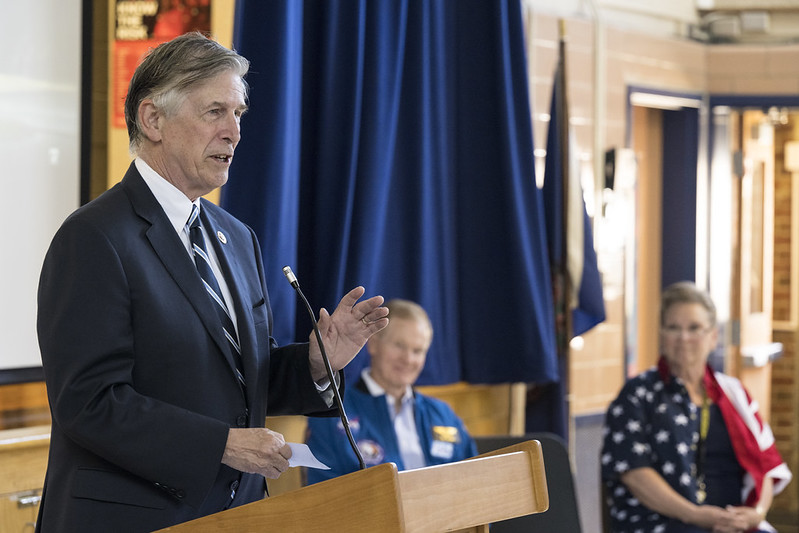 Rep. Don Beyer (NASA photo)
 “When we did that in USMCA we proclaimed, ‘here are the new gold standards,’” Beyer told Agri-Pulse. “Why not include those?”
But a far greater challenge for getting a Trump trade deal through Congress could come from how they handle new tariffs. If codifying the deals means codifying some of the reciprocal tariffs lawmakers may be less inclined to back them in a vote.
“The whole point of the trade agreements is to reduce barriers,” Beyer said. In the case of Switzerland, he said, “I'd hate to have to vote for a 15% deal.”
The Malaysia and Cambodia deal texts both include language stating that the U.S. shall apply a “reciprocal tariff rate.”
It’s not only Democrats that could balk at voting for deals that include higher tariff rates than when Trump took office. GOP lawmakers have been reluctant to endorse tariffs when they’ve been put to a vote.
Several Republicans joined with Senate Democrats last year in voting to overturn Trump’s tariffs on Canada and Brazil. The House has so far blocked efforts to force a floor vote on the administration’s duties, but that could soon change.
A freeze on tariff votes in the House expires at the end of the month. Several Republicans, including Rep. Don Bacon, R-Neb., took some cajoling when House leadership extended the freeze in September, and have only ratcheted up their opposition to tariffs since. Just last weekend, Bacon amplified social media posts showing American consumers, not foreign producers, have borne the brunt of tariff costs.
Adrian Smith, however, isn’t certain whether the inclusion of tariff rates in the deals would be an insurmountable barrier for Congress codifying them.
“These are conversations that we want to have,” he said. “There's always a lot a lot of discussions to be had, but I think that ultimately engagement can be very important.”

