
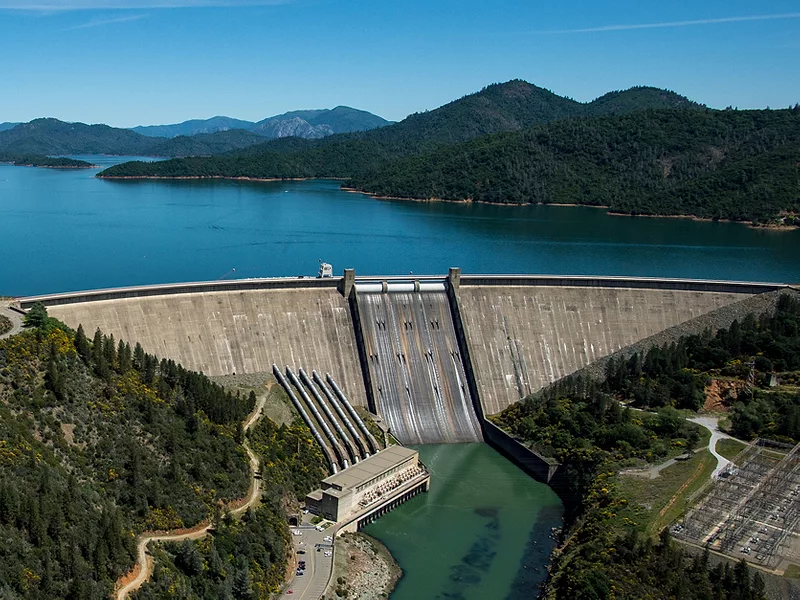
- Updated permits give the Central Valley Project and State Water Project more flexibility to move water during storms.
- Early winter operations moved additional runoff south of the Delta without recorded Delta smelt take.
- Growers cite proof of balance, but environmental groups remain skeptical.
Updated operating permits for California’s main water delivery systems are already producing measurable water supply gains during early winter storms, offering supporters new evidence that more flexible, real-time management can improve water reliability for farms and cities while maintaining protections for endangered fish.
State and federal water managers say recent changes to how the State Water Project and Central Valley Project operate in the Sacramento-San Joaquin Delta allow them to capture additional storm runoff during narrow hydrologic windows without increasing harm to sensitive species such as Delta smelt and migrating salmon.
The early results are fueling renewed debate over long-standing export restrictions in the Delta, with agricultural water users arguing the updated permits demonstrate that water supply improvements and environmental protections are not mutually exclusive.
 Allison Febbo (Westlands Water District photo)
Storm flexibility yields additional supplies
The most prominent test of the new approach came during California’s “first flush” period, when the first major storms of the water year send high flows through rivers and the Delta. These events can create short windows when additional pumping is possible if fish risk is low, but older permit frameworks often limited exports based on fixed seasonal rules.
According to a joint statement from the State Water Contractors and Westlands Water District, updated operating permits allowed managers to adjust pumping on a storm-by-storm basis between Dec. 25 and Jan. 7 using real-time monitoring of flows, turbidity and fish presence.
“Using real-time monitoring, the Central Valley Project and State Water Project reduced pumping when risks were present, then safely increased pumping when conditions allowed,” said Allison Febbo, general manager of Westlands Water District. “As a result of the management flexibility under the new permits, during that two-week period, approximately 75,000 acre-feet of additional water moved south of the Delta with no Delta smelt taken.”
Water agencies say that volume is significant because winter storm flows often represent the best opportunity to refill reservoirs and improve future allocations, particularly as climate change compresses runoff into fewer, more intense events.
What changed in the permits
The water supply gains stem from both federal and state updates to long-term operations.
At the federal level, the Bureau of Reclamation finalized an updated operating framework for the CVP in December known as Action 5, following a new record of decision on long-term operations. Reclamation said the changes are intended to maximize water deliveries while remaining consistent with federal endangered species protections.
Under the updated plan, Reclamation estimates the CVP could increase annual deliveries by 130,000 to 180,000 acre-feet, depending on hydrologic conditions. The State Water Project could see an additional 120,000 to 220,000 acre-feet if California adopts parallel operational changes.
Reclamation emphasized the updated operations fall within the effects analyzed in the most recent biological opinions issued by the National Marine Fisheries Service and the U.S. Fish and Wildlife Service.
At the state level, the California Department of Water Resources secured an amendment to the SWP’s incidental take permit from the California Department of Fish and Wildlife in December. The amendment allows more flexibility in how and when fish protection actions are implemented, relying more heavily on current conditions rather than calendar-based triggers.
Interested in more news on California agriculture, labor, water and rural issues? Sign up for a four-week free trial to Agri-Pulse West. You’ll receive our content - absolutely free - during the trial period.
DWR said the changes reflect decades of new scientific understanding, improved fish monitoring, and enhanced modeling tools that were not available when earlier permits were issued.
Supporters of the updated permits say the biggest shift is not simply higher export limits, but a move toward adaptive management that can rapidly respond to changing conditions in the Delta.
During first flush events, high turbidity can alter fish behavior and migration patterns. Under the updated approach, export pumping can be reduced during periods of elevated risk and increased when monitoring indicates fish are unlikely to be affected.
DWR has described first flush as “a short but important period” for Delta ecology and operations, noting that river conditions can change rapidly as storms move through California. The department says the amended permit allows managers to better match operations to those conditions while maintaining required safeguards.
Water contractors argue the older framework often prevented that kind of flexibility, forcing pumps to remain constrained even during periods when fish presence was low.
“The adaptive management approaches provided in the most recent water operation permits build upon decades of scientific research, strengthen drought preparedness, support groundwater sustainability, protect local jobs, and improve water availability for millions of Californians while maintaining strong environmental protections,” said Jennifer Pierre, general manager of the State Water Contractors.
 Jennifer Pierre (State Water Contractors photo)
Implications for agriculture
The impacts extend well beyond a single storm sequence.
Capturing additional winter runoff can improve reservoir storage, increase allocation forecasts and reduce reliance on groundwater pumping later in the season. That is especially important as growers face tighter restrictions under the Sustainable Groundwater Management Act.
Irrigation districts often point out to policymakers that even modest increases in captured supplies can have outsized impacts during dry years by supporting permanent crops, stabilizing farm employment and reducing pressure on already-stressed aquifers.
The updated permits also align with broader efforts to modernize California’s water system in response to climate volatility, which is producing sharper swings between floods and droughts.
Ongoing limits and unresolved tensions
Despite the early gains, water agencies say the updated permits do not eliminate all constraints.
In a January example cited by contractors, DWR released large volumes of water from Lake Oroville to maintain flood control space but was unable to move that water south of the Delta under existing rules, even as flows passed through the estuary to the ocean.
Contractors argue that scenario highlights remaining opportunities to better coordinate flood operations and water supply capture while maintaining fish protections.
Environmental advocates remain skeptical of claims that increased pumping can occur without ecological consequences. Conservation groups like Restore the Delta have long argued that higher exports can worsen conditions for native fish, particularly during dry or warm periods, and that the Delta’s ecological decline requires broader habitat and flow improvements beyond operational tweaks.
Those concerns resurfaced following Reclamation’s December decision, with critics warning the federal changes could undermine salmon recovery efforts and shift risk onto already fragile species.
Another unresolved issue is how state and federal regulatory frameworks will continue to align.
Reclamation’s updated operations are subject to California adopting parallel changes, and the State Water Resources Control Board retains authority over water quality and water rights in the Delta. That layered oversight means actual operations will continue to depend on coordination among multiple agencies.
For now, early storm-season results are providing water users with fresh data to support their case that adaptive management can deliver real benefits. The coming months will test whether those benefits can be sustained across a wider range of hydrologic conditions.

