

|
The Senate Agriculture Committee could see decidedly different Democratic leadership next year if Sen. Amy Klobuchar is elected governor of Minnesota: A vegan from New Jersey who has consistently criticized the U.S. ag and food system as “broken" is in line to replace her as the panel's top Democrat.
Booker could be the committee's ranking member, if Republicans retain control of the Senate, or chairman, in the less likely event Democrats take over the chamber.
He would become the first senator from the Northeast to get that spot in nearly 30 years. Former Sen. Patrick Leahy led the committee from 1977-1985 and was the ranking member from 1995 to 1997.
Since coming to the Senate in 2013, Booker has made food and ag issues a priority, often in a way that has not endeared him to the production agriculture community. He has introduced legislation to ban certain pesticides, phase out the use of large concentrated animal feeding operations and add oversight to the administration of check-off programs. He’s also introduced bills to examine and prevent corporate consolidation in the agriculture sector.
He has focused on food and nutrition issues, fighting alongside other Democrats to continue funding the Supplemental Nutrition Assistance Program during the government shutdown in the fall and introducing legislation to tackle obesity.
Booker: 'Excited and prvilieged' to move up the ladder
Booker told Agri-Pulse last month, after reports surfaced on Klobuchar's potential gubernatorial run: "I would be excited and privileged to be the chair of one of the most important committees to Americans and American farmers and the American food system," he said. "It's a vital committee."
Sen. John Boozman, R-Ark., chairman of the Agriculture Committee, told Agri-Pulse last week that “Cory and I really worked hard on this crypto thing, and we have known each other for many years. We’d certainly look forward to working with him if Amy becomes the next governor of Minnesota.”
To his supporters, Booker is a natural choice to become ranking member. “No member of the Senate has introduced more bills that have been referred to the Agriculture Committee in recent years,” said Scott Faber, senior vice president of government affairs at the Environmental Working Group.
Those efforts, however, have on the whole not succeeded. According to GovTrack.us, Booker introduced the third-most bills in the last Congress (Jan. 3, 2023-Jan. 3, 2025). Yet he “introduced zero bills that became law, including via incorporation into other measures, in the 118th Congress,” says GovTrack, which monitors Congress and the White House.
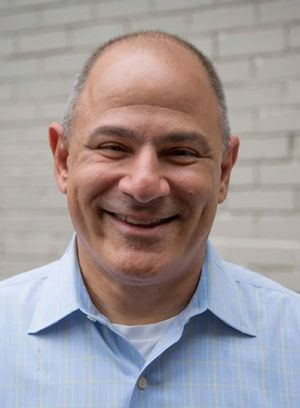 Scott Faber (EWG photo)“It's unfair to judge any legislator given our failure to pass a farm bill since 2018,” Faber said. “Having said that, Senator Booker has been incredibly successful at bringing attention to the failure of our farm and food policies to support most farmers, to make sure that folks have enough to eat, to make sure that our food is healthy, and to make sure that our food is produced in ways that reflect our shared values.”
Faber also pointed to Booker’s ability to reach across the aisle. “Many of those bills have been bipartisan,” he said. “He's co-sponsored legislation with Senator [John] Thune, with Senator [Chuck] Grassley, with Senator [Mike] Lee, with Senator [Shelly Moore] Capito, [and] worked on the digital commodities issues with Senator Boozman.
Faber added that Booker has worked with Boozman on international food aid programs. “He's focused, first and foremost on making sure our neighbors have enough to eat.”
No one, Faber said, has done more in recent years, “perhaps with the exception of [former] Senator [Debbie] Stabenow, to shape how we think about food and farm policies than Senator Booker.”
Stabenow, D-Mich., chaired the committee from 2011 to 2015 and again from 2021-2025. In between, she was the ranking member.
Philip Kahn-Pauli, director of legislative affairs at the Center for Science in the Public Interest, said if Klobuchar exits the Senate, Booker “will be ideally situated to collaborate across the aisle on legislation that will improve access to safe, healthy, and nutritious food for all.”
In a statement, Kahn-Pauli pointed to Booker’s focus on closing the Generally Recognized as Safe (GRAS) loophole that allows manufacturers to self-certify their food ingredients. “He has been talking about legislation to close the GRAS loophole longer than [Make America Healthy Again] itself has existed as a movement.”
Booker “has a clear vision of how interconnected issues in the food system are with everything from social inequality in rural and urban communities to American agriculture's critical implications for our nation's foreign policy,” Kahn-Pauli said. “He has consistently championed legislation that would improve nutrition security for millions of American families as well as working tireless to keep harmful toxins out of school meals.”
Checkoffs have been a focal point
Marty Irby, president & CEO of Capitol South LLC and a longtime lobbyist on animal welfare issues, also speaks highly of Booker, in particular his introduction of legislation with Utah’s Lee, a Republican, to require more oversight of check-off programs, which impose fees on commodities to fund marketing efforts.
“I don't know if this will shake out at the end of the day on the check-off front,” Irby said of the prospects for that legislation, known as the OFF Act. “It's died off a little bit.” But he expects Booker to “continue to push for that in the farm bill on the Senate side.”
Irby sees Booker working with Boozman on issues they both care about. “Probably one of the areas of commonality is going to be related to workers,” he says. “I know they've both been very attentive to the workers at whether it be Tyson or JBS or Smithfield, and the conditions that they're working in.”
Another area of focus could be helping small farmers. “New Jersey is not really a huge ag state, but Arkansas is, and you've got a lot of those guys who are doing farm-to-table work,” he says. The two senators could “coalesce around some common ground with the farmers who are farm-to-table or who are independent farmers, not necessarily contract growers.”
 Allen Carter (LinkedIn photo)
But Booker, particularly through legislation targeting specific pesticides, is not always on the same side as the growers in his own state. “I know it's always an uphill battle educating our elected officials on what it takes, what our toolbox consists of, to grow quality products for folks that rely on our food and fiber,” said Allen Carter, president of the New Jersey Farm Bureau.
Booker has introduced legislation to prohibit the use of specific chemicals such as the herbicide paraquat, and classes of insecticides including organophosphates and neonicotinoids.
“We want to show the importance of these items that are in our toolboxes to be able to produce the amount of food that's going to be needed over the next 15 to 20 years,” Carter said, adding, “farmers follow the [pesticide] label. They use things properly. These things cost money. We don't use them freely. We invest in them, and to take some of those away would require a lot more acreage to grow our food.”
In addition, Carter said, “I know we need to work with him on urban ag. I know he's an advocate for urban ag, and we have some state legislation that's eventually going to be working its way through [the state legislature] on urban ag issues.”
Carter added, “It's great for New Jersey that he's on the Ag Committee” because the state’s farmers produce $1.6 -$1.7 billion in ag revenue annually.
Not surprisingly, checkoffs dispute Booker’s arguments about those programs. Wayne Watkinson, general counsel to 17 of those programs, tells Agri-Pulse there’s “plenty of transparency.”
Speaking from CattleCon in Nashville, Tennessee, Watkinson said, “I just sat through an audit budget committee of the Cattlemen’s Beef Board and heard their audit. … Their audit report and the manager review process that USDA goes through, there's plenty of transparency.”
Watkinson says the checkoffs are essential for farmers and ranchers to promote their products, pointing to analyses showing rates of return on investment for the money invested in the programs.
An analysis performed for the beef checkoff in 2024 showed a $13.41 return on investment. “In other words, every national Beef Checkoff program dollar invested in demand-driving activities for the most recent five-year period, 2019-2023, had a positive effect on beef demand, resulting in a total industry-wide financial impact of $13.41 for beef producers and importers,” that analysis concluded.

