
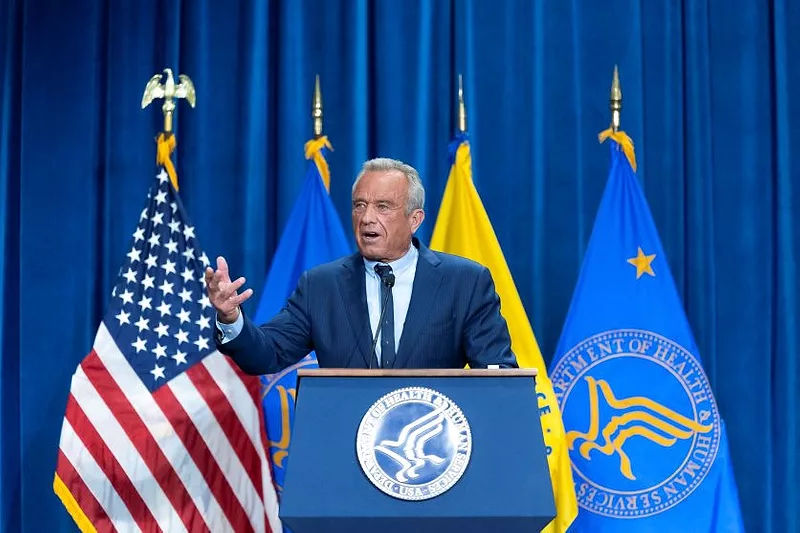
Health and Human Services Secretary Robert F. Kennedy Jr. is headlining the cattle industry’s annual convention, CattleCon, today in Nashville, Tennessee.
His appearance comes as the new food pyramid and messaging around the new dietary guidelines are promoting consumption of protein, and meat in particular. Agri-Pulse’s Lydia Johnson is reporting this week from CattleCon.
Kennedy made a stop at the Tennessee Capitol Wednesday as part of his “Take Back Your Health” tour.
New ag coalition calls for USMCA renewal
The Agricultural Coalition for USMCA has formed to push for renewal of the U.S.-Mexico-Canada trade agreement.
“USMCA is one of President Trump’s signature achievements and one that has significantly propelled the ag economy,” says Bryan Goodman, a spokesperson for the new group. “We are not saying it’s perfect, as some changes are warranted, but we are saying it is of paramount importance to farmers that all three countries renew the agreement.”
Why it matters: Under USMCA, the leaders of the U.S., Mexico and Canada must begin a formal review by July to determine whether to renew the agreement. If renewed, the agreement would remain in effect for an additional 16 years, with another review scheduled in 2032. If the countries fail to reach an agreement and move to terminate, USMCA will expire in 2036.
Thompson confirms dates for farm bill action
The House Agriculture Committee plans to start debating its new farm bill on Monday, Feb. 23. Committee Chairman Glenn “GT” Thompson, R-Pa., tells Agri-Pulse he’s set aside the following two dates, Feb. 24-25, to finish the legislation.
He confirmed that the legislation will include provisions to permanently house the Food for Peace program at USDA and to preempt state regulations of pesticides and California’s Proposition 12 standards for animal housing.
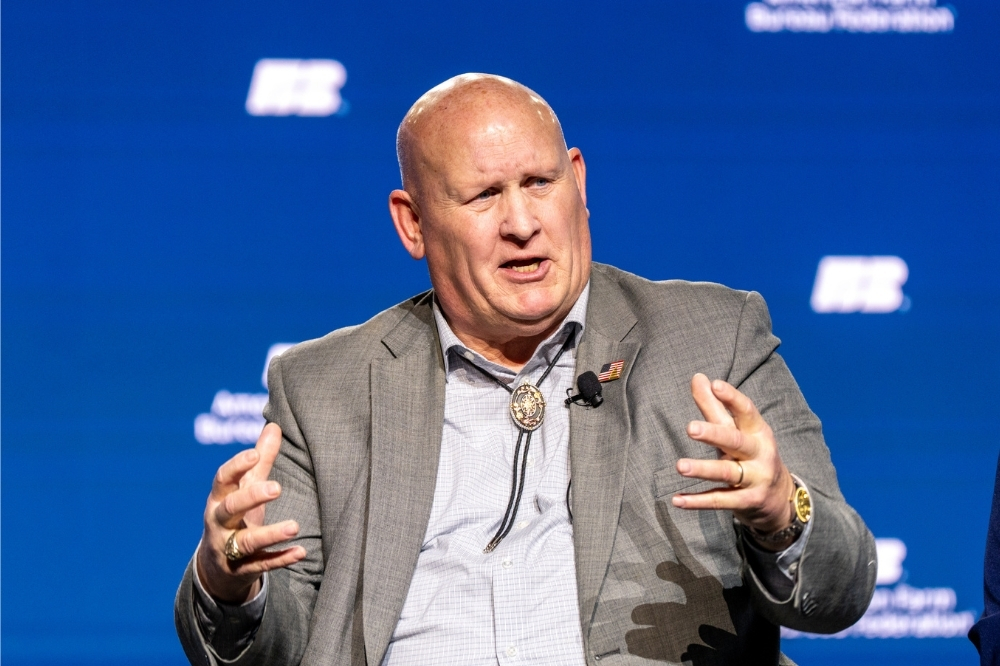 House Ag Committee Chairman Rep. Glenn "GT" Thompson, R-Pa. (AFBF photo)
Foreign ag labor bill coming, too
Thompson says his committee will put out a draft ag labor bill for discussion in roughly two to four weeks. The measure stems from a bipartisan task force, put together by Thompson, that in 2024 made 15 policy recommendations for reforming the H-2A program, which enables U.S. employers to hire foreign nationals for seasonal agricultural work.
Thompson said at the annual Washington meeting of the National Association of State Departments of Agriculture that he’s hopeful the legislation “breaks this whole foreign worker gridlock.”
It's not about citizenship,” Thompson said. “This is about reliable workforce. This is about food security.”
Keep in mind: H-2A is under the purview of the Judiciary Committee.
Farm bill and immigration
Sen. Amy Klobuchar, the top Democrat on the Senate Agriculture Committee, says she supports immigration reform legislation, including improving the H2-A program. She also told NASDA members on Wednesday she wants a robust, bipartisan farm bill that deals with relevant immigration issues.
Klobuchar says a limited farm bill can still deliver big for producers with additional financial aid for struggling producers, year-round availability of higher ethanol fuel blends (E-15), updates of USDA loan limits and expansion of mental health care access for farmers and rural areas.
“There will be a moment where we will either suddenly start working on immigration reform, shocking everyone, or there may be a moment when we do move forward with a bipartisan farm bill, and there won't be a lot of time to do it,” she told the audience of state ag and food officials from across the U.S. “When those moments happen … we need you speaking up.”
Tariffs and the high court
Klobuchar expressed concern about the time the Supreme Court is taking to rule on the legality of President Donald Trump’s emergency tariffs.
“The longer this goes on where we're not getting a decision, given the enormity of that decision, if it would be retroactive, or if it's not retroactive, I keep getting concerned about what's really going on here because I thought they'd want to make this decision right away if they're going to order these tariffs illegal under the law, as I think they are,” said Klobuchar, who attended oral arguments for the case in November.
State AGs seek EPA reconsideration of formeldahyde regs
Nineteen state attorneys general want the EPA to reconsider Biden-era regulations on domestic production of formaldehyde, citing the chemical’s importance to the production of eggs and other agricultural products.
In a letter, the attorneys general say “overly strict rules” on domestic formaldehyde made during the previous administration limit formaldehyde exposure, in some cases, “to levels lower than what is found naturally.” They say requirements should align more with formaldehyde conclusions used by European Union, World Health Organization and Health Canada.
"President Biden’s decision to in effect ban domestic formaldehyde risked higher prices for food, for housing, for industry—and risked pushing jobs abroad,” the letter says.
Take note: Formaldehyde is used as a disinfectant by egg, poultry and pork producers, and to reduce bacterial contamination of animal feed.
Reporter’s Notebook: Restrictions challenge Brazil’s new soybean farmers
Agri-Pulse Trade Editor Oliver Ward is traveling in Brazil this week and provides this report.
Specific indigenous ethnic groups in the Brazil state of Mato Grosso got the go ahead from Brazil’s Institute of Environment and Renewable Natural Resources (IBAMA) last year to engage in mechanized soybean production. The groups had been farming on their land in a legal grey area for over a decade.
But the authorization came with requirements that the land must have been previously cleared, cannot be leased to third parties or planted with genetically modified seeds. The Paresi tribe says the GMO restrictions are hindering its ability to compete, according to Dejanira Kezo, a Paresi leader, and her son Airton Zomizokamae.
Non-GMO seeds require additional crop protection sprays, demand more time and deliver lower yields. When more than 97% of Brazilian farmers are using GMO seeds, the Paresis say they cannot turn a profit and compete with their neighbors on price.
Take Note: Brazil’s soybean harvest is already underway, and their beans are currently cheaper in the Chinese market, in part, due to a lingering retaliatory tariff on U.S. exports.
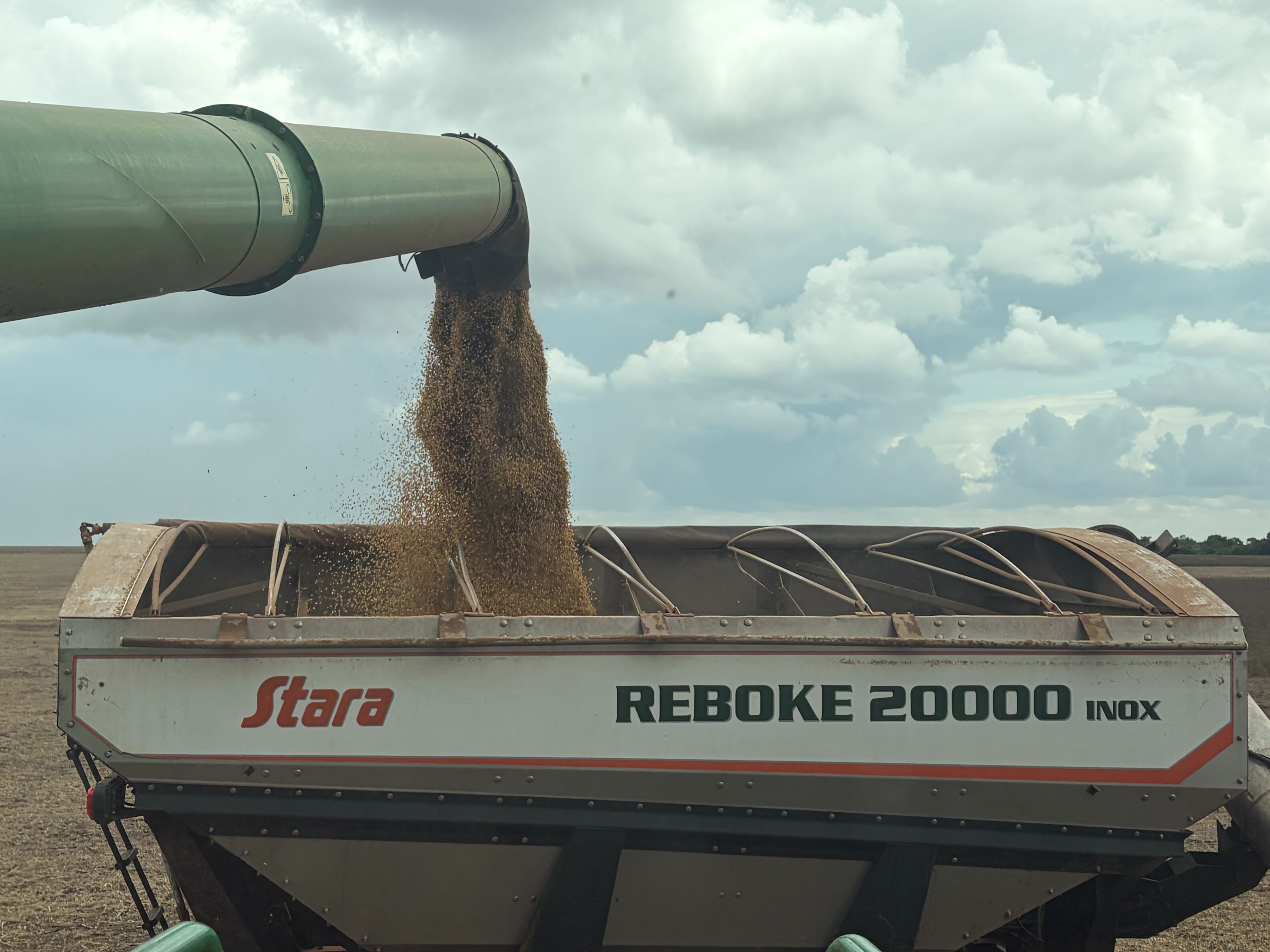 Mato Grosso soybean harvest (Agri-Pulse photo)
U.S. beef, USDA eye trade opportunities with Indonesia
USDA Undersecretary for Trade and Foreign Agricultural Affairs Luke Lindberg is leading a trade mission to Indonesia this week focused on expanding market access and boosting U.S. agricultural exports.
The U.S.-Indonesia trade pact negotiated this past summer eliminates tariffs on nearly all U.S. agricultural exports and reduces longstanding non‑tariff barriers, issues critical to beef access in the country. USDA estimates the agreement will unlock more than $1.6 billion in U.S. agricultural exports.
“In Indonesia I think we've worked through a lot of that low hanging fruit,” U.S. Meat Export Federation president and CEO Dan Halstrom said on the sidelines of CattleCon. “So, you combine that with this announcement of a framework agreement, I think Indonesia for beef could have some big payoffs.”
Halstrom said those payoffs could exceed $200 million annually for U.S. beef if all non-tariff trade barriers with the world’s fourth most populous nation are resolved.
Corteva says future is brighter with Bayer agreement
Corteva Agriscience plans to benefit from an agreement with Bayer that ended litigation over herbicide traits, CEO Chuck Magro said on an investor call Wednesday.
Magro said Corteva was “pleased to have reached an agreement which solidifies the use of existing technology rights in our own corn, canola and cotton product portfolios, including our own germplasm,” which will help the company reach “royalty neutrality” this year. The companies agreed to dismiss lawsuits against one another two weeks ago.
The agreement also will allow Corteva to enter the cotton licensing market in the U.S., a space in which the company currently does not participate.
Final Word
“China has had some imports from the U.S. delayed, so we expected that. At some moment, China was going to get more American soybeans. We expected that. I believe this could have a positive impact,” Lucas Beber, president of Aprosoja-MT, which represents soybean and corn growers in Mato Grosso. Beber was asked about President Donald Trump's post Wednesday that China is considering purchasing 8 million more tons of soybeans from "this season" on top of its earlier 12-million-ton commitment.
Beber, who spoke through an interpreter, noted that the extra purchasing could raise U.S. soybean prices and extend Brazil’s price discount.
Oliver Ward, Noah Wicks, Steve Davies, Philip Brasher, Lydia Johnson, Bob Ellison and Kim Chipman contributed to today’s Daybreak

.webp?t=1762183428)


