

- FAIR Plan now dominates coverage in some regions as insurers pull back.
- Ag groups say rural policies aren’t returning to the private market.
- Rising losses and pricing tensions complicate insurance recovery.
Lawmakers, insurers and agricultural associations are warning the California FAIR Plan is increasingly serving as a long-term insurance solution for rural property owners and farms as the traditional market continues to contract.
The state is grappling with the expanding footprint of its residual insurance market and the challenges of stabilizing coverage while moving policyholders back into the voluntary market. Created in 1968 as an “insurer of last resort,” the FAIR Plan now covers nearly 6% of the state’s property insurance market and has grown sharply in recent years as nonrenewals have increased.
At an oversight hearing last week, Assembly Insurance Committee Chair Lisa Calderon noted the program’s shifting role, saying she now views the FAIR Plan as California’s “safety net” rather than simply a last resort, as more constituents are being pushed into it after losing traditional coverage.
Exposure and growth continue to climb
Victoria Roach, president of the FAIR Plan, told lawmakers the association has continued to grow as the admitted market reduces coverage in wildfire-exposed areas.
The FAIR Plan’s exposure has reached about $724 billion and policies in force have climbed to roughly 668,000 — a 230% increase in exposure since 2022, according to a committee analysis.
Roach said the plan’s growth is closely tied to nonrenewals.
“When there’s nonrenewals going on in the admitted market, we see our growth escalate, because we start picking up a lot of those policies,” she said.
The FAIR Plan does not manage its geographic exposure in the same way private carriers do.
“We take people regardless of exposure,” she said, adding that in some regions the plan now holds more than 50% of the market.
The FAIR Plan paid roughly $3.5 billion in claims from wildfires last year, handling about 5,400 claims tied to the Pacific Palisades and Eaton fires, according to committee background documents.
 Peter Ansel, California Farm Bureau (CAFB)
Rural and agricultural policies stuck in the system
For agricultural groups, the hearing highlighted a persistent challenge: Many farm properties are entering the FAIR Plan but not returning to private coverage.
Peter Ansel, a senior policy advocate at the California Farm Bureau, told lawmakers that producers have faced years of nonrenewals and remain heavily represented in the residual market.
“We have a lot of members that have been at the forefront of the nonrenewal experience going back years,” said Ansel.
He noted that the farm bureau supported legislation to create a commercial clearinghouse intended to help move businesses, including farms, back into the admitted market. But he said the results have been limited.
“Unfortunately, we still have a large number of agricultural policies in the FAIR Plan, and we’re not seeing them exit through the commercial clearinghouse or the residential side,” he said.
Ansel described the situation as evidence of broader access problems in rural regions.
“We still have a broken market in terms of access being written, policies being written in those rural communities,” he added, arguing that the risk profile of many farm properties is not reflected accurately in underwriting. “We have a lot of members — due to the nature of agriculture and the way that they maintain their properties — who have a naturally low wildfire propagation risk that doesn’t come out in their ability to exit the FAIR Plan.”
Commercial FAIR Plan policies can cover farms, businesses and homeowners’ associations, and lawmakers expanded those options in recent years to address coverage gaps.
Roach said the clearinghouse system, designed to connect FAIR Plan customers with insurers willing to write new policies, remains a central tool but faces structural barriers.
“The big one for us is the clearinghouse,” she said. “And if we can make it easier for others to depopulate us.”
But she acknowledged the process depends heavily on brokers and insurers participating, which can limit transitions out of the plan.
State policy over the past several years has focused on encouraging that shift. The state’s Sustainable Insurance Strategy includes provisions aimed at transitioning FAIR Plan policyholders back into the admitted market and reducing its concentration in high-risk areas.
Industry warnings on rates and competition
The insurance industry cautioned that one obstacle to depopulation is the FAIR Plan rates have not always fully reflected risk, making it difficult for private carriers to compete.
Mark Sektnan, vice president at the American Property Casualty Insurance Association, said the inability to include certain costs in rates in the past contributed to the plan’s competitiveness.
“You cannot depopulate the FAIR Plan when somebody can go to the FAIR Plan policy, maintain the FAIR Plan policy for 30, 40 years, because it is cheaper,” he said.
Allison Adey, a legislative advocate at the Personal Insurance Federation of California, echoed those concerns, telling lawmakers that rate adequacy is critical to stabilizing the market and allowing the FAIR Plan’s role to shrink.
“We remain incredibly concerned with the competition between the FAIR Plan and the admitted market,” she said, attributing it in part to inadequate rate approvals in the past.
Other sectors described similar challenges. Dan Dunmoyer, president and CEO of the California Building Industry Association, said insurance costs have surged for housing developments and affordable housing projects.
“Our legally defined affordable housing has capped increases in rents. … But the cost of insurance has gone up 500%. Our affordable housing builders are being crushed by the current marketplace,” he said, noting that growth in the FAIR Plan is a warning sign that the broader insurance market is struggling. “When the FAIR Plan grows, as policymakers this should be a massive neon red flag. It means the regular market’s broken.”
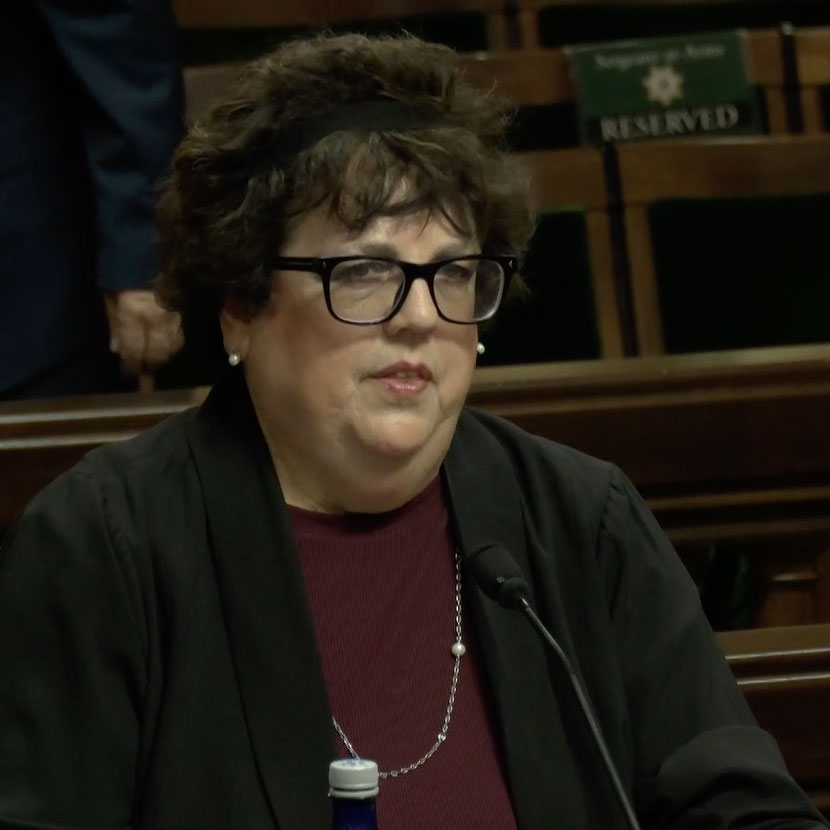 Victoria Roach, FAIR Plan (Assembly photo)
Recent developments driving the debate
The hearing came as the FAIR Plan sits at the center of a rapidly evolving policy and market response to California’s insurance crisis over the past year.
State officials have been trying to stabilize the system through a series of reforms. In 2024 Insurance Commissioner Ricardo Lara announced a FAIR Plan modernization agreement aimed at strengthening financial stability, expanding commercial coverage, and improving transparency and reporting requirements.
That effort grew more urgent after the private insurance market continued to contract. Wildfires and rising catastrophe risk have driven insurers to reduce exposure, contributing to an availability crisis and pushing more homeowners and businesses into the FAIR Plan. Lara’s Sustainable Insurance Strategy is intended to reverse that trend by modernizing rate tools and encouraging insurers to write more policies in higher-risk areas.
While the number of policies has skyrocketed, the plan’s financial pressures have spilled into the broader market. Following the LA wildfires, the plan sought a $1 billion assessment from insurers to cover claims, a cost that can ultimately be passed on to policyholders through surcharges.
The continued expansion could deepen rural reliance on the plan if insurers remain hesitant to return to wildfire-exposed areas.
The policy debate is still shifting. State lawmakers have introduced new bills to overhaul the FAIR Plan’s structure, improve customer service and increase transparency, according to state officials and news reports.
One proposal, backed by Calderon and Lara, would require the plan to offer coverage more comparable to traditional homeowners insurance rather than primarily fire-only policies.
Supporters of Assembly Bill 1680 say expanding coverage could help households and businesses that now must combine FAIR Plan policies with separate coverage. Critics warn the move could increase financial risk for the system and make it harder to shrink the plan over time.
Insurance trade groups have also argued that restoring rate adequacy is essential to moving policies back into the admitted market, warning that if FAIR Plan coverage remains cheaper than private insurance, depopulation efforts will stall.
The debate will continue to play out as lawmakers file new bills ahead of a deadline later this month and policy committees take up the proposals starting in March.

