

|
A fresh slate of bills filed last week in the California Capitol is setting the table for policy fights ahead, from boosting the minimum wage for farmworkers to enacting limits on fertilizer applications and banning “unsafe additives.”
While some are top priorities for lawmakers, many are spot bills to be fleshed out later, meaning details will shift quickly as committee hearings begin next month. Farm groups have already staked out some of their legislative asks, such as a tax credit on agricultural overtime and more support for winegrape growers.
Here are the top bills Agri-Pulse is watching this week and why they matter.
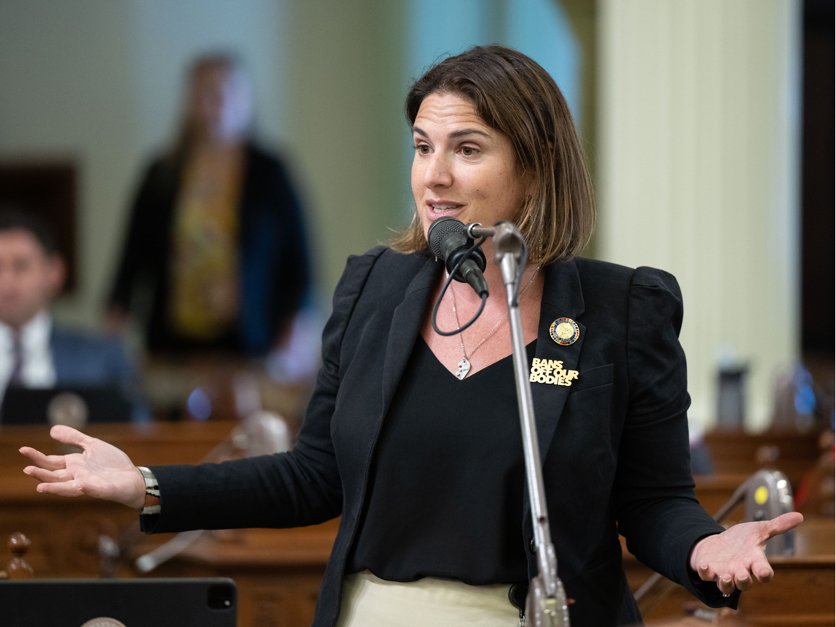 Asm. Rebecca Bauer-Kahan, D-Orinda (Office photo)
Nitrogen limits and the next chapter with Ag Order 4.0
With Assembly Bill 2447, Asm. Rebecca Bauer-Kahan, D-Orinda, is pressing the State Water Resources Control Board and regional water quality control boards to establish enforceable nitrogen discharge limits on fertilizer applications.
Bauer-Kahan has teamed up with the Natural Resources Defense Council, saying in a statement accompanying the bill — dubbed the Nitrogen Pollution Reduction Act — that she will “be leading the charge to ensure that California’s water is clean and safe.” She added that “for too long, the communities bearing the heaviest burden have been low-income families who can't safely drink the water from their own taps.”
Arohi Sharma, a senior policy analyst at NRDC, claimed that “other countries have shown that limits on nitrogen pollution work. Clean water and sustainable agriculture are not competing priorities. Californians deserve both.”
For agriculture, AB 2447 circumvents ongoing regulatory efforts to determine if setting nitrogen caps would be scientifically feasible. In 2023 the state water board determined the Central Coast regional board could not enforce such provisions in its Ag Order 4.0. Farm groups have also challenged the scientific basis of the order in court.
In the past year Bauer-Kahan did not hesitate to battle with agriculture and water interests over aggressive water proposals.
Groundwater recharge reform
Asm. Cecilia Aguiar-Curry, D-Winters, has stepped into the complex policy arena of groundwater recharge with AB 2026, which seeks to increase storage and remove impediments to recharge, building on a series of executive actions from Gov. Gavin Newsom since the last drought.
Farmers and water districts are backing the measure. Jim Mayer, a Yolo County olive farmer active in groundwater management and flood control efforts, and Michael Saunders, chair of the Regional Water Authority, argue in a blog post for the Northern California Water Association that “after a decade of experience under the Sustainable Groundwater Management Act, it is clear we need legislation that makes recharge easier, faster, more affordable and more certain.” They describe it as a policy problem and not a hydrology problem.
Mayer and Saunders want to make it easier to capture flood flows, to upgrade temporary permits into longer-term pathways and to maintain protections for water rights and environmental flows.
Dairy methane and manure management
Asm. Damon Connolly, D-San Rafael, is hoping to scale up the Alternative Manure Management Program at the California Department of Food and Agriculture to capture more methane and further ensure the state meets its SB 1383 climate goals for 2030. AB 2100 proposes an interagency task force and improvements to the CDFA grant program.
“California dairy farmers are struggling to survive, let alone adopt new strategies to reduce methane emissions,” said Connolly in a statement. “This bill helps our local farmers to transition to sustainable practices like composting that can help reduce emissions and improve water quality.”
The bill has secured the endorsement of the California Climate & Agriculture Network, which has pressed lawmakers to prioritize AMMP spending over dairy digester grants.
“AMMP is an underutilized but proven tool that helps reduce methane emissions while delivering valuable co-benefits for dairies,” said CalCAN Associate Policy Director Colton Fagundes. “This bill strengthens the program and improves the state’s ability to achieve its climate goals.”
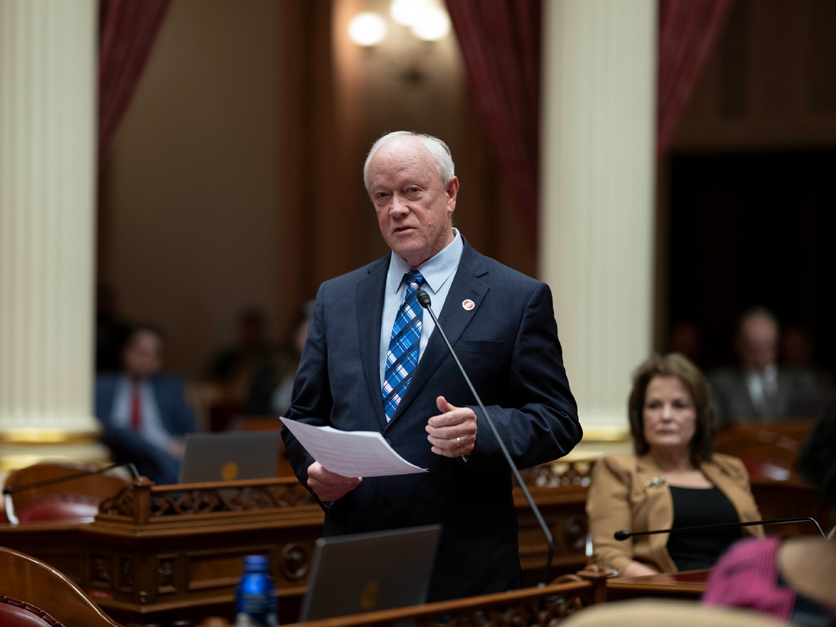 Sen. Jerry McNerney, D-Pleasanton (Office photo)
Delta water infrastructure
Sen. Jerry McNerney, D-Pleasanton, has brokered a rare water alliance, teaming up with Restore the Delta and the State Water Contractors on a bill aimed at shoring up California’s aging water backbone.
SB 872 would dedicate $300 million annually to levee repairs, subsidence response and other infrastructure upgrades in the Sacramento-San Joaquin River Delta and along key conveyance facilities tied to the State Water Project.
“Subsidence of water infrastructure is one of the biggest threats to Californians' water security,” said Jennifer Pierre, general manager of the State Water Contractors, in a statement. “Without funding assistance … the 27 million people who rely on the State Water Project would be burdened with the full cost of repairing our water delivery system, reducing water affordability and reliability for all Californians.”
Targeting ‘unsafe additives’
A new Assembly proposal would tighten oversight of food ingredients sold in California, adding disclosure requirements and targeting additives deemed unsafe.
AB 2034 by Asm. Dawn Addis, D-Morro Bay, would prohibit the manufacture, sale or distribution of foods containing certain additives identified as posing health risks, while also requiring clearer ingredient disclosures to consumers. The measure builds on recent legislative efforts to scrutinize food chemicals and increase transparency in labeling.
Supporters argue the bill is needed to address gaps in federal oversight and to give consumers more information about what is in their food. They contend that some additives allowed under federal law have raised safety concerns and warrant state action.
Industry groups are expected to raise concerns about a patchwork of state standards and potential compliance costs for manufacturers and retailers, particularly if California requirements diverge from federal rules.
Meanwhile, Assembly Minority Leader James Gallagher, R-Yuba City, is also looking to build on California’s momentum after it passed the nation’s first ban on ultraprocessed foods in school meals last year. Gallagher’s AB 2535 would ensure the state “promotes the inclusion of California-grown agricultural and whole food products in school meals.”
And Asm. Lori Wilson, D-Suisun City, has filed legislation to establish a California Healthy Food Procurement Fund aimed at expanding access to nutritious, California-grown foods in schools and other public institutions.
Broader landscape
Other bills drawing agricultural attention this week include:
- AB 2646 proposes a $19.75 per hour minimum wage for certain agricultural workers, building on a Central Coast push to tie farmworker wages with the cost of living.
- AB 2619 would require data centers to report water use, while SB 1168 would impose a surcharge on data centers that consume large amounts of electricity.
- AB 2627 would set aside $90 million for conservation easements from the 2024 climate bond.
- AB 2427 would create a 25% tax credit for farming investments, with more for low-emission equipment and wildfire hardening.
- SB 1419 would revise the definition of socially disadvantaged farmers and ranchers to remove language on racial, ethnic and gender prejudice to “instead mean farmers and ranchers who experiences barriers to agricultural viability due to economic or structural factors.”
- AB 2086 would limit the disclosure of personal information in pest control licensing.
- SB 899 would require wildfire smoke health assessments within the state’s resilience planning.
- AB 1176 would restrict businesses or governments from certain countries — including China — from owning California farmland.

