
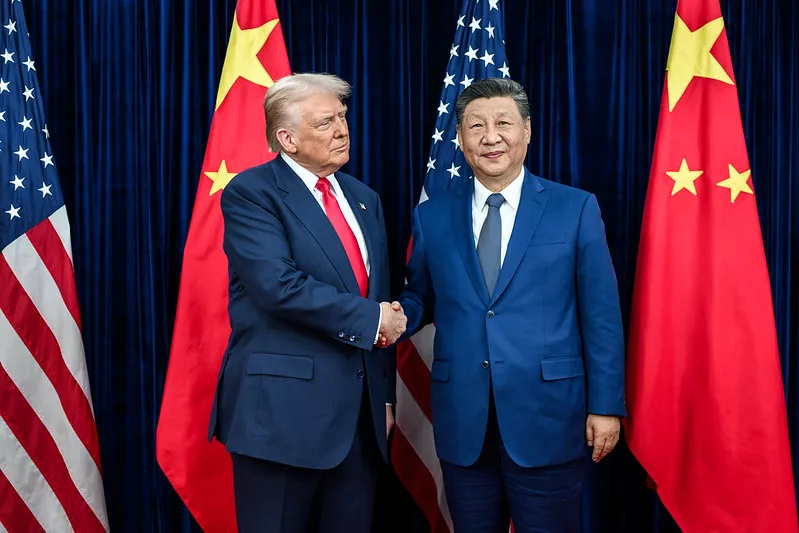
The Trump administration has asked Beijing to delay a planned meeting between President Donald Trump and Chinese President Xi Jinping slated for the end of the month.
“We’ve requested that we delay it a month or so,” Trump told reporters Monday. “Because of the war, I want to be here. I have to be here, I feel,” he added.
Tensions between the U.S. and China have escalated in recent weeks with the Trump administration announcing new trade investigations and China calling for an end to the Iran war.
Market reacts: Soybean prices in Chicago plummeted 70 cents on Monday, hitting the exchange down limit for the day. Futures for May delivery closed down 5.7% to $11.55 a bushel. Soy oil and soy meal futures also fell.
Arlan Suderman, chief commodities economist for StoneX Group, says a delayed summit between Trump and Xi could mean a delayed trade agreement.
"It's also notable that this week's negotiations are talking positive about a lot of other commodities, but there is little to no mention of the anticipated additional 8 million metric tons that President Trump indicated in early February that China might buy in the current marketing year," Suderman said. "Add to that a revision in Brazil's inspection guidelines that once again allow soybeans to more freely flow from Brazil to China, and the bears took control of the oilseed market."
Take note: The American Soybean Association urged Trump on Monday to push for additional U.S. soybean purchases and the removal of a 10% retaliatory tariff on U.S. exports.
Also: Following a two-day meeting between top U.S. trade officials and their Chinese counterparts that wrapped up on Monday, both sides cited constructive talks. Officials discussed creating a board of trade to help manage the bilateral trade relationship, according to U.S. officials and the Chinese embassy in Washington.
FAO report warns of Iran war impacts on global food security
A new analysis from the UN Food and Agriculture Organization says the war in Iran threatens global food security in more ways than just raising fertilizer and energy costs.
“Gulf economies host millions of migrant workers from South Asia, Southeast Asia, and Africa who send home billions of dollars in remittances each year,” the report from the chief economist office reads.
If these remittances are interrupted, it could significantly reduce household incomes in developing economies, just as food and energy prices are rising.
A sustained oil shock will also increase demand for biofuels, the report notes, which could take more commodities out of food markets and drive prices up.
Interested in more news on farm programs, trade and rural issues? Sign up for a four-week free trial to Agri-Pulse. You’ll receive our content - absolutely free - during the trial period.
“Overall, the Persian Gulf conflict highlights the deep interconnections between energy markets, fertilizer supply chains, and global agrifood systems,” the report says.
On fertilizer prices: A coalition of ag groups are pressing Mosaic and Simplot on their position on countervailing duties applied to phosphate fertilizer from Morocco and Russia. The duties are up for a five-year review and Nutrien, a major North American producer, is already signaling that it will not oppose eliminating the duties.
Rice industry to warn against caving to Indian demands
The U.S. rice industry will raise the alarm this morning at a Ways and Means trade subcommittee hearing over likely Indian negotiating positions at the forthcoming 14th World Trade Organization ministerial
In written testimony seen by Agri-Pulse, USA Rice’s Peter Bachmann will warn that India will likely hold discussions hostage to secure permanent exceptions from WTO rules for its support to the domestic rice industry.
“India has demonstrated they are willing to hold ministerials hostage on pet issues, and there is no reason to believe MC14 will be any different,” Bachmann writes in testimony submitted to the committee.
“India may prevent any critical breakthrough on WTO reform or other topics,” he adds. The WTO allows government purchases of commodities to bolster food security. But the U.S. and other rice industries have long accused the Indian government of allowing these stocks to end up on the global market.
“An American rice farmer isn’t competing against an Indian rice farmer – they’re competing against the Indian government,” Bachmann says.
The ministerial is set to kick off March 26 in Cameroon.
Take note: Agriculture talks are still at a deadlock, however, and have been for years. A draft ministerial statement calling for revitalized talks and new milestones this month faced opposition from the U.S. and others.
Fires burn through Nebraska rangeland
A series of fires in recent days have burned through more than 740,000 acres of land in central and western Nebraska, including rangeland used for grazing, and state officials say it will take additional time to get them under control.
“We think we’re in a very high-risk period,” Irv Portis, assistant director of the state’s Emergency Management Agency, said in a press briefing Monday. “Everybody’s aware of the weather forecast. I would anticipate this event will take several days to bring it to where we can control it and be comfortable handing it off to locals."
The largest fire has burned nearly 600,000 acres, which Nebraska Agriculture Secretary Sherry Vinton said represents a grazing resource for around 35,000 cows. Gov. Jim Pillen offered some optimism, however, noting that there were “lots of areas” where cows were moved and where farmsteads “saw very little hay being burned.”
Blustery weather delays USDA nominee vote
The threat of windblasts up to 80 mph and possible tornadoes in the Washington area on Monday prompted senators to knock off early on their first day back from a recess.
The Agriculture Committee postponed its business meeting, which was to feature a vote on the nomination of Glen Smith to be undersecretary of agriculture for rural development. Smith, a member of the Farm Credit Administration's board of directors who hails from Atlantic, Iowa, was nominated in early August.
Democrats seek to bolster food supply chains in new bill
Sen. Ben Ray Luján, D-N.M., and Rep. Nikki Budzinski, D-Ill., are introducing legislation to ensure farm, grocery and meatpacking workers are paid during major disasters.
The Grocery, Farm and Food Worker Stabilization Grant Program Act would create a permanent program, like USDA’s now-defunct 2021 Farm and Food Workers Relief effort that provided almost $680 million for pandemic-related expenses.
The United Food and Commercial Workers International Union backs the bill. UFCW, the largest U.S. private sector labor union, criticized the Trump administration last May for shutting down the pandemic-era program.
Final word
"It's the middle of spring calving, for God's sakes. It couldn't come at a worse time." — Nebraska Farmers Union President John Hansen on wildfires that have raged through Western and Central Nebraska over the past few days, burning an estimated 740,000 acres.
For more news, go to www.Agri-Pulse.com.
.webp?t=1762183428)


