
|
California lawmakers have reopened a high-stakes debate over how — and whether — to prioritize agriculture in cap-and-invest spending, after the state extended and rebranded its cap-and-trade program last year. The conversations have raised both strong evidence of success and deep divisions over both impacts and future direction.
The Senate Agriculture and Senate Environmental Quality committees held a joint hearing last week to examine how agricultural programs have used Greenhouse Gas Reduction Fund dollars and what role they should play as the state rethinks climate spending.
“Noticeably missing from the funding [in the reauthorization] was a focus on agriculture,” said Senate Agriculture Chair Anna Caballero, D-Merced.
She lauded the emission reductions but cautioned that the industry’s climate footprint is “pretty small” when considering that California is responsible for less than 1% of global emissions and agriculture is just 8% of that share.
Funding uncertainty looms
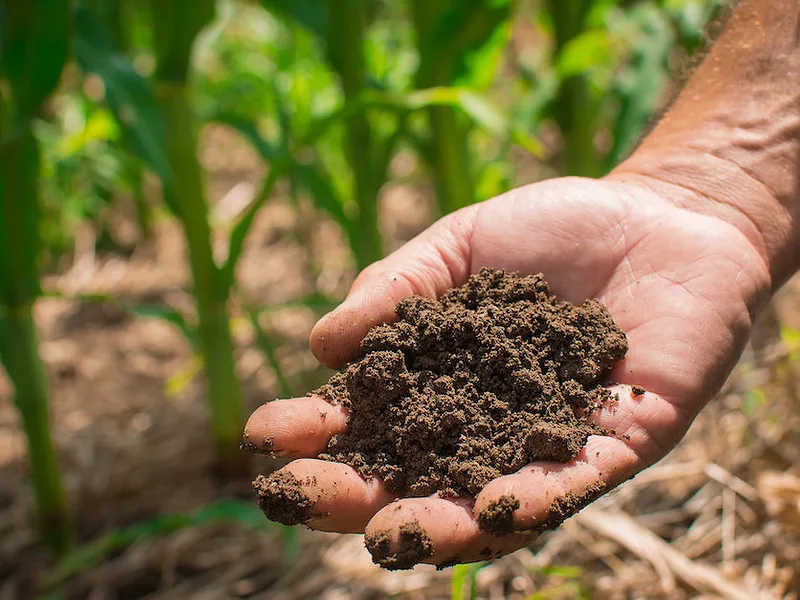
State officials and researchers pointed to more than a decade of investment in climate-smart agriculture as evidence that incentive-based programs can deliver measurable results.
Virginia Jameson, deputy secretary for climate and working lands at the California Department of Food and Agriculture, told lawmakers the state has invested about $727 million on core initiatives like the Healthy Soils Program, the State Water Efficiency and Enhancement Program and alternative manure management.
Those investments have supported about 4,000 on-farm projects, saved 1.6 million acre-feet of water and reduced greenhouse gas emissions by 31 million metric tons of carbon dioxide equivalent — equal to removing more than 7 million cars from the roa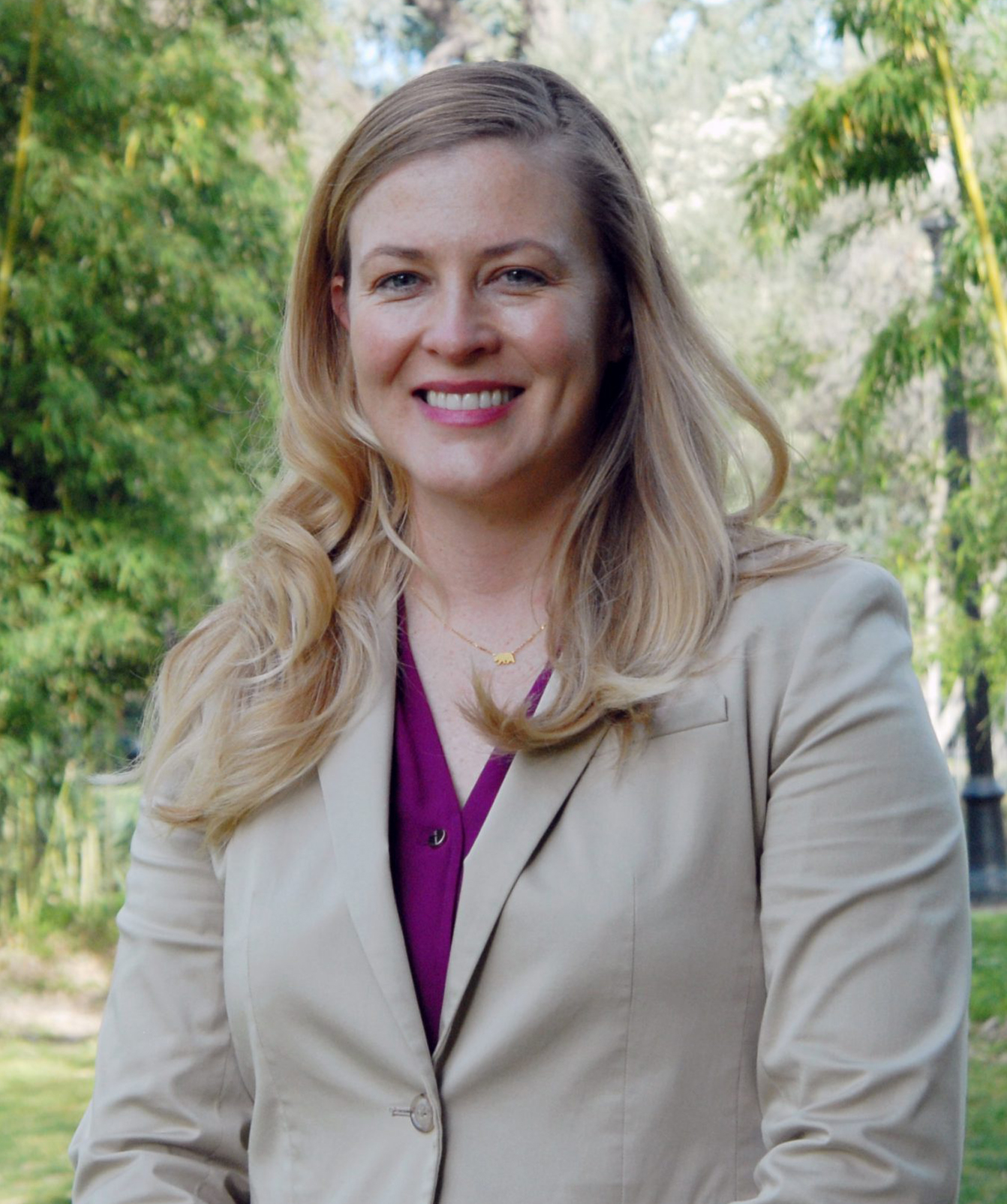 Virginia Jameson, CDFA (office photo)d.
Demand for the programs has consistently exceeded the available funding, with oversubscription rates ranging from 161% to 876%, explained Jameson, signaling strong interest among farmers in adopting climate-friendly practices when financial support is available.
“With a little help, farmers are more than willing to take on these new practices,” she said.
But Jameson and others warned that the funding outlook has shifted. Most programs have relied on one-time GGRF appropriations, and recent changes to the cap-and-invest structure have introduced new competition for limited dollars.
The Legislative Analyst’s Office reinforced those concerns, emphasizing both the importance of agricultural emissions and the constraints facing future funding decisions.
It’s easy to be “in the know” about what’s happening in Washington, D.C. Sign up for a FREE month of Agri-Pulse news! Simply click here
The state has directed $2.5 billion across various agricultural climate programs over the past decade, according to the LAO, but questions remain about cost-effectiveness and long-term impact. While the office found the programs have significant potential to reduce emissions, it cautioned that some benefits may be overstated and urged lawmakers to require additional evaluation if funding continues.
The LAO framed three key questions for policymakers: how effective the programs are, what role incentives should play in contrast to regulations, and how to prioritize limited GGRF dollars going forward.
Those questions are becoming more urgent as projections suggest the fund may not have enough revenue to fully support all existing commitments in the coming years.
Academic experts underscored agriculture’s broader economic and environmental importance.
Alexandra Hill, an agricultural economist and University of California, Berkeley professor of cooperative extension, said working landscapes represent the seventh-largest sector in the state economy and account for about 5.7% of total annual sales.
Agriculture alone is the dominant driver within that category, contributing the majority of jobs, businesses and economic output.
At the same time, researchers emphasized that agriculture is both vulnerable to climate change and central to potential solutions, particularly through soil carbon sequestration, water efficiency and methane reduction.
UC Davis animal science professor Ermias Kebreab highlighted California’s leadership in reducing dairy methane emissions through digesters and alternative manure management systems. He described a multipronged strategy — combining improved herd efficiency, manure management changes, digesters and emerging technologies like feed additives — as critical to achieving the state’s methane reduction targets.
“This success is directly attributable to California’s cap-and-invest program,” said Kebreab, noting that many projects would “simply not pencil out financially” for farmers without state support.
Dairies push back on environmental justice criticism
For years the most contentious issue has been the role of dairy digesters.
Despite scientific evidence to the contrary, Phoebe Seaton, executive director of the Fresno-based Leadership Counsel for Justice & Accountability, argued that digesters may worsen environmental conditions by encouraging methane-producing liquid manure systems, increasing nitrous oxide emissions, and contributing to groundwater and air quality problems in already burdened regions.
She also questioned their cost-effectiveness and argued the funds could deliver greater benefits elsewhere.
Michael Boccadoro, executive director of the Agricultural Energy Consumers Association, countered that the dairy sector has already achieved more than 5 million metric tons of annual greenhouse gas reductions, putting it “easily on pace” to meet the state’s mandate to cut methane emissions 40% below 2013 levels by 2030.
“We’re more than two-thirds of the way there today, with more projects to come,” said Boccadoro.
He argued the progress is not yet reflected in official state inventories because of lagging data but said it will soon show “very significant reductions within the agricultural sector” as projects come online and are incorporated into the California Air Resources Board’s accounting.
Boccadoro went further, asserting that California’s dairy industry is on track to become climate neutral by 2030.
“There is not another industry in California that’s going to be able to make a similar claim — not the energy sector, not the transportation sector,” he said, pointing to methane’s shorter atmospheric lifespan. “We're unique in that aspect, because methane is unique in how it impacts climate change.”
He credited the progress to the state’s incentive-based approach and herd efficiency, noting California has about 200,000 fewer dairy cows than in 2008.
Defending digesters, Boccadoro stressed that they are responsible for about 90% of the reductions achieved so far for manure management emissions, compared to about 10% from alternative manure management practices, which have had more incentive grants.
“We're going to be able to offset not just our methane, but our nitrous oxide and our CO2 emissions from dairy farms in California,” he added.
He also disputed Seaton’s claims that digesters are not cost-effective as “one of the worst studies I've seen done,” saying that even those low estimates rank digesters among the state’s most efficient programs.
 Cannon Michael, Bowles Farming (Brad Hooker/Agri-Pulse)
Energy costs and processing capacity
Beyond on-farm practices, the hearing highlighted the often-overlooked role of energy and food processing infrastructure in California’s climate-smart agriculture strategy.
Tricia Geringer, vice president of government affairs at the Agricultural Council of California, pointed to the Food Production Investment Program, administered by the California Energy Commission, as critical to preventing food processing — one of agriculture’s most energy-intensive segments — from leaving the state
Geringer described how FPIP grants have enabled processors to electrify operations, adopt low-emission refrigeration and install renewable energy systems, reducing both emissions and operating costs.
The grant funding has allowed a dried fruit cooperative to implement a compressed air project, reducing its electricity costs 25% while lowering local air pollutants. Since 2019 four tomato processors have left California, but one processor was able to take on all that business without increasing their emissions due to FPIP grant funding, according to Geringer.
“That ensured that those tomato farmers had a home for their product and that they were paid,” she said.
Grant programs like FPIP and FARMER, supporting low-emission tractors, help offset high electricity and fuel costs by supporting cleaner equipment and more efficient systems.
The California Air Pollution Control Officers Association noted that FARMER alone has helped replace more than 10,000 diesel engines, cutting greenhouse gases along with NOx and particulate matter — with most of the benefits flowing to disadvantaged communities.
“Because the emissions are real, quantifiable and permanent, you can count those reductions towards your state implementation plans to meet federal and state standards,” said Brendan Twohig, lobbying on behalf of the association. “That's even more critical now, with federal actions taking place that put holes in the SIPs.”
Stability and partnership
Farmers stressed the importance of stable, predictable funding to support long-term investments.
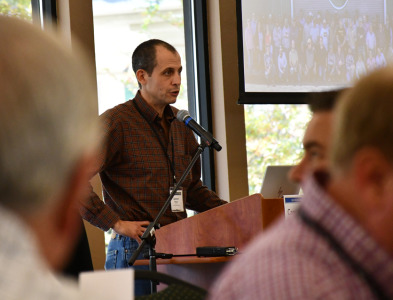
Cannon Michael, president of the Bowles Farming Co., described how his multigenerational operation has adopted a range of climate-friendly practices, including drip irrigation, solar energy, composting and crop diversification. But he said those efforts do not shield farmers from economic volatility from fluctuating commodity prices, water uncertainty and global supply chain disruptions.
“Anywhere we can have a little bit of stability helps so much,” said Michael, adding that state programs enable farmers to plan investments that often take years to implement.
He characterized the programs as a form of partnership between the state and agriculture, contrasting them with regulatory approaches and saying that with the carrot and stick approach “there’s been a lot of stick” with agriculture.
Lawmakers echoed that sentiment, with Caballero arguing that incentive-based policies are more effective than punitive measures.
“You don’t get much from a stick. You get litigation,” she said.

