
|
California dairy digesters and food processors landed in the middle of a broader fight over climate policy last week as air regulators approved major updates to the state’s cap-and-invest program, a package meant to tighten greenhouse gas limits while softening the hit to utility customers and energy-intensive industries.
The California Air Resources Board adopted the changes after two days of hearings and hundreds of public comments, sending the rules toward a Sept. 1 effective date. The vote gives farmers, food processors and dairy biogas developers more certainty that the carbon market will continue through 2045, but it also leaves major questions over whether agriculture will gain more from new industrial incentives or lose ground through reduced Greenhouse Gas Reduction Fund revenue.
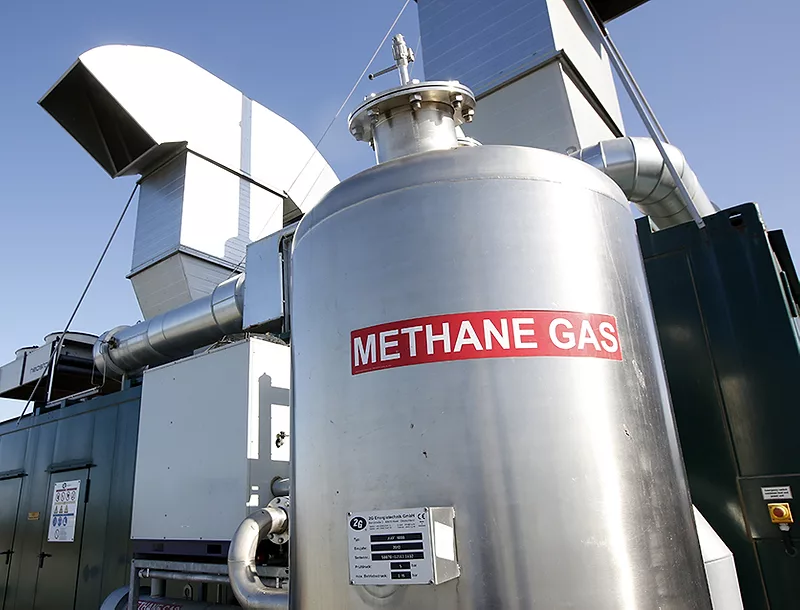
For dairies, the most immediate issue is whether CARB’s new manufacturing decarbonization incentive, or MDI, can support renewable natural gas projects tied to the state’s methane goals without creating a new fight over out-of-state credits, double counting or whether fuel ever reaches California. For farms and ranches, the broader concern is whether more allowance value going to utilities and industry will mean less money for programs like the Sustainable Agricultural Lands Conservation Program and climate-smart agriculture grants.
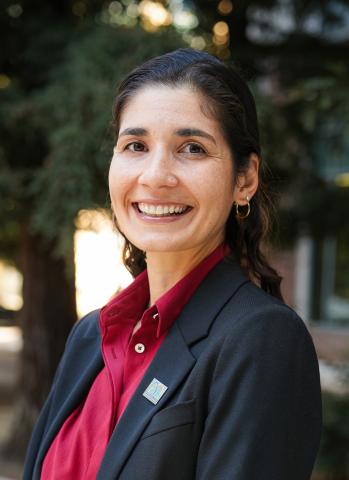 CARB Chair Lauren Sanchez (CARB photo)
The adopted updates remove 118 million allowances from the market, producing an 11% annual cap decline this decade and an average 7% decline from 2031 to 2045. The package provides $10 billion for electricity bill credits; preserves an estimated $8 billion for the Greenhouse Gas Reduction Fund; and doubles the MDI to $4 billion for manufacturers, including food processors, cement plants and refiners.
Gov. Gavin Newsom applauded the decision, saying California’s program has proven the state can “cut pollution, create jobs and invest in a cleaner future at the same time.” He framed the vote as a response to federal climate rollbacks, saying California is “staying focused by protecting our economy, safeguarding public health and doubling down on the clean energy future all Californians deserve.”
CARB Chair Lauren Sanchez made a similar case, calling the rulemaking “critically important for California” at a moment of climate policy attacks and economic uncertainty.
“By moving forward today, we are responding to real affordability concerns while sending a clear and unwavering signal to the world that we remain committed to long-term investment in clean energy, good jobs and healthier communities,” said Sanchez in a statement.
Ag climate funds face pressure
American Farmland Trust, California Farmland Trust and the California Farm Bureau warned that CARB’s revisions could destabilize funding for farmland conservation. Their comment letter urged the board to slow down and protect continuous funding for SALC, arguing the program has delivered a large share of GGRF emission reductions with a relatively small share of funding.
That argument gave agriculture common cause with groups that often show up on different sides of climate debates. During her “no” vote, CARB board member Lynda Hopkins said she could not remember “the last time that agriculture, environmental justice, environmentalists and local government agreed on anything.” Hopkins said she supported cap-and-invest and the state’s 2030 and 2045 climate targets, but not “making this large allocation change on such short notice before the board and the public can clearly see and identify and understand the benefits.”
Cut through the clutter! We deliver the news you need to stay informed about farm, food and rural issues. Sign up for a FREE month of Agri-Pulse here.
Food processors, meanwhile, feared that without more free allowances and incentives, California plants will keep closing or fall behind competitors in states with lower energy and compliance costs.
Jacob DeFant, senior director of environmental policy for the Agricultural Council of California, warned CARB’s steep allowance decline would “further drive up costs for the food and agriculture sectors, threatening economic engines in the state, raising consumer costs, and increasing leakage risk.” DeFont said the risk “is not hyperbolic,” pointing to five major food processing facility closures since 2025 in communities with unemployment rates above the statewide average.
CARB staff acknowledged that pressure in explaining the latest changes to the proposal. Rajinder Sahota, a senior CARB official, said staff had received significant feedback from the industrial sector as refineries, food processors, glass plants and other manufacturers face closures or potential closures. Staff found a way to give more support to industry, she said, moving industrial assistance from about 60% to 70%. But “because it’s still the same pie, it had to come from somewhere,” she said, and that meant fewer allowances left for auction and GGRF.
The California League of Food Producers supported CARB’s move to preserve leakage protections through 2030, including continued 100% assistance for covered industries. The group also backed the MDI in concept but warned CARB that many food processors cannot simply swap out gas equipment for electric systems overnight. Large boilers, thermal processes, refrigeration, space constraints and utility reliability all complicate the transition.
John Eisenhut, the agriculture member on the board, put the issue in farm terms. Food processors, he said, are not just another industrial sector.
“The ag industry needs food processing, they’re in jeopardy, and producers of fresh produce don’t have the option of hauling their product out of state — it’s perishable,” he said. “I just want to make sure there’s space, so that any one sector does not suck up all the allocations.”
That concern pushed the board to wrestle with whether the MDI could be dominated by large refineries, cement plants or hydrogen projects before smaller industrial sectors like food processing can compete.
CARB staff said the incentive is not meant to be a blank check. Sahota said eligible project categories were carefully chosen and “not a grab bag.” Facilities must already be covered by cap-and-invest; have verified emissions data; and submit applications with project details, timelines, cost estimates and projected greenhouse gas reductions. The money cannot be used for overhead, bonuses, lobbying, shareholder dividends or legal settlements. If companies fail to follow through, they have to return the value and CARB retires the allowances.
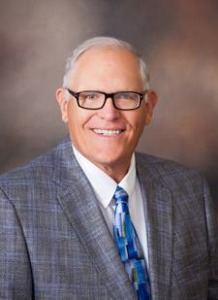 John Eisenhut (CARB photo)
Board pauses MDI rollout
Skepticism over the MDI carried over to dairy biogas and renewable natural gas. The RNG Coalition urged CARB to better recognize methane reduction benefits from dairy, swine, food waste and landfill projects, and to ensure the rules do not treat pipeline-injected RNG as fossil gas. But environmental justice and food safety advocates warned CARB not to create new subsidies for combustion fuels or manure-based gas projects without strong proof of in-state benefits.
During the board’s final deliberations, board member Eric Guerra raised the concerns circulating through public comments about out-of-state renewable natural gas benefiting from the MDI even if the gas never physically enters California. Staff pointed to language directing CARB to evaluate how the program fits with the state’s SB 1383 methane targets and whether it provides enough support to reduce emissions under that law.
That left the board trying to approve the broader cap-and-invest package while pushing pause on the most disputed piece. Sanchez amended the resolution to require CARB’s executive officer to report back and propose any needed changes before the agency receives MDI applications or issues allowances. She said the pause would allow staff to analyze impacts on GGRF, allowance demand, cap integrity and sector-specific allocations.
That did not satisfy all critics. Hopkins said the late revisions changed the investment balance of the program and resulted in too many stakeholders “left out in the cold.” She said her “no” vote was “not a vote against cap-and-invest,” but against moving forward before the board could understand whether the package would come at the expense of zero-emission transit, affordable housing, clean air, clean water and community emissions work.
Yet such delays create their own risks. CARB staff and several board members said the state already faces auction uncertainty and weaker GGRF revenue than many groups expected when lawmakers extended the program last year.
The result was a vote that kept California’s carbon market on track but postponed some of the most important decisions for agriculture. Dairy biogas developers, food processors and farm groups will now be watching the MDI follow-up process as closely as the rule itself.
