
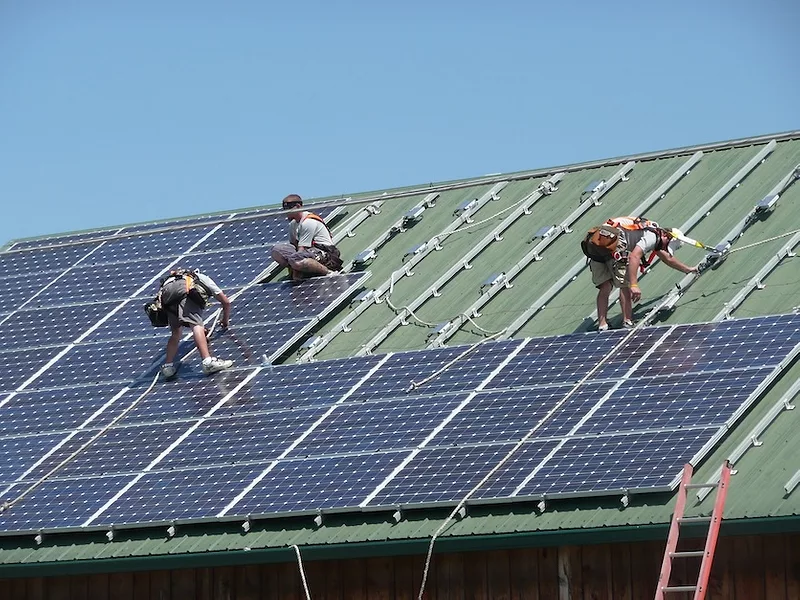
The Agriculture Department will pause grant awards for the Rural Energy for America program until it finishes updating program regulations to meet an executive order calling for less federal wind and solar funding.
According to a stakeholder announcement, the REAP program will “not be making further grant awards” until it makes new regulations effective under an executive order that directs agencies to limit funding for wind, solar and other “green” energy sources. The pause applies to all applications submitted under a notice of funding opportunity for fiscal years 2025 through 2027 that do not have a “fully executed” financial assistance agreement, an accompanying frequently asked questions document says.
"These changes reflect our commitment to ending the massive cost of providing taxpayer handouts for unreliable energy sources and follows Administrative priorities of energy dominance, national security, economic growth, and the fiscal health of the nation," the stakeholder announcement says.
According to the FAQ, REAP guaranteed loans are still being accepted and certain solar voltaic and wind applications are eligible for guarantees. However, renewable energy systems and energy efficiency applications for fiscal 2026 are not currently being accepted, it says.
REAP provides grants and guaranteed loans for on-farm energy and energy efficiency projects, including wind turbines, solar panels, biogas systems and grain dryers, among other things. The program provides guaranteed loans of up to 75% of the cost of eligible projects, grants covering up to 25% of project costs, and combined grant and loan guarantee funding for up to 75% of project costs.
A 2022 Agri-Pulse analysis of REAP funding data found solar projects emerged as one of the most dominant recipients of REAP grant funding in the years following 2015, surpassing energy efficiency projects, which had previously been significant recipients. However, that analysis did not include program data for 2023, 2024 or 2025.
Interested in more news on farm programs, trade and rural issues? Sign up for a four-week free trial to Agri-Pulse. You’ll receive our content - absolutely free - during the trial period.
According to the FAQ, USDA staff will stop processing environmental reviews for applications that have been filed but have not yet seen completed reviews. For applications currently under appeal, applicants who receive an adverse decision "will be notified that the agency will not be making further awards until after the new regulations are completed,” it says.
"Once the updated regulation has been published and the agency announces acceptance of new applications, the applicant may file a new application in compliance with the forthcoming regulations,” the FAQ said.
In a statement, National Sustainable Agriculture Coalition policy specialist Richa Patel said USDA’s decision to halt awards only adds additional pressure to farmers and rural small businesses already feeling financial strain from other forces.
"Countless small businesses have invested significant time and resources in this popular, bipartisan program to reduce their energy costs,” Patel wrote. "USDA should implement the REAP program as quickly as possible and provide more clarity on when farmers can expect the program to resume."
Lloyd Ritter, the director of the Ag Energy Coalition, said in a statement that the "REAP program has been working very well, for years, including the first Trump Administration — saving farmers, cooperatives and small businesses money, helping rural America address high energy costs as well as bolstering national security." He said "it’s past time USDA got going, awarding cost-shared grants and loans to farmers and others for 'all of the above' energy dominance."
"Farmers not only know what and when to plant, they also know what energy works best for them — from onsite distributed wind power, to rooftop solar, geothermal, biogas and beyond," Ritter said. "The ongoing REAP program standstill is simply hurting their folks for no sensible reason."
This story has been updated with additional comment.

