
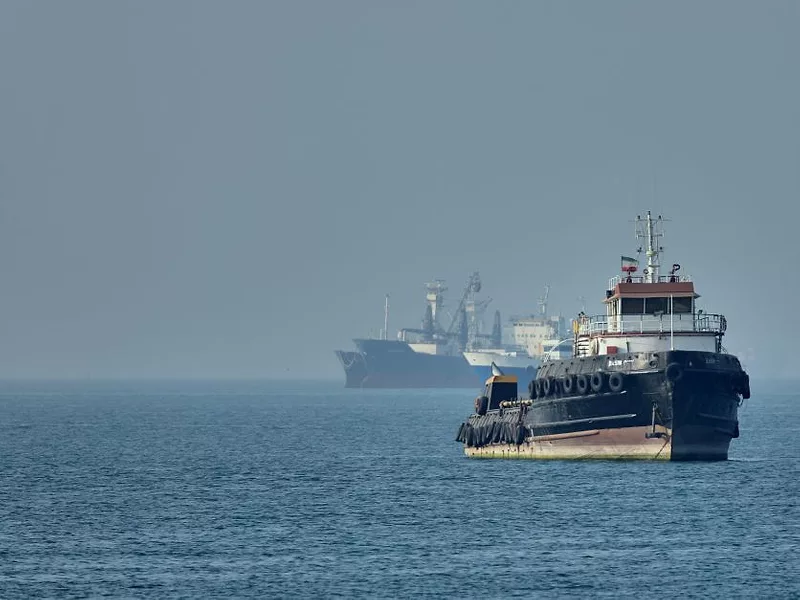
The future of an ongoing ceasefire with Iran is on shaky ground after the U.S. reported attacks on ships the Navy was escorting through the Strait of Hormuz.
“Iran has taken some shots at unrelated Nations,” including a South Korean vessel, President Donald Trump posted to his Truth Social account Monday. The United Arab Emirates’ Ministry of Defense also said on social media that Iran had launched over a dozen missiles at UAE targets Monday.
The attacks come just a day after Trump said the U.S. would begin escorting other countries’ stranded commercial vessels through the strait as part of what he dubbed “Project Freedom.”
A ceasefire has been in effect for four weeks now as both sides negotiate over an end to the conflict, which has driven commodity prices up more than 8%, urea up 50% and DAP up 17%.
Trump said over the weekend that he would likely reject the latest Iranian proposal as the country has “not paid a big enough price.”
China rumblings: Treasury Secretary Scott Bessent urged the Chinese government to apply pressure to Iran to reopen the Strait of Hormuz.
“Iran is the largest state sponsor of terrorism, and China has been buying 90 percent of their energy, so they are funding the largest state sponsor of terrorism,” he said on Fox News. “Let’s see [Beijing] step up with some diplomacy and get the Iranians to open the strait.”
Trump and Chinese President Xi Jinping are set to meet face-to-face in Beijing later this month.
Greer aiming to wrap trade probes this summer
U.S. Trade Representative Jamieson Greer is aiming to complete two trade investigations into countries’ unfair trade practices by the summer. The probes are likely to be used to justify new tariffs, with a temporary global tariff set to expire this summer.
“We expect to be wrapping those up this summer,” he told CNBC on Monday. But Greer left the door open for further dealmaking.
“At that time the president will be able to assess whether those problems require a reaction in the form of a tariff or otherwise, or whether we can have deals to try and eliminate the practices,” he added.
It’s easy to be “in the know” about what’s happening in Washington, D.C. Sign up for a FREE month of Agri-Pulse news! Simply click here
The global tariff is set to lapse in July without congressional action.
Take note: USTR is kicking off a four-day hearing today in its investigation into economies’ manufacturing overcapacity.
The first day of testimony will feature comments from the sugar, seed and soybean industries. Representatives from the olive oil, tree, distilled spirits and cheese import sectors are slated to testify Wednesday.
In remarks seen by Agri-Pulse, the American Sugar Alliance’s Rob Johansson will argue a global overcapacity in sugar production and foreign subsidies are hurting U.S. industry.
“The U.S. Trade Representative has a critical opportunity to correct for the unfair foreign trade practices that have led to chronic global overcapacity in sugar production, and to prevent American sugar producers from experiencing further losses,” Johansson will say.
Soy farmers get some good news, with China caveat
Soybean farmers are seeing higher crop values amid robust crushing in the heartland and more favorable biofuel policy in Washington.
Higher demand for soy oil needed to make biodiesel is helping drive up prices on the Chicago Board of Trade. Futures have jumped more than 30% over the last three months. The value of whole soybeans is also on the upswing, closing above $12 a bushel on Monday for the first time since mid-March.
Record crush margins have motivated ag processors to secure soybean supplies for the summer, StoneX Group chief commodities economist Arlan Suderman says.
But the outlook for global demand remains in question as President Trump prepares to visit China later this month, according to Terrain’s Bree Baatz.
“Domestic biofuel policy can stabilize prices, but it alone will not be supportive of prices sustaining `beans in the teens’ levels for the long term,” the soy analyst said.
Still, as the U.S. appetite for processed soy builds, farmers living near crush plants could see favorable cash prices in the year’s second half, Baatz added.
Spring planting over 25% done for corn, soybean producers
Planting season is well underway, with corn and soybean farmers reporting that they have sown more than a quarter of their acreage, according to the Agriculture Department’s most recent crop progress report.
Corn farmers across 18 states had reported planting 38% of their acres as of May 3, while soybean farmers in 18 states had planted 33%, according to the report released on Monday.
Meanwhile cotton farmers in 15 states had planted around 21% of their acreage, while sorghum farmers in six states had planted 22% of their acreage.
PFAS case dismissed by federal appeals court
A federal appeals court has rejected an appeal from two environmental groups challenging EPA over PFAS regulations after concluding they do not have legal standing to pursue the case.
Public Employees for Environmental Responsibility and the Center for Environmental Health had sued in district court in Washington, D.C., seeking a shutdown of production of PFOA, one of a class of PFAS formed during the fluorination of plastic containers.
The court dismissed the case, in part because EPA had initiated a rulemaking addressing the issue. The D.C. Circuit Court of Appeals ruled for EPA on different grounds, finding that the two groups lacked “associational standing” to plead their case.
The groups “do not suggest that [they] have the requisite roles, responsibilities, or influence over the organizations to alone satisfy the strictures of associational standing,” the D.C. Circuit Court of Appeals said in its opinion, released Monday. “To the extent they gesture toward that position on reply, the argument comes too late.”
Avocados on tap for Cinco de Mayo
Cinco de Mayo is shaping up to be a big one in the produce aisle, with record avocado imports and stepped‑up retail promotions. U.S. importers are on track to bring in a record 235 million pounds of Mexican avocados in the month leading up to the holiday, according to the Hass Avocado Board.
The industry is betting on food‑centered celebrations. “We’re seeing a real cultural shift in how people, especially new generations, are choosing to celebrate — they’re drinking less and connecting more through shared experiences like food,” said Alvaro Luque, president and CEO of Avocados from Mexico in an industry press release. “That trend is why we’re prepping for our biggest Cinco ever.”
Retailers are leaning in. Produce ads climbed 4% to 266,651, USDA data says. Lime prices surged 34% from a year ago, while advertised Hass avocado prices dropped 23%.
Final word
“We are hopeful that those prices will start coming down this summer, this fall, but again, this is a massive, complicated policy challenge that we're working to fight every single day.” — Agriculture Secretary Brooke Rollins speaking about beef prices at a press conference on Monday.
For more news, go to www.Agri-Pulse.com.
.webp?t=1762183428)


