
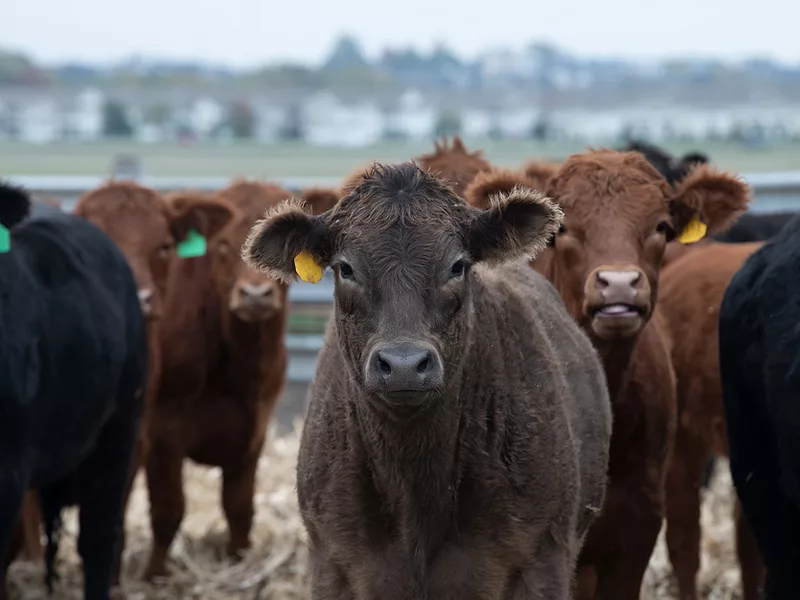
The Trump administration said Tuesday it is “fine-tuning” its planned executive actions to boost beef imports and support efforts to expand the domestic cattle herd.
The White House had said the president was poised to sign two executive orders on Monday, but neither materialized. At briefings with industry and congressional offices, the administration said it would be suspending tariff-rate quotas for beef-exporting countries for 200 days.
The U.S. currently maintains country-specific tariff-rate quotas for four countries and an open quota of 65,000 metric tons that any exporting nations can use. The quotas limit the volume of beef products that can enter the U.S. market at a reduced tariff rate.
“The President is committed to lowering beef and other grocery costs for everyday Americans,” a White House official told Agri-Pulse in an email Tuesday morning. “The Administration is accordingly fine-tuning potential executive actions to alleviate temporary shortages in the domestic beef market.”
The official did not give a new timeline on when any executive action might come. President Donald Trump is expected to fly to China on Tuesday afternoon for a two-day state visit.
The prospect of again using imports to ease domestic prices – as the administration did last year when it temporarily increased Argentina’s tariff-rate quota – was met with outcry from the domestic cattle industry and skepticism among senior farm-state lawmakers.
R-CALF CEO Bill Bullard told Agri-Pulse Monday that the trade action risked undermining efforts to rebuild the U.S. cattle herd, noting that investors need policy signals that indicate their investments in U.S. beef production won’t be undercut by imports.
American Farm Bureau Federation President Zippy Duvall called any plans to increase beef imports "extremely worrisome" in a statement Tuesday and warned the measures "could undermine the fragile recovery ranchers are experiencing."
"We appreciated the president’s efforts to enhance the farm economy earlier this year. We now urge him to consider the economic impact an executive order would have on rural America," Duvall said.
It’s easy to be “in the know” about what’s happening in Washington, D.C. Sign up for a FREE month of Agri-Pulse news! Simply click here
A similar view is present on Capitol Hill. A GOP congressional aide expressed similar concerns to Agri-Pulse Tuesday.
“If you're trying to rebuild the herd, I don't think this is what you do,” the aide said. “I don't think it will impact consumer beef prices very substantially, but I think it could do a lot of political harm, and I think it could do some harm to the beef markets in the United States.”
Lawmakers and their offices were blindsided on Monday when the Wall Street Journal first reported that the executive orders were ready for Trump's signature.
An administration official had told Agri-Pulse last week that an announcement was not “imminent.” The congressional aide said their office was invited to join a call with administration officials on the potential actions on short notice.
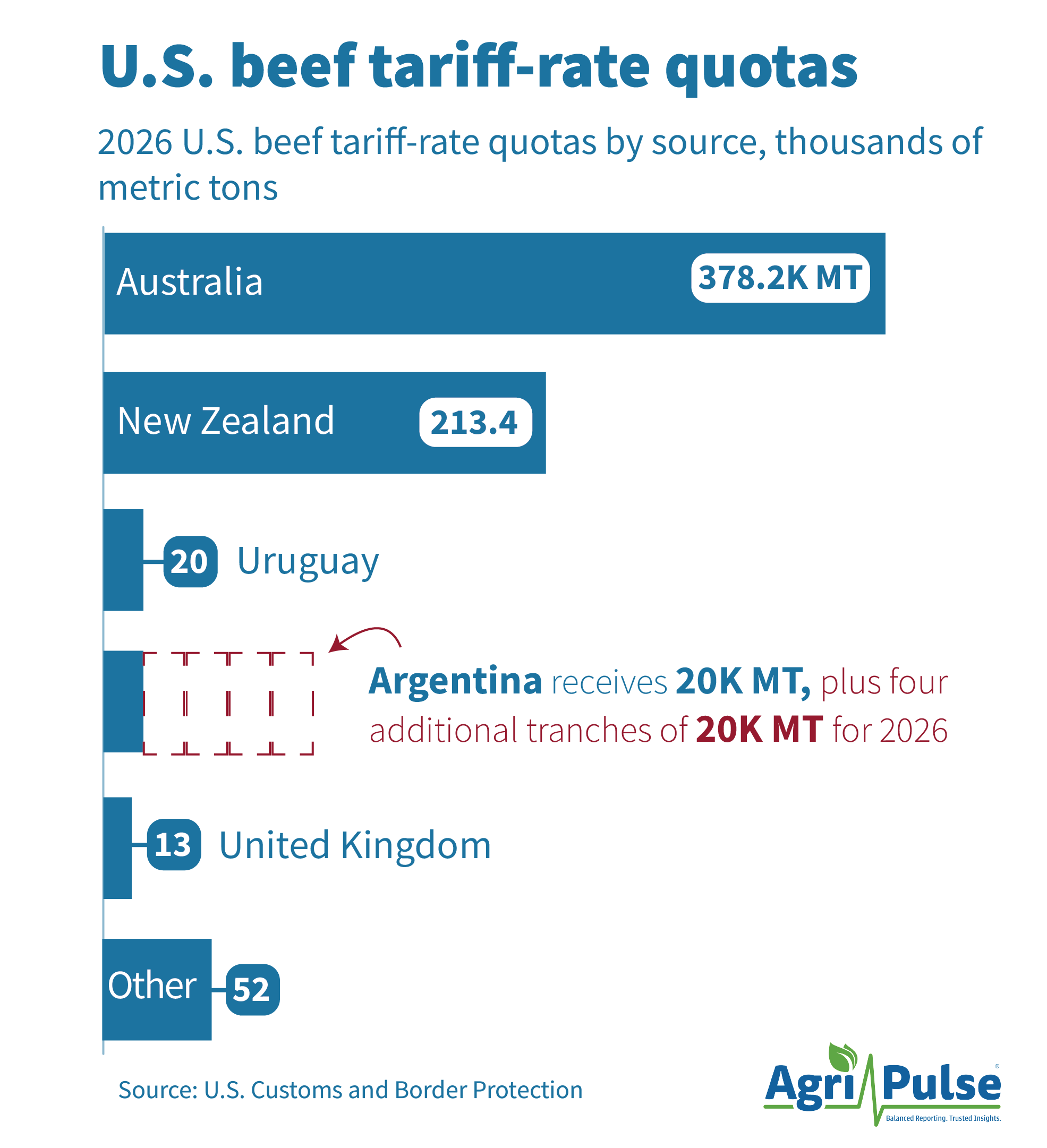 Nebraska Republican Sen. Deb Fischer, who was vocal in her opposition to the additional tariff-rate quotas provided to Argentina last year, said Monday night that she had not been briefed on the executive orders but had only heard “rumors.”
Senate Majority Leader John Thune, R-S.D., expressed his own reservations with the plan Monday night in comments to Agri-Pulse.
"Where I come from in cattle country, we're not a big fan of foreign imports and we have the best herd in the world and we'd like to keep it that way," Thune said. "But I understand what [the president] is trying to respond to, and that's the cost of beef in this country."
U.S. beef imports have jumped in early 2026 amid tight domestic supplies and strong demand. Through the first quarter, U.S. imports reached 1.7 billion pounds, up more than 15% from the previous year, and the majority of those imports arrived at the higher, out-of-quota tariff rate of 26.4%.
The 65,000 metric ton tariff-rate quota for "other" countries was completely filled in the first week of the year.
Meanwhile, beef prices continue to rise. In April's Consumer Price Index published Tuesday, beef prices were up 2.7% from the previous month, and almost 15% from April 2025. Uncooked beef roasts were up almost 18% on a non-seasonally adjusted basis.
This story will continue to be updated with additional information.

