
|
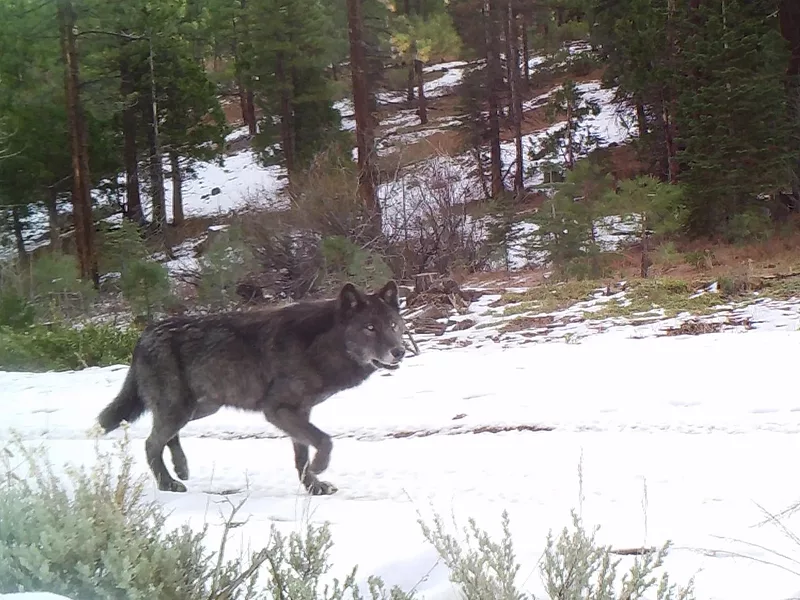
California appears on the verge of allowing more aggressive deterrence methods against gray wolves after widespread cattle depredations last year prompted the state’s wildlife agency to euthanize four wolves last October.
The state Department of Fish and Wildlife is working with counties, ranching groups and wolf advocates on a plan to let sheriff’s deputies and trained scouts use nonlethal hazing methods – including pepper balls and rubber bullets – to protect livestock and steer endangered wolves back toward natural prey.
The plan would need approval from county supervisors and the U.S. Fish and Wildlife Service and could be implemented within the next month, said Amaroq Weiss, a senior wolf advocate for the Center for Biological Diversity.
The effort comes after the CDFW responded to 267 suspected livestock depredations last year, up 260% from the prior year, and confirmed that 198 were definite or likely wolf attacks, according to an annual report released May 14.
Rancher and Sierra County supervisor Paul Roen, who lost more than 40 calves to wolves in the Sierra Valley in northeastern California last summer, said he and others were hoping to have the enhanced measures in place by the time they brought cattle back to the high country this spring.
“The pressure’s on from all sides,” Roen told Agri-Pulse, noting that ranchers started bringing cows in about two weeks ago. “We haven’t had losses that I know of yet,” he said.
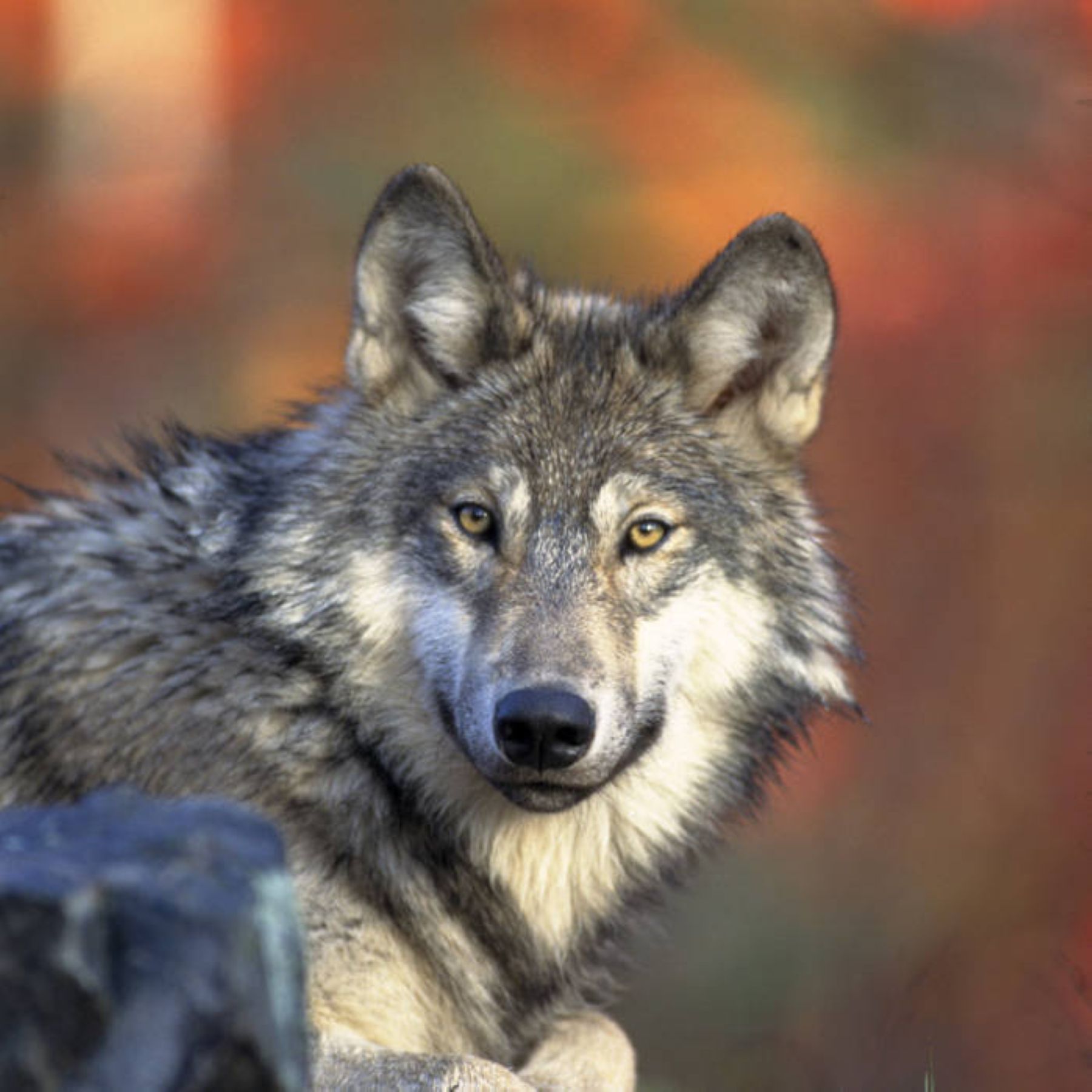 (U.S. Fish and Wildlife Service photo)
More than a decade after a collared wolf dubbed OR-7 became the first known gray wolf to wander into California in nearly a century, the state ended 2025 with a minimum population of 55 wolves, a 10% increase over 2024, despite a confirmed 12 wolf mortalities throughout the year. Four of those wolves, all part of the Beyem Seyo pack, were lethally removed after killing at least 90 cattle in the Sierra Valley.
The state entered the second phase of its decade-old wolf recovery plan just as University of California researchers published two studies that opened the eyes of policymakers – one last spring that suggested that cattle are a major component of wolves’ diet, and another in November that found wolf-related costs in the Sierra Valley reached at least $2.6 million over a seven-month period last year.
It’s easy to be “in the know” about what’s happening in Washington, D.C. Sign up for a FREE month of Agri-Pulse news! Simply click here
Cattlemen and local officials have also used public safety as a rallying cry. Last year, Sierra and four other counties – Modoc, Lassen, Plumas and Shasta – declared wolves a threat to people after some showed the absence of a natural fear of humans.
In addition to nonlethal weapons, state and federal wildlife officials are offering support for carcass removal and range riders, providing more collared wolf data and exploring options for county-based liaison positions to strengthen communications with ranchers, the CDFW says. Agency spokesman Peter Tira said the CDFW prioritizes both wolf conservation and rural community livelihood.
“Our approach is grounded in science, responsive to local conditions and focused on reducing conflict over the long term,” he said in an email.
Weiss, a leading advocate for the state Endangered Species Act protections that were afforded to gray wolves in 2014, joined cattlemen and county officials at a USDA-hosted pepper ball training in April. Pepper balls are an irritant, similar to pepper spray, fired from air launchers or modified paintball guns. Rubber bullets or bean bag shells could also be used, she said.
“This is not a modification to the wolf plan; we’re simply now in Phase 2 because of the success” of wolf recovery, Weiss said.
UC Cooperative Extension and UC Berkeley are also seeking input from producers on the future of a wolf-livestock compensation fund established in 2021 that has paid out over $3.5 million to affected ranchers. The anonymous survey takes about 20 minutes to complete and will close on June 11.
The CDFW has also committed to in-person meetings in wolf territory to further solicit feedback, said Kirk Wilbur, the California Cattlemen’s Association’s vice president of governmental affairs.
“My hope is that there’s robust participation from ranchers,” both those who’ve used the program and those who may need to, Wilbur said in an email.
