
|
California’s pest prevention system is working, but state and county officials say the program is being stretched by a surge in invasive species threats, aging infrastructure, staffing gaps and pathways that did not exist when the system was last comprehensively reviewed nearly three decades ago.
That was the central message from a presentation to the State Board of Food and Agriculture recently on the Comprehensive Pest Prevention Program Analysis Project, or C3PA, a sweeping review of the programs California relies on to keep destructive insects, plant diseases and other pests out of the state’s farms, nurseries, landscapes and natural areas.
The analysis, conducted through a partnership between the California Department of Food and Agriculture, the California Agricultural Commissioners and Sealers Association and university researchers, is the first broad review of California’s pest prevention infrastructure since the mid-1990s.
Neil McRoberts, a UC Davis plant pathology professor and director of the Western Plant Diagnostic Network, told the board that since the last major assessment, California agriculture has operated through three decades of globalization, shifting supply chains and rapid growth in online shopping.
“Things like e-commerce, for example, simply didn’t exist in any meaningful way back when the [state conducted the last review],” McRoberts said.
The new report focuses heavily on three core programs: California’s border inspection stations, detector dog teams that inspect packages at U.S. Postal Service and private shipping facilities, and the High Risk Pest Exclusion Program, a state-county effort to detect and prevent high-consequence pests.
The broader message from state, county and university officials was that pest prevention now touches almost every part of California agricultural policy, from sustainable pest management to international tourism to food security.
Cut through the clutter! We deliver the news you need to stay informed about farm, food and rural issues. Sign up for a FREE month of Agri-Pulse here.
CACASA Executive Director Lindsey Carter told the board the analysis reached a clear conclusion that California’s pest prevention system works and provides economic, environmental and public benefits. But she delivered a stark warning.
“Simply put, the threats have grown faster than our capacity to address them,” Carter said.
 Lindsey Carter, CACASA (Fred Greaves/Agri-Pulse)
Carter said protecting agricultural production is not just a farm issue but a public trust, environmental and food security issue.
The report lands as CDFA and county agricultural commissioners are dealing with a high-profile example of the risks facing the system, with glassy-winged sharpshooter detections on grapevines shipped to Costco stores from a Fresno County nursery.
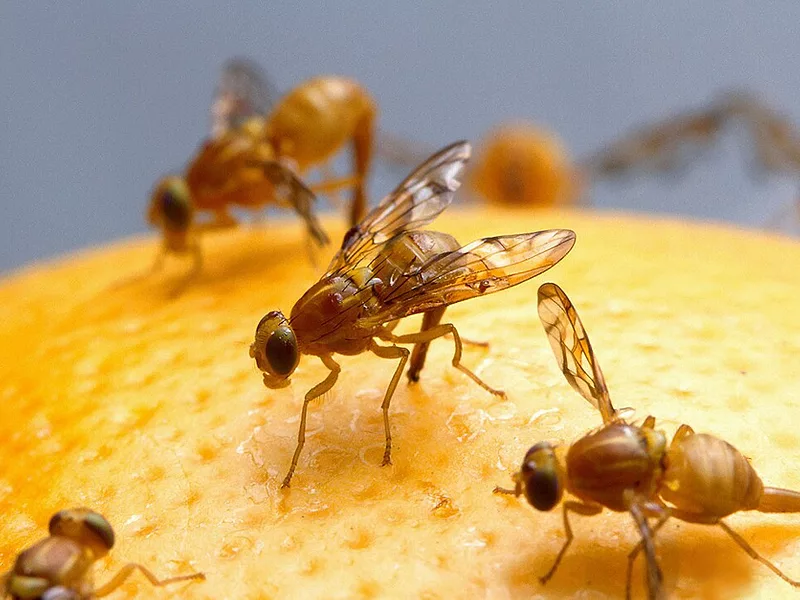
C3PA also points to the heavy toll from recent fruit fly outbreaks. California declared seven invasive fruit fly quarantines in 2023 and 2024, the most in a single year, with eradication costs exceeding $208 million by the time those infestations were eliminated.
“While those [response] efforts were ultimately successful, they demonstrated just how quickly resources can be stretched when multiple threats occur simultaneously,” Carter said.
Prevention as the cheaper option
The analysis frames pest prevention as a cheaper alternative to long-term pest control. Carter said every pest — whether intercepted at a border station, detected by a dog team, found through surveillance trapping or excluded through quarantine enforcement — can prevent far larger costs later for agriculture, urban landscapes, natural ecosystems and consumers.
“Prevention remains the most cost-effective strategy available to California,” she said.
That point was reinforced by McRoberts, who said the cost-benefit discussion is difficult because the system is designed to prevent events that otherwise could cause enormous damage.
Looking at California’s top 20 crop commodities by value, McRoberts said researchers found common pest species already cause about $560 million in lost economic surplus annually. That includes losses to producers and consumers.
“We lose a Hawaii’s-worth of agriculture from California each year, just from the top 20 crops and what pests do on those crops,” McRoberts said.
The concern is not just existing pests but what happens when new ones arrive. The report uses current pest damage to help estimate the scale of potential losses if additional invasive pests gain a foothold.
The analysis also links pest exclusion to California’s sustainable pest management goals. McRoberts pointed to Asian citrus psyllid as an example of what happens when an invasive insect becomes established. Pesticide use targeted at psyllids increased after the pest arrived in the state.
“If eradication works, pesticide use peaks and then goes back to where it came from,” explained McRoberts. “If we have an ongoing situation, we’re locked into an ongoing increased level in pesticide use.”
That means exclusion is one of the few strategies that can align growers, environmental groups and regulators, officials said. Carter noted that pest prevention was one of the few principles with broad support during the state’s Sustainable Pest Management Roadmap discussions.
The report identifies several areas for investment, ranging from modernizing exclusion infrastructure to expanding detector dog teams, improving diagnostic capacity, upgrading technology systems and adding staff to address growing workloads.
Additionally, the report identifies more than $90 million in immediate one-time funding needs and $25 million in annual investments to strengthen infrastructure, staffing and pest exclusion programs. Those figures, Carter said, represent immediate gaps, not the full long-term increase needed to keep pace with future risks.
One of the clearest examples is the detector dog program. CDFA Plant Health and Pest Prevention Services Director Victoria Hornbaker said the state’s dog teams are producing significant detections despite having limited coverage at postal and shipping facilities.
Hornbaker said the state has roughly 12 to 14 dog teams covering postal facilities, FedEx, UPS and USPS only a small share of the time. She said postal facilities are where CDFA sees many pest risks arriving.
McRoberts said researchers can estimate how many dog teams would be needed to reach certain levels of coverage at key facilities and how much each incremental addition would cost. But defining the target is the harder policy question.
“The value that you’re protecting is so big, much bigger, so many times bigger than any sensible budget that you would allocate for prevention,” McRoberts said.
 Prof. Niel McRoberts (UC Davis photo)
New pathways, new risks
E-commerce is another fast-growing concern. CDFA said researchers found that only 16 of 62 surveyed websites clearly displayed restrictions on shipping plant material to California. Large platforms like eBay, Amazon and Etsy have taken steps to communicate restrictions, but officials said many smaller sellers are failing to tell customers when plants, soil or other agricultural materials cannot legally be shipped into the state.
That gap matters because online sales can bypass traditional checkpoints, especially when consumers do not know that a plant, fruit or seed shipment may carry a pest.
Hornbaker also raised a looming threat that could test the state’s system: this summer’s FIFA World Cup and the 2028 Los Angeles Olympics. International passenger travel is a major pathway for fruit flies and other pests, and Southern California is already a hot spot for fruit fly pressure. Hornbaker told the board the state is working with the Governor’s Office of Emergency Services and contractors on messaging for visitors.
“We are opening the flood doors for that to come into L.A., which is Fruit Fly Central,” said Hornbaker, adding that a quiet outcome would count as success. “If we skate out of L.A. with no abnormal outbreaks of any sort and no fly issues, that’s a win.”
Carter said CACASA met with U.S. Customs and Border Protection in March, and CBP has developed a team and protocols for the events in coordination with other federal agencies.
The challenge, officials acknowledged, is that prevention can be hard to sell politically because success often means nothing happens. There is no emergency response, no sweeping quarantine and no headline-grabbing eradication campaign.
Carter said that makes it difficult to show the public and lawmakers what the system prevented. But she argued the alternative is far more expensive.
“If you never hear from us about another outbreak, that means it’s doing its job,” she said.
Carter stressed that the report should not simply be viewed as a request for more funding. CACASA wants the state to establish a plan that elevates pest prevention as a long-term statewide priority. Such a plan could guide strategic investment, workforce development, technology upgrades and coordination among state, county, federal and industry partners.
The stakes are expected to grow as California faces more climate variability, higher travel volumes, expanding e-commerce and shifting trade patterns. CDFA Secretary Karen Ross said in a statement that the best investment California can make is preventing infestations before they happen.
“We have a robust and comprehensive approach to detect and eradicate infestations when they do make it into our state and into our fields,” Ross said. “But it’s important to limit the need for these more costly measures by keeping pests out when we can.”

