
Urea, a nitrogen fertilizer used by a wide range of farmers, has fallen to its lowest price this year as markets wait for global trade flows to resume out of the Middle East, according to Bloomberg Intelligence fertilizer analyst Alexis Maxwell.
The crop nutrient shipping through New Orleans is trading this week at $340 a short ton for July, the lowest level of 2026 and down from about $360 last week, Maxwell told Agri-Pulse on Thursday, citing Green Markets, a Bloomberg company.
The welcome news for crop growers, dairy producers and ranchers coincides with a drop in Bloomberg’s Green Markets Weekly North America Fertilizer Price Index.
“Even though it's up 14% year to date, it's down 21% in the past month with the expected opening of the Strait of Hormuz,” Maxwell said during a presentation on Wednesday.
Fertilizer has once again become a major focus of the agriculture industry and broader world economy after surging to record highs three years ago amid supply-chain shocks triggered by the start of the Russia-Ukraine war.
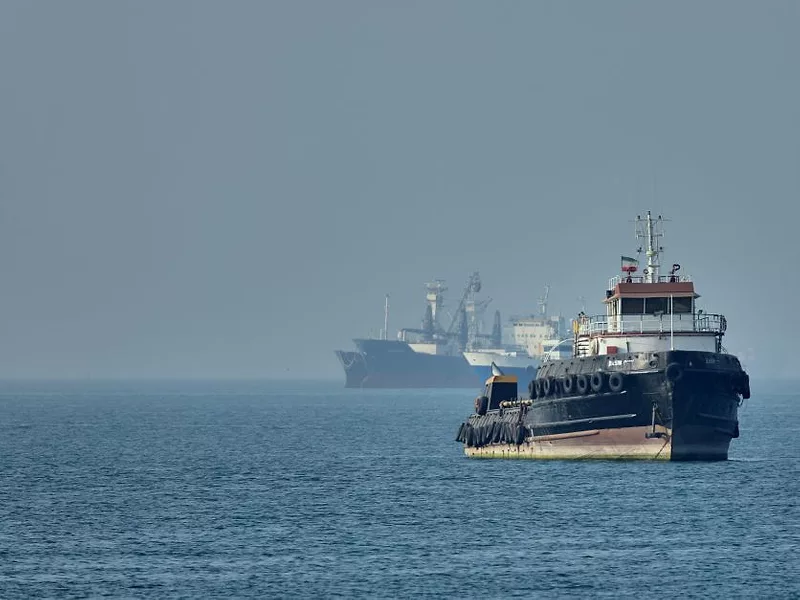
Prices began soaring anew in March after war with the U.S. and Israel led Iran to effectively close off the global trade chokepoint of the Strait of Hormuz, financially squeezing farmers already struggling with lower crop prices, and higher production costs and weaker demand amid President Donald Trump's tariff wars.
Trump and Iranian President Masoud Pezeshkian signed a memorandum of understanding on Wednesday that establishes a two-month negotiating window, with a goal of ending war between the two countries. The MOU calls for commercial vessel traffic through the strait to begin immediately, without tolls, for 60 days.
The lower urea price is driven mainly by the anticipated full reopening of the strait, as well as the wind-down of the application season in the Northern Hemisphere and China’s recent lower-than-expected price floor for urea exports to India, which sets global benchmark prices, Maxwell said.
Cut through the clutter! We deliver the news you need to stay informed about farm, food and rural issues. Sign up for a FREE month of Agri-Pulse here.
Fuel prices ease
The cost of fuel, another farm input, also is easing.
The national average price for regular gasoline in the U.S. dropped below $4 a gallon on Thursday for the first time in more than three months, according to AAA. The average national price stands at $3.99 a gallon, up from $3.18 a year ago.
Diesel, which farmers rely on to operate heavy machinery, also has fallen, but remains above the psychologically significant $5 a gallon. The national average as of Thursday is $5.12 a gallon, down from $5.63 a gallon last month and up from $3.59 a gallon a year ago, AAA says.
North American corn and soybean farmers are heading into a critical part of the growing season. For corn, the biggest U.S. crop, many farmers soon will decide whether to sidedress nitrogen fertilizer alongside rows of emerged plants. Meanwhile, South American producers are in the middle of their main buying and pre-planting application season for fertilizers used for various crops.
Shipments of urea and ammonium sulfate to Brazil, a major importer, are down 15% year-to-date through May, according to Maxwell. That’s setting the stage for a demand surge in the second half of the year “as farmers step in for this crop nutrient that can’t be skipped,” she said.
While nitrogen typically is viewed by farmers as an essential tool, crop nutrients that can be mined from the soil, like phosphate, are more likely to be skipped or curtailed during times of big price increases.
Phosphate is up 27% since the start of the year as key global suppliers like China restrict exports and the supply of sulfur, a main feedstock for production phosphate fertilizer, remains tight, according to Maxwell.
Potash prices are relatively flat this year, up just 3%, she said.
Ship traffic
The movement of vessels through the Strait of Hormuz is picking up. There were 10 crossings on Thursday, Maxwell said.
The expectation is that any vessels with passengers are the first to move through the crucial waterway, then oil and gas, and subsequently fertilizer and sulfur, Maxwell said.
“We believe there are roughly 40 vessels of loaded fertilizer, that’s mostly urea, behind the strait, with some of that material already pre-sold to India, and some cargoes also available for sale,” she said.
Further, to restart urea facilities, “it’s not just a matter of turning the switch on,” Maxwell noted. “There is a little bit of lag time built into the system to get that material out to farmers.”
For more news, go to Agri-Pulse.com.
.webp?t=1762183428)
