
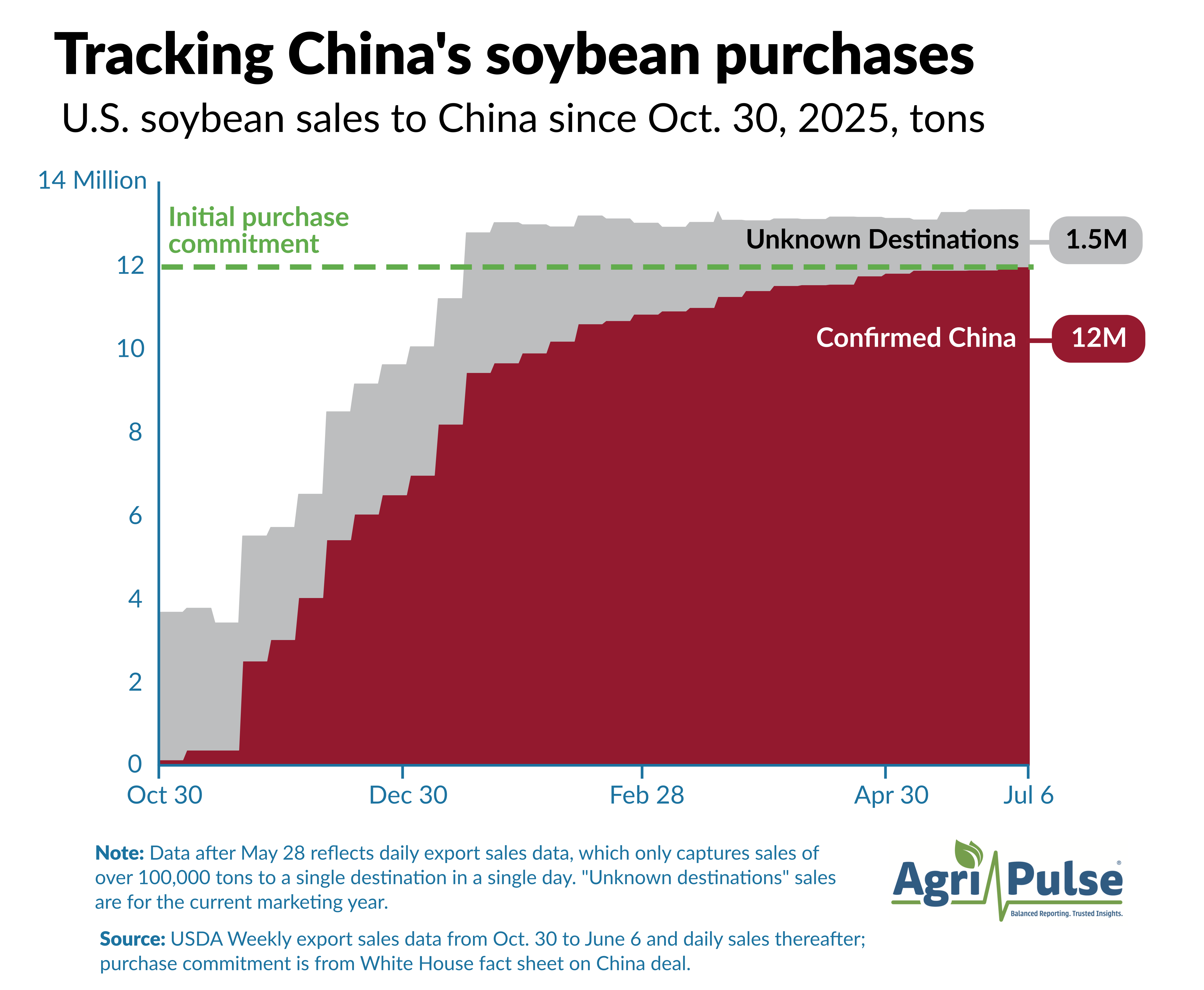
In May 2025, following a string tit-for-tat tariff escalations between the U.S. and China, Chinese buyers froze purchases of U.S. soybeans. The country resumed buying in October, ahead of a meeting between both countries’ leaders, but not before driving prices down and inflicting losses on U.S. farmers.
The Trump administration says that at that meeting in South Korea in late October, Beijing agreed to purchase at least 12 million metric tons of U.S. soybeans in the final two months of 2025, and a further 25 million tons in 2026 and 2027, respectively. In a Truth Social post in early February, President Donald Trump said that Beijing is considering upping its purchases by another 8 million tons this marketing year.
Agriculture Secretary Brooke Rollins said at the end of January that China had fulfilled its initial 12-million-ton purchase commitment.
Official data lags the private sector; it is highly likely that China has surpassed its initial 12 million-ton commitment, analysts say.
In addition to confirmed sales of just over 12 million tons, as of July 6, USDA reported outstanding orders from unknown destinations of around 1.5 million tons.
“It sounds reasonable,” former USDA economist Fred Gale told Agri-Pulse in late January. “There's no way to track it with any precision,” he added, but said that many of the orders without a confirmed destination are likely destined for China.
Industry figures and lawmakers are closely watching what comes next, however, and are keen to ensure China fulfills both its 12 million-ton pledge, and its 25 million-ton commitment before the end of 2026. In her social media post touting China's initial 12 million tons of purchases, Rollins said that Beijing would still buy another 25 million tons in 2025.
Notably, China has not publicly confirmed the details of the purchase commitments. The two sides have also not released any text of any agreement reached.
“Looking ahead, absent political disruptions, I’d expect 18-20 MMT in 2026/27,” commodity analyst Agata Kingsbury said in a Jan. 20 LinkedIn post. “But 25 MMT is achievable if the agreement holds and geopolitics stay quiet (a big ‘if’).”
“The story isn’t over,” she noted.
A note on the graph data
Agri-Pulse is tracking Chinese soybean purchases through official USDA data, using weekly export sales data, supplemented with daily “flash” sales data.
Daily sales only capture sales of more than 100,000 tons to a single destination in a single day, while weekly export sales use reports from U.S. exporters to track all U.S. exports in a given week. Accordingly, the weekly export date is shown until the latest available date, with daily export sales shown thereafter.
USDA adjusts daily and weekly export sales data to reflect any cancellations or changes in destinations. Accordingly, the numbers can go up or down in subsequent data releases.
The Foreign Agriculture Service publishes daily sales on the business day after the exporter reports the sale to the agency.
The sales to "unknown destinations" shown now includes all outstanding sales to unknown destinations captured in the weekly export sales, plus additional daily flash sales since the last weekly export sales data release.
For more news, go to Agri-Pulse.com.