
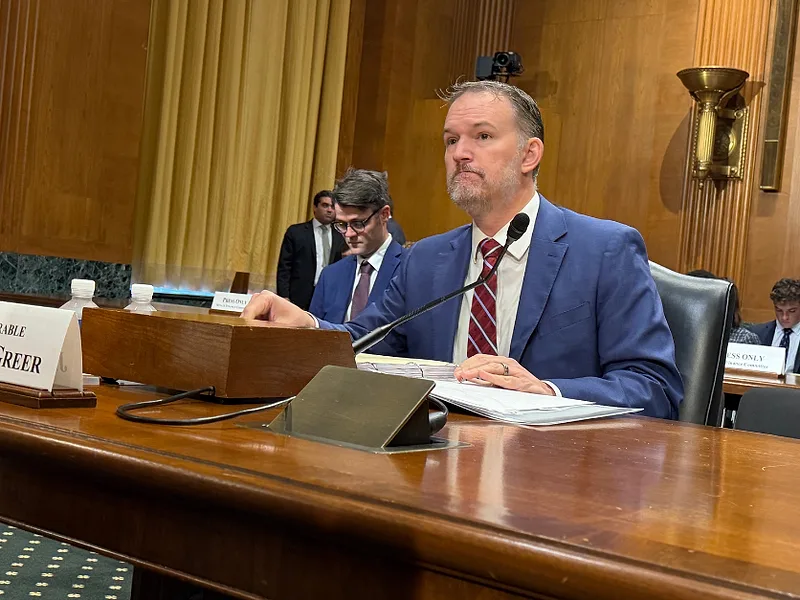
The Trump administration's exemptions for agricultural inputs such as fertilizer and seeds from tariffs imposed on 60 countries drew praise from the agricultural industry.
The Office of the U.S. Trade Representative concluded its quick Section 301 investigation Thursday into allegations that 60 countries have not properly enforced prohibitions against importation of products made using forced labor. The action came just hours before global 10% tariffs imposed under Section 122 were set to expire.
The 60 countries now face tariffs ranging from 10 to 12.5%. In addition to seeds and fertilizer, products exempted include pesticide inputs, coffee, bovine products, and certain fruits such as bananas and seasonal tomatoes.
The American Seed Trade Association – representing approximately 85% of the U.S. seed industry – expressed support for the exemptions. USTR exempted several types of seeds from the levies, including seeds for sweet corn, peas, sowing beans, kidney beans, lentils and leguminous vegetables "not elsewhere specific or included," according to the Federal Register notice memorializing the tariffs.
“Tariff relief under these investigations, and others, will help ensure that U.S. seed companies can conduct necessary steps of seed production that cannot be relocated and remain economically competitive in a global industry. The U.S. seed sector remains a committed partner in combating forced labor, and in supporting the innovation pipeline that empowers American farmers to lead the world in agricultural exports,” Andy LaVigne, ASTA’s president and CEO, said in a statement.
At a hearing earlier this month, LaVigne testified that tariffs are adding significant costs to the industry that traditionally relies on global cooperation for research, development and seed movement.
The American Soybean Association said in a statement that it appreciates the exemptions for seeds, fertilizer, crop protection products and machinery.
“At the same time, additional products essential to farmers now face additional tariffs that will drive up the price of inputs and further exacerbate the rising cost of farming. ASA encourages the administration to continue expanding exemptions to reflect the needs of U.S. agriculture," Scott Metzger, ASA’s president and Ohio soybean farmer, said in the statement.
The National Coffee Association, which also testified at the Sec. 301 hearing, was pleased with the outcome.
“The United States can’t grow coffee to meet our needs, so the administration’s strategic exemptions of coffee from these tariffs will make critical contributions to easing cost-of-living pressures and enabling coffee’s continued enormous contributions to U.S. jobs, manufacturing, and the economy,” William “Bill” Murray, NCA’s president and CEO, said in a statement.
NCA also testified at another Sec. 301 hearing to impose 25% levies on Brazil, where the group recommended an exemption for unflavored instant coffee. Those tariffs were finalized on July 15 with that exemption.
Bids to remove the exemptions on bovine and beef products were unsuccessful. Jenna Stanton, the director of policy and public affairs for the United States Cattlemen's Association, testified at the USTR hearing, urging the the panel to drop the exemption.
“American consumers are telling you with their wallets that they want beef and they’re willing to pay for it. What they are not asking for you to do is to quietly replace American beef with foreign beef raised under conditions we would never allow here,” Stanton said at the hearing, adding that U.S. beef consumption is at a 70-year high.
USCA didn’t respond to a request for comment.
The tariffs also remove tariffs on UK whiskies; however, that exemption doesn’t extend to all imported spirits and wines.
“The U.S. and UK spirits industries support a deeply integrated transatlantic supply chain that will benefit from the eliminations of these tariffs. That includes American cooperages, stave mills, loggers and white oak producers whose new and used American Whiskey barrels play an important role in whisky production and maturation in the U.S. and UK,” the Toasts Not Tariffs coalition said in a statement.
“We remain hopeful this is the first step toward eliminating tariffs on all imported spirits and wines, further supporting the American businesses and workers that rely on a thriving hospitality industry,” the statement continued.
Congress reacts
The latest batch of tariffs came shortly before the Section 122 tariffs were set to expire Friday. That authority allows the president to impose levies up to 15% for 150 days, but not longer without the consent of Congress.
The Sec. 122 tariffs replaced the global levies under the International Emergency Economic Powers Act, or IEEPA, that the Supreme Court rolled back in February.
Instead of relying on Congress to extend the tariffs, the administration decided to launch the Sec. 301 investigation, granting the White House more political control over the tariffs; however, any future administrations could remove the tariffs upon entering office.
House Ways and Means Chairman Jason Smith, R-Mo., applauded the announcement.
“Holding accountable those countries that are not doing nearly enough to rid their supply chains of goods produced with forced labor is appropriate to address unfair trading practices that put American workers at a competitive disadvantage,” Smith said in a statement. “The Trump Administration’s investigations have already compelled a number of countries to put forward proposals and take concrete steps to implement forced labor import bans.”
The committee’s ranking member, however, criticized the move, along with other Democrats.
“Forced labor is a real and pervasive problem in our supply chains and demands serious enforcement," Rep. Richard Neal, D-Mass., said in a statement. "It should never be cheapened into a pretext for a tariff policy built on dubious legal theories and personal grievances. The American people deserve a coherent trade strategy — not another last-minute attempt to save face for a president who has completely lost the plot,"
The Senate Finance Committee's ranking member, Ron Wyden, D-Ore., said in a statement that the levies will keep inflation high and will not help workers around the world. Wyden introduced a bill that would place checks on the president’s tariff authority.
“This is a blatant attempt to revive Trump’s illegal global tariffs under a different name,” Wyden said. “Trump cannot be trusted with tariff authority. Congress should pass the bill I introduced this week to rein him in and put Congress back in the driver’s seat on trade.”
The committee’s chairman, Mike Crapo, R-Idaho, didn’t respond to a request for comment.
For more news, go to Agri-Pulse.com.
