
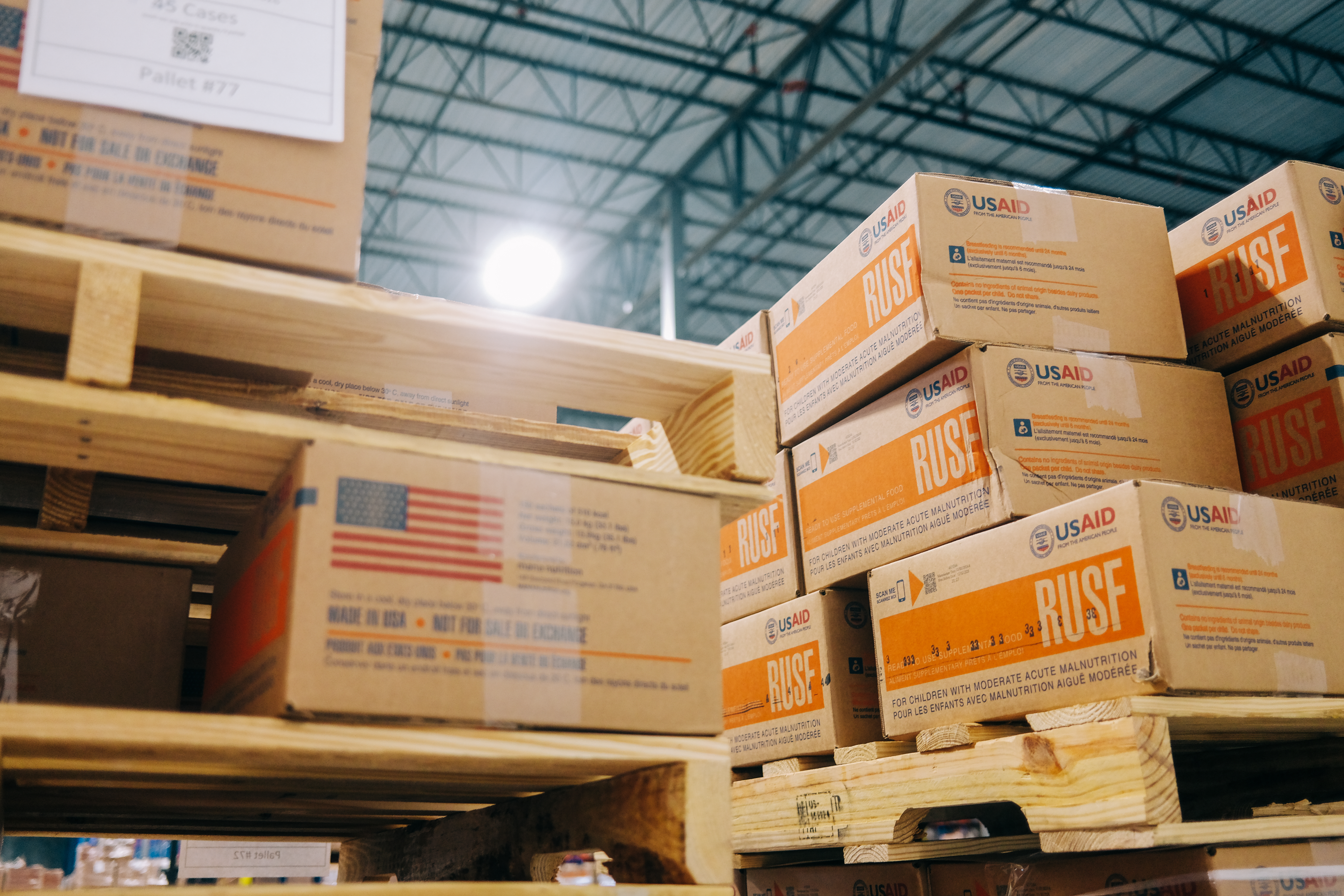
The State Department took a step toward absorbing U.S. Agency of International Development programs last week when it told Congress it would dissolve the agency and outlined its vision for redistributing the agency’s responsibilities across the department. But analysts fear that the merger plays into the hands of U.S. adversaries and could, perhaps permanently, sever a source of revenue for U.S. agriculture.
Jeremy Lewin, a senior USAID official and former official in the Department of Government Efficiency initiative, wrote to agency staff last week that all but a congressionally mandated barebones staff would be terminated this summer as part of USAID’s merger with State. The department, Lewin said, would hire the necessary staff after the merger.
One former USAID contractor said the email was being discussed in aid circles as an “extinction event” for U.S. foreign aid. They argued that U.S. foreign aid would essentially cease until the State Department could restart operations — which could take two years or more.
Other countries are already stepping in the fill the void, analysts told Agri-Pulse.
In the wake of a 7.7-magnitude earthquake in Southeast Asia on Friday, the U.S. has pledged around $2 million in aid, said the Washington Post, a fraction of China’s almost $14 million.
“The United States is essentially noticeably silent in its response,” said Chris Barrett, a professor of economics and management at Cornell University.
Beijing also stepped in to fund axed U.S. projects in Cambodia supporting child literacy and nutrition.
“China's like, ‘Oh, you don't want to build your global influence this way. We certainly will,’” a former USAID contractor who received their termination notice in February told Agri-Pulse.
Barrett argued that China already is clearly maneuvering to take advantage of the U.S. retreat from international aid. Stepping in to fund health clinics or child nutrition programs, he said, has long-term benefit for Beijing. Countries that have seen their U.S. aid dry up may be less inclined to support U.S. goals in international forums, he said. Similarly, in countries where China has stepped up to plug the hole, governments may see benefits in advancing Beijing’s interests.
“That government is going to be a lot friendlier to China than they otherwise would have been,” Barrett said.
There are opportunities for China in the food assistance space as well, should they wish to take them. China has traditionally not been a big player in international food aid, Barrett said. It has had its own food security challenges and has instead focused support on infrastructure and other development programs. But with Russia’s war in Ukraine imposing financial constraints on Moscow's ability to fund international aid, and the U.S. winding down operations — at least temporarily — an opening could fall into China’s lap, analysts said.
“It seems to me, anyway, a logical progression for us leaving a vacuum and opportunists stepping in,” said Mark Moore, co-founder of Mana Nutrition, a company that makes life-saving nutrition packs for malnourished children. “If they don't, they're stupid.”
 Mark Moore (Mana Nutrition photo)
A new food aid supply chain
It’s not only China that stands to benefit from the U.S. retreat. Countries in the global south can serve as new sources of international food assistance.
The U.S. model of food assistance through Food for Peace is unique. Farm bills authorize the purchase of U.S. farm products to be shipped abroad for humanitarian purposes. But other donor countries cut down on logistical costs by sourcing food products closer to the recipient countries.
“As those who still conduct food assistance operations in the developing world shift their sourcing, you're going to see places like Brazil and South Africa benefiting from this,” Barrett said. Southern European countries that can send products to Africa could also stand to benefit, as well as Australia and New Zealand, which can ship to recipients in Asia.
“The suppliers who benefit from that humanitarian assistance are entirely non-American. This is a big change,” Barrett said.
For ready-to-use therapeutic foods, which Mana Nutrition makes, alternative suppliers in Africa have ramped up operations and can capitalize on shifting supply chains and new donors.
There’s also no guarantee that if State were to swiftly rebuild U.S. food aid, it would do so in the mold of USAID. Erin Lentz, associate professor of public affairs at the University of Texas, said that a renewed focus on government efficiency and the project of rehoming and rebuilding food aid programs under the State Department could open the door to conversations around new models that reduce the role of U.S. farmers.
“It's much more efficient and faster and cheaper to use cash to buy food locally, or to use cash to allow people to buy food themselves,” Lentz said.
It’s easy to be “in the know” about agriculture news from coast to coast! Sign up for a FREE month of Agri-Pulse news. Simply click here.
She added that she has already seen a revival of discussions in aid circles of how best to source and distribute U.S. food aid.
“If this is about a political statement like, ‘Oh, we think we can get this triple win by helping farmers, shippers and hungry people by returning to a much more outdated food aid model where we're buying food locally,’ it's a wasteful approach,” Lentz said. “That isn't to say that farmers in the U.S. don't deserve and need support and assistance … it's just that food aid might not be the right tool to do it.”
Inexperience at State
The State Department’s takeover also poses new challenges for U.S. foreign assistance that could undermine goals of promoting international development and providing life-saving aid.
The department is a policy institution, George Ingram, a senior fellow at the Brookings Institution’s Center for Sustainable Development, told Agri-Pulse. As such, he said, it lacks the necessary experience to run assistance programs in the field. With USAID’s workforce let go, State will need to build this institutional knowledge from scratch.
The former USAID contractor said that they had seen this first-hand working on projects in Bangladesh. The State Department’s Bureau of Population, Refugees and Migration had just one person in the country working with Rohingya refugees overseeing a very large budget, they said.
“I don't think that the work culture and organizational culture has an eye towards the level of oversight that is required,” the former contractor said.
Bringing USAID under an executive department with a political agenda could also hurt State’s ability to partner with local organizations to get its aid to affected communities, Ingram argued.
Local groups "don't want to be seen to be the implementers of U.S. foreign policy,” Ingram said. “They want to be seen as operating in the interests of their own communities and their own countries.”
 George Ingram (Brookings photo)
USAID’s independence had made it easier for the U.S. to partner with these local organizations, he said.
Lentz pointed to the United Kingdom’s merger of its Department for International Development with its Foreign and Commonwealth Office in 2020 as an example of challenges that come with bringing aid under an office with an explicit foreign policy focus.
U.K. foreign aid, she said, is now viewed internationally as part of a broader government effort to support the U.K.’s interests abroad. “It's lost some credibility abroad, frankly,” Lentz said.
State’s proposed reorganization also threatens to create silos that prevent knowledge-sharing on international aid, Ingram argued. A reorganizational chart submitted to Congress and seen by Agri-Pulse would separate USAID’s development operations, allocating some to State’s regional bureaus and folding others into its offices of Global Food Security, Global AIDS Coordinator and Global Health Security and Diplomacy.
“If you're going to do it,” Ingram said, “keep all of the development stuff together.” Ingram charged that the proposal sent to Congress would be "just the opposite.”
What is clear to many analysts who spoke to Agri-Pulse is that the model for food and humanitarian aid as it was before Trump took office is gone and is unlikely to return.
“Foreign aid as we have known it to date, will not come back,” Ingram said. “We're going to be dealing with a foreign aid program that is much more transactional and is driven by foreign policy considerations and not development considerations. And it's going to impact on the effectiveness of that assistance.”
For more news, go to Agri-Pulse.com.

