
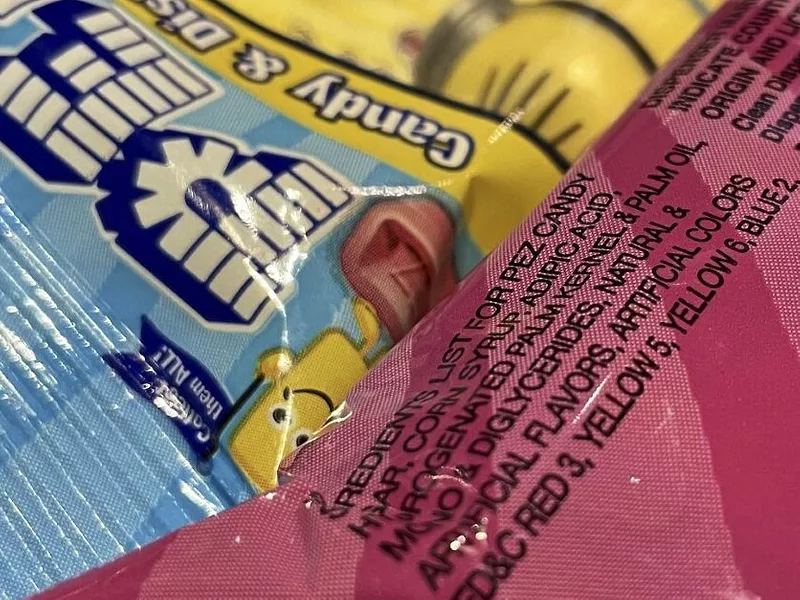
Some food companies are beginning to phase out synthetic food dyes in reaction to the Trump administration’s goal of removing all color additives from the food supply by the end of 2026.
However, the push now is driven largely by state laws. Industry’s success in meeting these goals could hinge on the Food and Drug Administration efficiently evaluating and approving alternatives. Cuts to the agency's staffing could throw a wrench into the process.
Last month FDA Commissioner Martin Makary joined Health Secretary Robert F. Kennedy Jr. to announce a national standard and timeline for removing synthetic food dyes. The plan included regulatory moves such as removing authorization for Citrus Red No. 2 and Orange B.
However, consumer health advocates were quick to point out that these dyes are not commonly used in food now. Removing the six remaining synthetic dyes will be voluntary for the industry.
Kennedy and allies in the "Make America Healthy Again" movement have met privately with food industry groups on chemicals, additives and dyes. At their announcement, food and health leaders said they had an understanding with companies on this effort, but no representatives from the food industry were present at the event or immediately confirmed the agreement.
Melissa Hockstad, president and CEO of Consumer Brands Association, said there was no formal agreement between the administration and the food industry on food dyes. But there were discussions about what it would take to make the transition and find scalable alternatives.
“Realistically, there's a time component to it, and there is a cost component to it, which is something that we were clear about during our conversations, and it's something that we're, of course, thinking about and how we would be able to proceed moving forward,” Hockstad said.
CBA continues to be clear with Kennedy about what the industry will need to make the switch and realistic timelines, and feels the administration has acknowledged these.
States driving food dye bans
However, states are pushing bans on food colorings in school meals or entire state markets. Food companies will follow the law and therefore need to meet these timelines.
West Virginia is one state that has already passed a ban on seven food dyes. The ban starts in school meals by Aug. 1 of this year, and other foods in the state in 2028.
 Melissa Hockstad (CBA photo)
Hockstad said CBA is tracking 141 bills in 40 states. She said it is a challenging patchwork for industry but also could reduce access and choice for consumers and increase costs.
Based on the announcement, CBA is optimistic that HHS and FDA are stepping up as national safety standard regulator as they prefer a federal standard over the patchwork that is forming.
Speaking at a recent food policy conference, Jim Jones, former deputy commissioner of the FDA Human Foods Program, said having secretarial level leadership on food dyes and chemicals is a significant step. Still he was not optimistic about the initiative’s success.
“Close to zero, I’d say,” Jones said on the odds all synthetic dyes are removed from the food supply by the proposed timeline. “There’s no hammer. There’s no consequence to not doing it.”
Either intentionally or not, the announcement signaled to states that FDA and HHS embrace the recent action on food dyes, Jones said.
Cut through the clutter! We deliver the news you need to stay informed about farm, food and rural issues. Sign up for a FREE month of Agri-Pulse here.
Jones warned this could shift policymaking on chemicals. Historically, federal laws have given FDA and EPA authority to make policy based on science. With states driving these policies, it’s based more on public perception.
“I’m not saying one’s right or wrong,” Jones said. “But mistakes will be made that will lead to misallocation of resources.”
Jones said state legislators could go after chemicals that don’t pose much risk but impose costs on manufacturers, restricting resources to pursue more harmful chemicals.
One area the industry will need FDA to act on, for example, is ensuring that natural food dye replacements are safe and approved.
 Jim Jones (FDA photo)
“Our No. 1 priority is food safety, and we’re going to make sure that if a safe ingredient is being removed from the marketplace, we have to have a safe ingredient to replace it,” said Sara Gallo, senior vice president of product policy and federal affairs at CBA.
FDA said it would expedite review of alternative dyes, which will help industry have a safe ingredient to transition to. It raises questions about agency resources, however.
Gallo said it’s important that FDA’s Office of Chemical Safety is well staffed so alternative dyes are evaluated in a timely manner and so consumers have confidence in them.
“I don't think we can have an honest conversation around the availability of alternatives and ramping those things up if we're not thinking about how the agency itself is prepared to handle that influx of work,” Gallo said.
Jones said the postmarket chemical review staff is not equipped to put much energy into food dyes. He said there are just 30 people in the office, not enough to evaluate more than a couple chemicals per year.
PepsiCo announced during a recent investors’ call that it would reformulate many of its snack products to remove artificial colors. The company pointed out that over 60% of its U.S. food products already contain no synthetic food dyes.
The brand’s products include popular chip and snack products like Lay’s, Cheetos, Doritos and Frito Lay items. The entire portfolio will shift to using natural colors or have natural color options over the next couple of years, said PepsiCo CEO Ramon Laguarta.
"We obviously stand by the science and our products are very safe and there's nothing to worry about this," Laguarta said. "Ideally, we can do this in a very pragmatic, orchestrated way as an industry and not create unnecessary panic or chaos. But, we'll lead that transition."
On Monday leaders at Tyson Foods said the company has been “proactively reformulating” products with synthetic dyes and plans to remove all those ingredients by the end of May.
Shortly ahead of the FDA announcement, the International Dairy Foods Association said its members would eliminate artificial colors in milk, cheese and yogurt products in the national school lunch and breakfast programs. The group expects dyes to be removed by July 2026.
Food companies are evaluating behind the scenes the products they can transition. Hockstad said more companies are likely to announce changes to their products in the coming months.
For more news, go to: www.Agri-Pulse.com

