
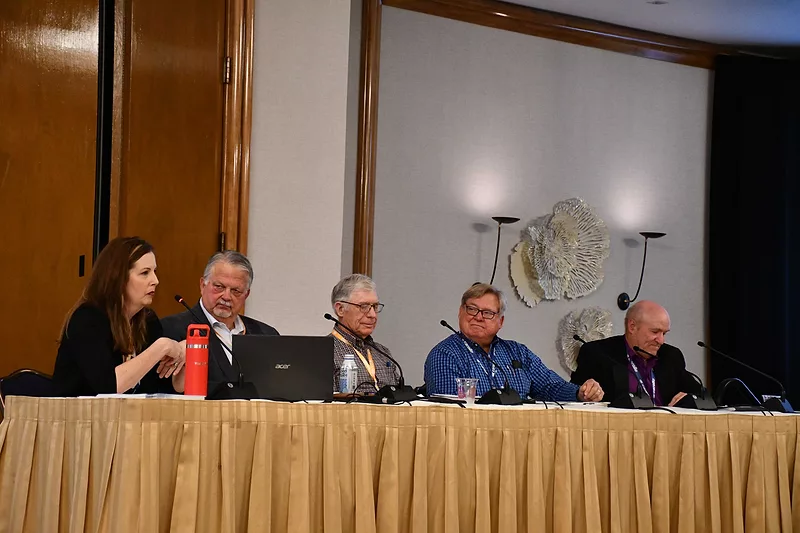
Fourteen farmers representing portions of California’s Delta and the San Joaquin Valley are joining ranks to coordinate priorities for Delta management.
Though similar coalitions of farmers interested in water management have tried over the last decades to lobby local, state and federal water managers on their respective interests, the Great Valley Farm Water Partnership is trying to be the tortoise against the hares in the race to create solutions applicable to all Delta water users.
“I tell everybody this work feels like my golf game –– as long as the ball goes forward, I'm happy,” said Amy Wolfe, a partner at Mujeres Poderosas LLC and the partnership’s official facilitator.
She told Agri-Pulse that they haven’t received any pushback on the content of their recommendations. Rather, people have been wary of another farmer-led coalition trying to make headway on Delta management.
Wolfe describes the partnership as an “opportunity to get back to basics” by grouping the people most impacted by water supply restraints in a single alliance. Controversial management strategies like the Delta Conveyance Project were intentionally left out of the partnership’s strategy. Wolfe explained they are trying to demonstrate a unified front and avoid “shiny object syndrome.”
“What this group understands is the value in the importance of connecting as people — before issues, before commodities, even before geography,” said Wolfe. “And frankly, these are really hard, complicated, intricate issues that require a different approach … it doesn't mean that we're always popular in our commitment to those guiding principles, but the group is dedicated to holding steadfast.”
Since November 2023 the partnership has met every other month to identify key issue areas facing Delta and south-of-Delta users. Brought together by Austin Ewell, a board member of the Water Blueprint for the San Joaquin Valley, the volunteer farmer-delegates were asked to find common ground on how they would like to see the Delta managed. Blueprint members hosted a series of Delta tours and invited the delegates to mingle and discuss how to improve the system at large.
The 14 delegates represent water and agricultural interests across the Sacramento-San Joaquin region, such as farmers Edwin Camp, Arvin-Edison Water Storage District board president and Friant Water Authority board member, and Mary Hildebrand, who sits on the South Delta Water Agency and the Delta Water Users boards of directors.
Since their initial meeting, the delegates, informed by a group of technical advisors, have selected seven focus areas: sediment removal in the south Delta, south-of-Delta water storage capacity, levee funding and maintenance improvements, south Delta permanent operable gates, improved export management, predation suppression and invasive aquatic weed control.
Starting with sediment
During a panel at the Association of California Water Agencies spring 2025 conference, Wolfe and four farmer delegates announced the completion of the partnership’s first white paper.
The group decided to begin with sediment reduction, which became a hot topic after the floods of 2023 exacerbated buildup in south-of-Delta channels.
Russell van Loben Sels, VP and chief finance officer of Amistad Ranches and former chair of California’s Delta Caucus, explained that the affected channels not only move water to export pumps, but they move water throughout the south Delta. The 2023 conditions left Delta diverters without access to water, affecting exports from the Central Valley Project and State Water Project.
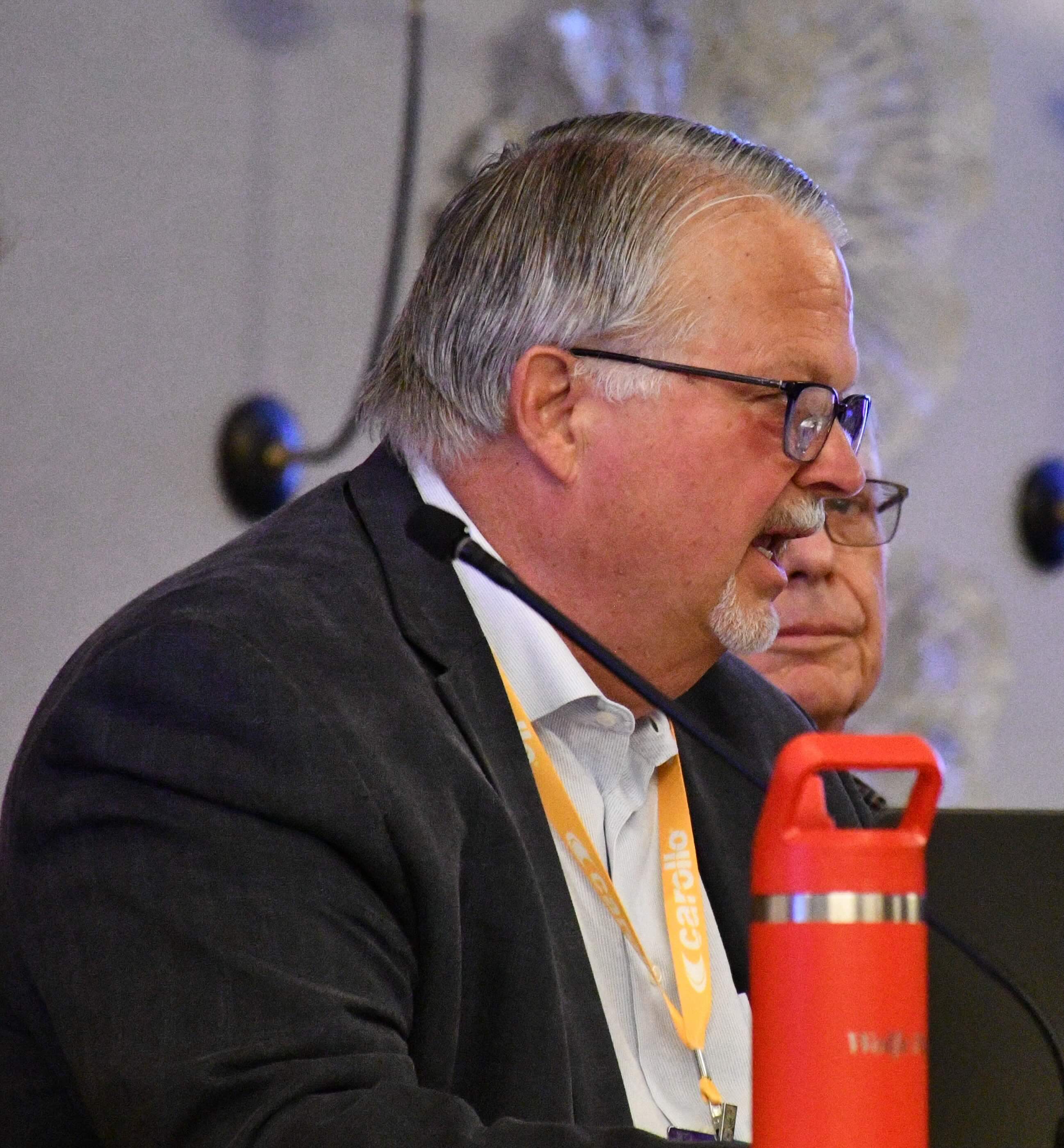 Edwin Camp (Agri-Pulse photo)Camp said unifying Delta water users is key to the partnership’s mission and why the group is different from past coalitions.
“I used to claim my Delta compadres hated me because I was down in the bottom end of the Central Valley,” he said, explaining that he felt a need to compete for water with northern users.
He found that once they were in the same room, the farmers were more excited to find collective and easily achievable solutions than argue.
“We gotta work at it in small bites,” said Camp.
The position paper looks at current sediment and silt conditions in Delta channels and efforts to remedy buildup. It recommends the state adopt a channel depth restoration and maintenance program in the Delta to ease pressures on the ecosystem, for local diverters, and the Central Valley Project and State Water Project.
“We've done a lot of work, we've created a resource that we can distribute and start to generate the support politically and monetarily to get this first project on the road,” said van Loben Sels.
The position paper revolves around a 2021 planning guide for south Delta channel depth restoration. Prepared by the environmental science and engineering consulting firm Anchor QEA, the guide supports ongoing channel maintenance and levee system improvements.
Cut through the clutter! We deliver the news you need to stay informed about farm, food and rural issues. Sign up for a FREE month of Agri-Pulse here.
Getting partners back to the table
During the ACWA panel, Russell Ryan, a program manager for Metropolitan Water District of Southern California, said permitting and funding are the keys to starting the maintenance. He hopes the geographic diversity represented by the delegates will propel required permits to some extent.
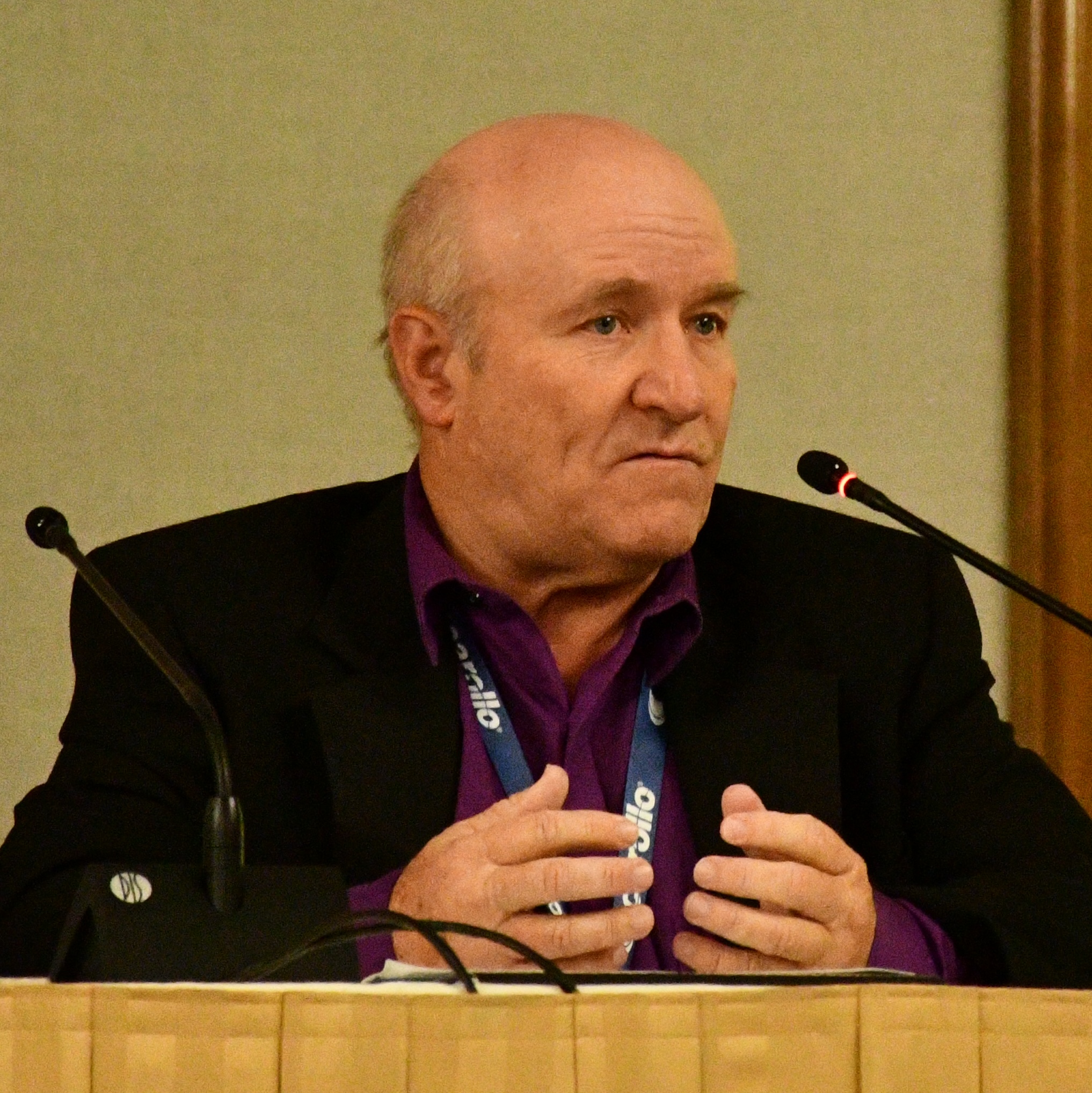 Russell Ryan (Agri-Pulse Photo)
“The funding is a big one … we are very conscious of that, and we all have our connections to the Legislature,” said Ryan.
Though the initial Anchor QEA report was supported by the California Department of Water Resources, South Delta Water Agency, State Water Contractors and San Luis & Delta-Mendota Water Authority, Wolfe told Agri-Pulse that the partnership is focused on reuniting those four entities to commit to carrying out the maintenance plan.
“At the time that was a group, through their actions and their spend … [that] really demonstrated a commitment to the value and the importance of doing this work,” said Wolfe.
The study ultimately identified roughly 30 miles of channels that will require maintenance over a 10 year period, costing about $10 million per mile.
One of the partnership’s technical advisors told Agri-Pulse the study was released around the same time California was facing a major drought period. Managers in the south Delta directed their focus to drought response, electing to run the Paradise Cut bypass expansion project in tandem with some channel maintenance.
But the expansion project is not moving quickly enough to address the sediment buildup, facing delays in obtaining funding.
Understanding that more pressing issues may have deterred the progress of a maintenance program, Wolfe said the GVFWP sees an opportunity with a new federal administration and the aftermath of the 2023 floods to make the project a reality.
“We're getting to a point where the cumulative impact, should we have another major wet season, could tip things to a place where it's now managing [a] crisis,” said Wolfe, noting that some of the member delegates believe that point has already passed.
The delegates are now working to distribute the white paper across their networks to garner awareness of the partnership’s position. They are also putting out a letter requesting signatures of official support.
Scott Peterson, director of water policy for the San Luis & Delta-Mendota Water Authority, told Agri-Pulse he is excited to see multi-region agricultural interests working together and potentially set a precedent for other Delta issue areas, like predation of non-native species.
“There's long been too much conflict in this space…[we hope] that it's something that creates a stable foundation and a stable track record for success,” said Peterson.
For more news, go to Agri-Pulse.com.

