
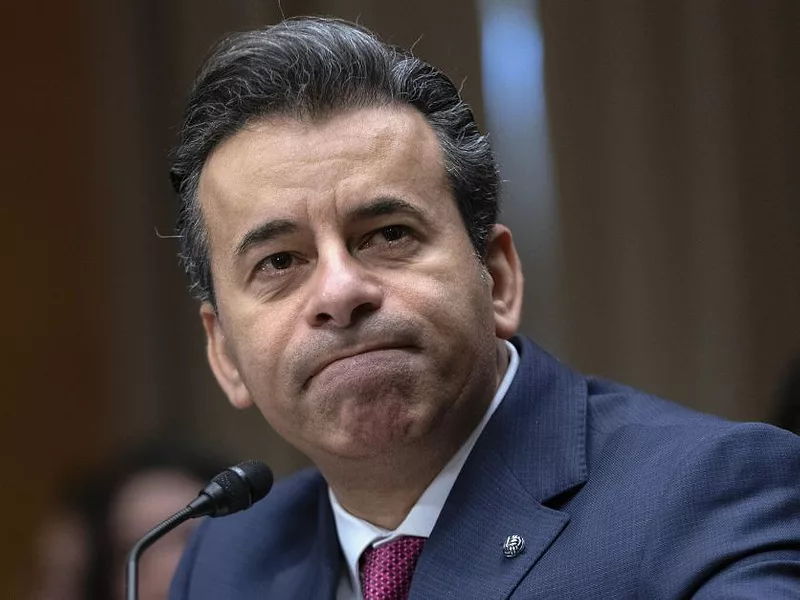
Industry groups are criticizing FDA Commissioner Martin Makary for “incorrect and misleading” comments on seed oils.
Makary told Fox News Wednesday morning that it’s nearly impossible to find infant formula without seed oils, a product he called “pro-inflammatory” and not naturally occurring.
His comments came ahead of a FDA expert panel on infant formula, centered on the presence of heavy metals and seed oils.
“Seed oils have been used in the global food supply for decades and are proven to be safe and nutritious ingredients for a variety of products,” said the National Oilseed Processors Association and the Corn Refiners Association in a statement. “Remarks like those made today create unwarranted anxiety about the food supply and about safe and nutritious formula that benefits millions of infants globally.”
Red-state lawmakers clear MAHA bills
Legislators in Texas and Louisiana have passed bills requiring food manufacturers to put warning labels on products containing certain ingredients. Both bills await the signatures of Republican governors. Their passage demonstrates the growing influence of Health and Human Services Secretary Robert F. Kennedy Jr.’s Make America Healthy Again movement.
The Louisiana bill, SB 14, would ban certain ingredients – including several food dyes, additives and artificial sweeteners like sucralose – from school meals. This does not apply to food in vending machines or concession stands.
It also would require manufacturers to label any food item in the state if it includes one ingredient on a more expansive list. In addition to food dyes and additives, the list includes interesterified soybean oil and synthetic trans fatty acid.
Finally, the bill would require restaurants and other food service establishments to inform customers on menus or another visible location if they cook with seed oils. This applies to corn, soybean, canola and sunflower oils.
Louisiana Gov. Jeff Landry issued an executive order in May requesting the appropriate state agency to request a waiver from the USDA to pilot restrictions on soft drinks and candy from SNAP. In a video announcing this move, he also urged the Legislature to approve SB 14.
Meanwhile: In Texas, both chambers have cleared SB 25 for Gov. Greg Abbott’s signature. Similar to the Louisiana bill, it would require manufacturers to display a warning label if the product contains one of 44 ingredients, many of which are banned or regulated in other countries.
The label would read: “WARNING: This product contains an ingredient that is not recommended for human consumption by the appropriate authority in Australia, Canada, the European Union, or the United Kingdom."
The bill was scaled back from its original form to remove sweeteners. It also would invalidate the labeling requirements in the event of similar or more far-reaching federal requirements. The bill also only applies to a food product label developed or copyrighted on or after Jan. 1, 2027.
Appropriations bill seeks to move jurisdiction of Food for Peace
House appropriators who oversee budgets for USDA and FDA are set to advance the fiscal year 2026 spending bill today, with a full markup scheduled for next Wednesday.
It’s easy to be “in the know” about what’s happening in Washington, D.C. Sign up for a FREE month of Agri-Pulse news! Simply click here
A big but not unexpected change is language transferring Food for Peace to the USDA’s jurisdiction. It would also cut funding for the program to the lowest level since 2002.
The bill deviated in many ways from the president’s 2026 budget request, by maintaining funding for the Commodity Supplemental Food Program and not going nearly as far on cuts to staff at the Natural Resources Conservation Service.
The House Appropriations Subcommittee on Agriculture, Rural Development, FDA and Related Agencies will vote on the bill today.
Read more about the House appropriations bill here.
CBO estimates impact of tariffs, budget bill
The Congressional Budget Office estimates the House-passed One Big Beautiful Bill Act would increase federal budget deficits by $2.4 trillion over the next 10 years. That’s the net effect of the legislation after $1.25 trillion in spending cuts and $3.8 trillion in tax reductions, primarily through extending provisions of the 2017 Tax Cuts and Jobs Act, CBO says.
The bill would reduce spending under the House Ag Committee by $238 billion over 10 years after accounting for $56 billion in increased outlays for farm bill programs, most of which would go to commodity programs and crop insurance, according to CBO.
But, but, but: A separate CBO analysis says President Donald Trump’s tariffs would raise $2.8 trillion in revenue over the decade while also slowing the economy.
Keep in mind: Senate Republicans are likely to propose some significant changes to the House bill in coming days. For one thing, there’s concern in the Senate about the House bill’s state cost-share requirement for the Supplemental Nutrition Assistance Program.
Agri-Pulse’s Rebekah Alvey wrote about how the bill could hit many counties with added costs.
What’s next: Senate committee chairs are rolling out their proposals. Senate Environment and Public Works Committee Chair Shelley Moore Capito, R-W. Va., released the draft for her panel’s portion of the bill Thursday. It eliminates funding provided under the Inflation Reduction Act for a variety of purposes, including for testing the environmental impact of biofuels.
Lutnick: Commerce to roll out BEAD funding by end of the year
The Trump administration aims to begin rolling out Broadband Equity, Access and Deployment program funding by the end of 2025, Commerce Secretary Howard Lutnick told Senate appropriators on Wednesday.
Lutnick said the department will publish a notice of funding opportunity through the program “soon,” and aims to begin approving contracts within the 90 days that follow.
He said if applicants “are technologically agnostic” and “agree to provide the broadband at the cheapest price per user,” the agency will make all awards by the end of the calendar year.
On a separate note: In response to a question from Michigan Democrat Gary Peters, Lutnick said the National Weather Service would continue to staff regional offices. But he also criticized the current technology and “hard-coded” operational systems used by NWS as “absurd.”
“The next time you see me, the concept of having three people at some regional office will be laughable because our 2,000 meteorologists and our hundreds of hydrologists will be able to stay and forecast and protect us in a modern way."
Chinese nationals linked to possible agroterrorism weapon
Two Chinese citizens have been charged in connection with allegations that they smuggled into the U.S. a fungus that could be used as an agroterrorism weapon. The fungus, Fusarium graminearum, is said to cause billions of dollars in crop losses worldwide each year.
The Justice Department says one of those arrested is a member of the Chinese Communist Party and that she was working at a University of Michigan lab. Her boyfriend allegedly tried to smuggle fungus from China to the lab.
Final word
"Not a lot of input from agriculture into that report, and it's noticed." – National Pork Producers Council CEO Bryan Humphreys, discussing the lack of producer input considered in the Make America Healthy Again Commission report.
For more news, go to Agri-Pulse.com.


