
House GOP leaders overcame Republican objections to Senate provisions on SNAP, rural hospitals and other issues to clear President Donald Trump’s massive spending and tax package, including a historic infusion of new farm program funding.
The bill, which passed 218-214 after a long night of drama, will provide $66 billion in new spending for farm programs while extending the 2017 Tax Cuts and Jobs Act and the 45Z biofuels tax credit. It will be the largest amount of new funding for farm programs since 2002.
Trump is expected to sign the bill on Friday.
The 870-page measure, dubbed the One Big Beautiful Bill, will set a new precedent for agricultural policy by paying for increased spending for farmers by cutting nutrition assistance. The bill will cut spending on the Supplemental Nutrition Assistance Program by an estimated $186 billion over 10 years, in part by expanding work requirements to adults as old as 64 and to parents of school-age children. States will also for the first time be required to start sharing the cost of SNAP benefits.
For farmers, the bill is expected to sharply increase payments through the Price Loss Coverage and Agriculture Risk Coverage programs, while cutting crop insurance premiums and putting new money into trade promotion initiatives and agricultural research. Farmers will be allowed to enroll up to 30 million additional acres into PLC and ARC.
The Congressional Budget Office estimates the overall bill will increase federal deficits by $3.4 trillion over the 10-year period since the cost of extending the 2017 tax cuts and adding new ones, combined with new funding for GOP priorities, far exceeds the projected savings from cuts to SNAP, Medicaid and other programs.
The 2002 farm bill provided $67 billion in new funding for commodity programs when adjusted for inflation, plus $16 billion more for conservation.
Just two Republicans ultimately voted against the bill – long-time deficit hawk Tom Massie of Kentucky and Brian Fitzpatrick of Pennsylvania, who opposed the Senate's additional Medicaid cut. But Republican leaders, along with senior White House officials, and Trump himself, had to intervene to assuage concerns of both moderates, who worried about the impact of Medicaid cuts on hospitals, and the hardline conservative members of the House Freedom Caucus who objected to Senate compromises on a range of issues, including SNAP and clean energy subsidies.
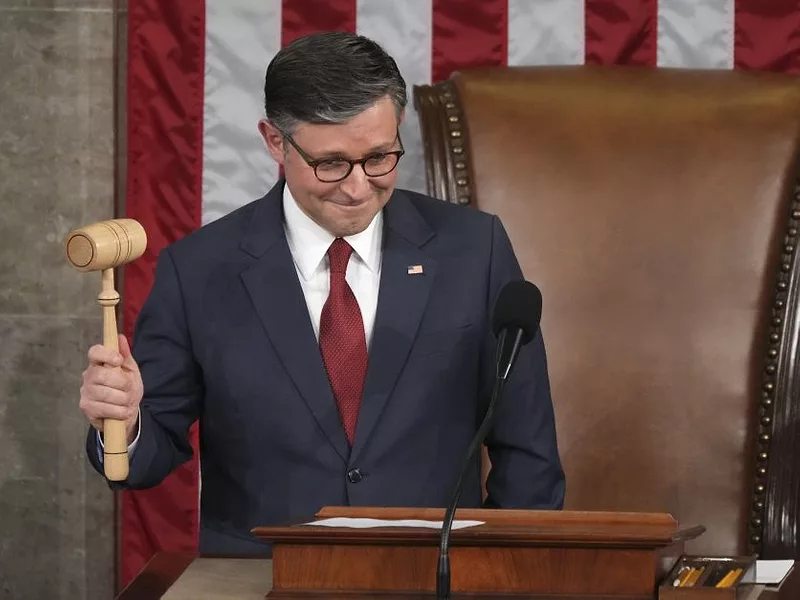
House Speaker Mike Johnson, R-La., huddled with Republican holdouts for hours Wednesday while keeping a procedural vote open. Several members also rushed to the White House throughout the day to get assurances and clarifications about the bill.
The drama continued overnight after a key procedural vote on the floor rule for the bill had to be kept open for six hours before the holdouts could be persuaded to vote for it, finally clearing the way at 3:30 a.m. for an eventual vote on the legislation itself.
Freedom Caucus unhappy with SNAP, hospital aid
A list of complaints circulated by the Freedom Caucus included an objection to the Senate’s easing of the new SNAP work requirements for parents of school-age children. Under the House bill, parents of children as young as 7 years old would be required to work for SNAP benefits. The Senate raised the minimum age of children to 14, in part because some states don’t allow children as young as 7 to be left alone.
Interested in more news on farm programs, trade and rural issues? Sign up for a four-week free trial to Agri-Pulse. You’ll receive our content - absolutely free - during the trial period.
The hardliners also objected to a Senate provision that would delay implementation of a new state cost-share requirement for SNAP benefits for states that have SNAP error rates in excess of about 13%, a provision needed to win the vote of Sen. Lisa Murkowski, R-Alaska.
Members of the House Agriculture Committee were also not thrilled by the changes, but said other parts of the bill outweighed a no vote.
“Am I happy about everything? No, but there's a difference between compromise and capitulation. We're not capitulating. We're compromising,” said Rep. Derrick Van Orden, R-Wis., when asked about the cost-share changes. “That's how this government is structured.”
A $50 billion fund for hospitals that was added to the bill in the Senate to soften the impact of Medicaid funding cuts also drew the conservatives’ ire.
With the House vote on the line, Agriculture Secretary Brooke Rollins defended the deep cuts to funding for Medicaid and SNAP. The Senate would cut $186 billion from SNAP over 10 years and use some of the savings to increase spending on farm programs, including $59 billion of commodity programs and crop insurance.
She told CNBC the historic cut to SNAP, something unthinkable in a bipartisan farm bill process, would provide “better and more important support for our farmers and ranchers."
As for Medicaid, Rollins claimed the program “is very broken. You have states that under the weight of Medicaid are going bankrupt. You have huge parts of the program that are unworkable.”
She went on, “There will never be a time in this country where people won’t have access to healthcare, but we have to do better with the programs that we have and Medicaid is one of them.”
At a White House meeting with some GOP moderates, Trump helped mitigate concerns about the Senate Medicaid changes, said Rep. Dusty Johnson, R-S.D.
Specifically, he said there was a deeper explanation of the $50 billion fund for rural hospitals. Johnson said the fund will not only go to rural hospitals, which was an important distinction for some members. He noted the provider tax and state directed payment provisions phase in over a number of years, which some members were unaware of and convinced them that these changes were doable.
Centers for Medicare and Medicaid Services Administrator Mehmet Oz explained to the lawmakers how the fund would be used. Johnson reportedly said there is no statutory requirement to use the funds for rural hospitals, which helped members from suburban and urban districts realize the fund could support them as well.
Rep. Don Bacon, R-Neb., said he’d like to send the bill back to the Senate with changes that move the Medicaid provisions closer to the House version. However, he said that’s unlikely to happen.
“You gotta weigh the pros versus cons and I weighed not raising taxes on people probably the highest,” Bacon said. “I think imperfection is just a fact. I’ve been talking people back home, I think we can tolerate what parts I don’t like the most.”
Democrats: Don't lecture us on deficit spending
Democrats focused their criticism on the SNAP and Medicaid cuts in a bid to make the votes as uncomfortable as possible for Republicans.
“Republicans at the direction of President Trump have decided to cut social programs for the most vulnerable people in our country in order to give billionaires like Elon Musk another tax break,” Rep. Salud Carbajal, D-Calif., said at a news conference.
“Instead of protecting and strengthening your health care coverage and feeding hungry families, my colleagues on the other side of the aisle are working to approve these indiscriminate cuts that will cause needless suffering, all … to give the richest 1% of Americans the largest tax break in history, not to mention it adds over $4 trillion to our national debt.”
Democrats also chastised Republicans for the projected increases in deficit spending that would result from the bill, which includes a $5 trillion increase in the federal debt ceiling. "Don't ever lecture us about fiscal responsibility, not now, not ever," House Minority Leader Hakeem Jeffries, D-N.Y., said in a closing speech that set the record for the longest in House history at more than 8 hours, 44 minutes.
Republicans will still have some unfinished business when it comes to farm programs. Many proposed changes to the 2018 farm bill couldn't be included in the legislation, including increased USDA loan limits.
The Senate parliamentarian also objected to including a provision to suspend permanent price support authority, which is routinely included with farm bills to discourage future Congresses from allowing authority for commodity programs to lapse.
For more news, go to Agri-Pulse.com.


