

Senate Republicans are planning to put the first fiscal 2026 appropriations bills on the floor this week, testing Democrats over the GOP's successful rescission of $9 billion worth of FY25 spending. A key Agriculture Department nominee also will get a confirmation hearing this week.
Republicans have been to ram through much of their policy agenda on a partisan basis this year, using the budget reconciliation process, the Congressional Review Act, and rules for rescissions, but the GOP will have to have Democratic help to keep the government funded when the new fiscal year starts Oct. 1.
Senate GOP Leader John Thune, R-S.D., plans to test the waters by bringing up at least the FY26 Military Construction appropriations bill this week and other spending bills could be added as well, including Agriculture, which includes funding for USDA and FDA. Appropriation bills need 60 votes to pass the Senate, which the GOP controls 53-47.
Democrats question why they should help Republicans pass appropriation bills when they can’t be sure the GOP won’t claw back some of the spending later using the rescissions process.
“This was a pretty serious blow to our trust in each other and really could impede our ability to move forward,” said a senior Democrat on the Senate Appropriations Committee, Chris Coons, D-Del.
Thune spokesman Ryan Wrasse argues that Democrats will bear the blame if they don’t help pass FY26 appropriations bills.
“Thune can control a lot of things, but he can't control whether or not Democrats will force a government shutdown. That's entirely on them,” Wrasse said in a social media post.
Also this week, the Senate Agriculture Committee will vote Monday on four pending nominations and finally have a hearing after months of paperwork delays on the nomination of Richard Fordyce to serve as USDA undersecretary for farm production and conservation.
Fordyce’s hearing comes as USDA’s Farm Service Agency and Risk Management Agency have been tasked with implementing a series of changes to commodity programs and crop insurance included in the budget reconciliation bill signed into law July 4.
The issues FSA faces include implementation of provisions allowing farmers to obtain up to 30 million new base acres that would be eligible for payments under the Price Loss Coverage and Agriculture Risk Coverage programs.
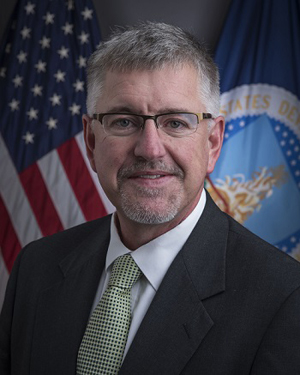 Richard Fordyce (USDA photo)
A fourth-generation corn, soybean and cattle producer near Bethany, Missouri, Fordyce earlier served as Missouri agriculture director before joining the first Trump administration as FSA administrator. He oversaw distribution of aid under the Market Facilitation Program, which was created using USDA’s Commodity Credit Corporation spending authority to compensate growers for the impact of President Donald Trump’s trade war with China.
Since 2021, he has been the agriculture business growth director at public relations firm, Osborn Barr Paramore.
On Saturday, Trump pressured the Senate to stay in session through August to act on his pending nominees.
“Hopefully the very talented John Thune, fresh off our many victories over the past two weeks and, indeed, 6 months, will cancel August recess (and long weekends!), in order to get my incredible nominees confirmed,” Trump said in a social media post.
It wouldn't be unusual for Thune to threaten to keep the Senate in session beyond next week in order to pressure Democrats to agree a deal for moving some nominations ahead of the break.
Don’t miss a beat! It’s easy to sign up for a FREE month of Agri-Pulse news! For the latest on what’s happening in Washington, D.C. and around the country in agriculture, just click here.
Prop 12 in focus ahead of farm bill 2.0
The House Agriculture Committee, meanwhile, will hold a hearing Wednesday on California’s Proposition 12, a law Chairman Glenn “GT” Thompson, R-Penn., is seeking to gut with a provision in an upcoming farm bill. Prop 12 regulates housing for sows and hens for pork and eggs sold in California. Thompson has said it’s “imperative” to include a provision preempting Prop 12 and similar state laws in the skinny farm bill he’s aiming to take action on this fall.
All swine farms in California and those selling into the California marketplace were required to comply with Prop 12 rules for sow housing as of January 2024.
“The Supreme Court made clear that only Congress can restore order and protect the balance between states’ rights and interstate commerce,” Thompson said. “As we finalize the remaining pieces of the farm bill, addressing the Prop 12 fallout is not optional, it’s imperative.”
In a statement, the National Pork Producers Council said it would “engage in the discussion on burdensome restrictions that producers would face if Proposition 12 and similar legislation create a patchwork of state regulations; the impacts of the California law throughout the country—including increased producer costs and consumer prices; and realistic concerns over animal welfare when laws based on arbitrary numbers rather than science determine housing regulations.”
The hearing comes a week after more than 30 Senate Democrats, led by California Sen. Adam Schiff, wrote a letter to Senate Ag Committee Chairman John Boozman, R-Ark., urging Senate Ag Committee leaders not to include preemption of Proposition 12 in a new farm bill.
The Democrats oppose the newest version of the Ending Agricultural Trade Suppression (EATS) Act, dubbed the Food Security and Farm Protection Act, introduced by Republican Sens. Chuck Grassley and Joni Ernst of Iowa, and Roger Marshall of Kansas this spring.
A spokesperson for Rep. Ashley Hinson, R-Iowa, who led the EATS Act in the House last Congress, told Agri-Pulse this spring she plans to introduce legislation and “looks forward to building bipartisan support” to block Proposition 12.
India trade announcement remains elusive
Trump again teased that the U.S. is on the brink of securing a deal with India, leading some to speculate that an announcement could be imminent.
While more than 20 countries have received letters outlining new tariff rates, with some containing threats of significant hikes, Prime Minister Narendra Modi’s government has escaped fresh tariff threats.
“We're very close to a deal,” Trump told reporters on Wednesday. The president and senior officials have argued they are on the cusp of a deal for several weeks, but the lack of a tariff letter from Trump to Indian officials, some believe, may be auspicious.
“We've been expecting an announcement of a deal,” said Mark Linscott, a senior trade policy adviser at the US-India Strategic Partnership Forum, during a webinar hosted by the Washington International Trade Association earlier this month. “It was pretty clear that the negotiators on both sides had essentially concluded an agreement in principle.”
 Mark Linscott (The Asia Group photo)
Receiving a letter from the president with new tariff rates could have undone some of the progress in negotiations, Linscott said.
“There's still the possibility of an announcement,” Linscott added. “Getting no letter is much better than getting a letter at this point in time.”
An Indian delegation was in Washington, D.C., last week for ongoing trade discussions.
European Union trade negotiator Maroš Šefčovič also flew to Washington last week for talks with Commerce Secretary Howard Lutnick and U.S. Trade Representative Jamieson Greer, according to an EU spokesperson. The Financial Times reported on Friday that the U.S. tariff rate has become a sticking point in the talks, with Trump pushing for a minimum rate of 15% to 20%.
Ways and Means Republicans will have the opportunity to press officials for an update on the state of negotiations when they meet with both Lutnick and Greer this week, multiple lawmakers told Agri-Pulse, after similar meetings planned for last week were postponed.
Here is a list of agriculture or rural-related events scheduled for this week in Washington and elsewhere (all times EDT):
Monday, July 21
4 p.m. – USDA releases Crop Progress report.
5:30 p.m. – Senate Agriculture Committee meeting to consider pending nominations for USDA and the Commodity Futures Trading Commission, S-216 Capitol.
Tuesday, July 22
10 a.m. – House Agriculture Committee to consider the United States Grain Standards Reauthorization Act of 2025, 1300 Longworth.
10:30 a.m. – House Agriculture Committee hearing, "Past Breakthroughs and Future Innovations in Crop Production,” 1300 Longworth.
10:30 a.m. – House Energy and Commerce Energy Subcommittee hearing, “Strengthening American Energy: A Review of Pipeline Safety Policy,” 2322 Rayburn.
Wednesday, July 23
10 a.m. – House Agriculture Committee hearing, “An Examination of the Implications of Proposition 12,” 1300 Longworth.
10 a.m. – House Transportation and Infrastructure Economic Development, Public Buildings, and Emergency Management Subcommittee hearing, “Fixing Emergency Management: Examining Improvements to FEMA's Disaster Response,” 2167 Rayburn.
10 a.m. – Senate Environment and Public Works Committee to consider the nomination of Katherine Scarlett a member of the Environmental Protection Agency’s Council on Environmental Quality and Jeffrey Hall to be an assistant administrator of the Environmental Protection Agency, 562 Dirksen.
11 a.m. – The Center for Strategic and International Studies webinar, “Rising India and the Prospects for India–U.S. Economic Ties.”
3 p.m. – Senate Agriculture Committee hearing to consider the nomination of Richard Fordyce to be undersecretary for farm production and conservation, 328 Russell.
Thursday, July 24
8:30 a.m. – USDA releases Weekly Export Sales report.
1 p.m. – The Council for Agricultural Science and Technology webinar, "Understanding the Most Urgent Crop Protection Challenges for Specialty Crop Farmers."
Friday, July 25
11 a.m. – USDA releases monthly Food Price Outlook.
For more news, go to Agri-Pulse.com.


