
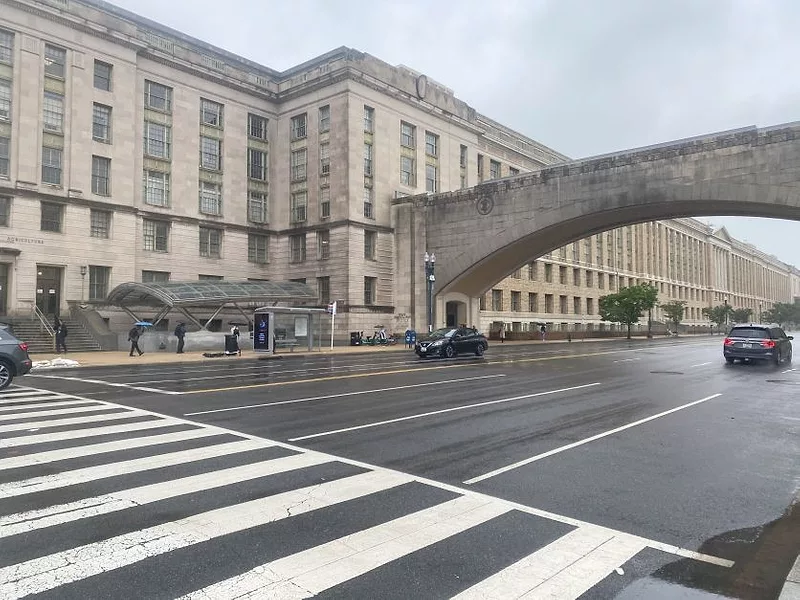
The Senate Agriculture Committee is hearing from USDA today on its plans to reorganize the agency, which notably involves moving employees based in the national capital region to five regional hubs.
Deputy Agriculture Secretary Stephen Vaden will face questions from senators who were caught off-guard by the reorganization announcement. Members of the committee largely said they want to make sure the plan will serve farmers and understand its specifics.
“I’m supportive of the idea of more opportunities for people to work for the federal government outside of Washington D.C., but I’m interested in the details and facts, the analysis that demonstrates what the Department of Agriculture is doing makes sense,” Sen. Jerry Moran, R-Kan., said on Tuesday.
Sen. Adam Schiff, D-Calif., said he’s concerned about the loss of expertise that could come with this plan. He added that none of the planned regional hubs are close to his state.
"I want to make sure that this doesn’t serve as an impediment to accessing resources by California farmers,” Schiff said.
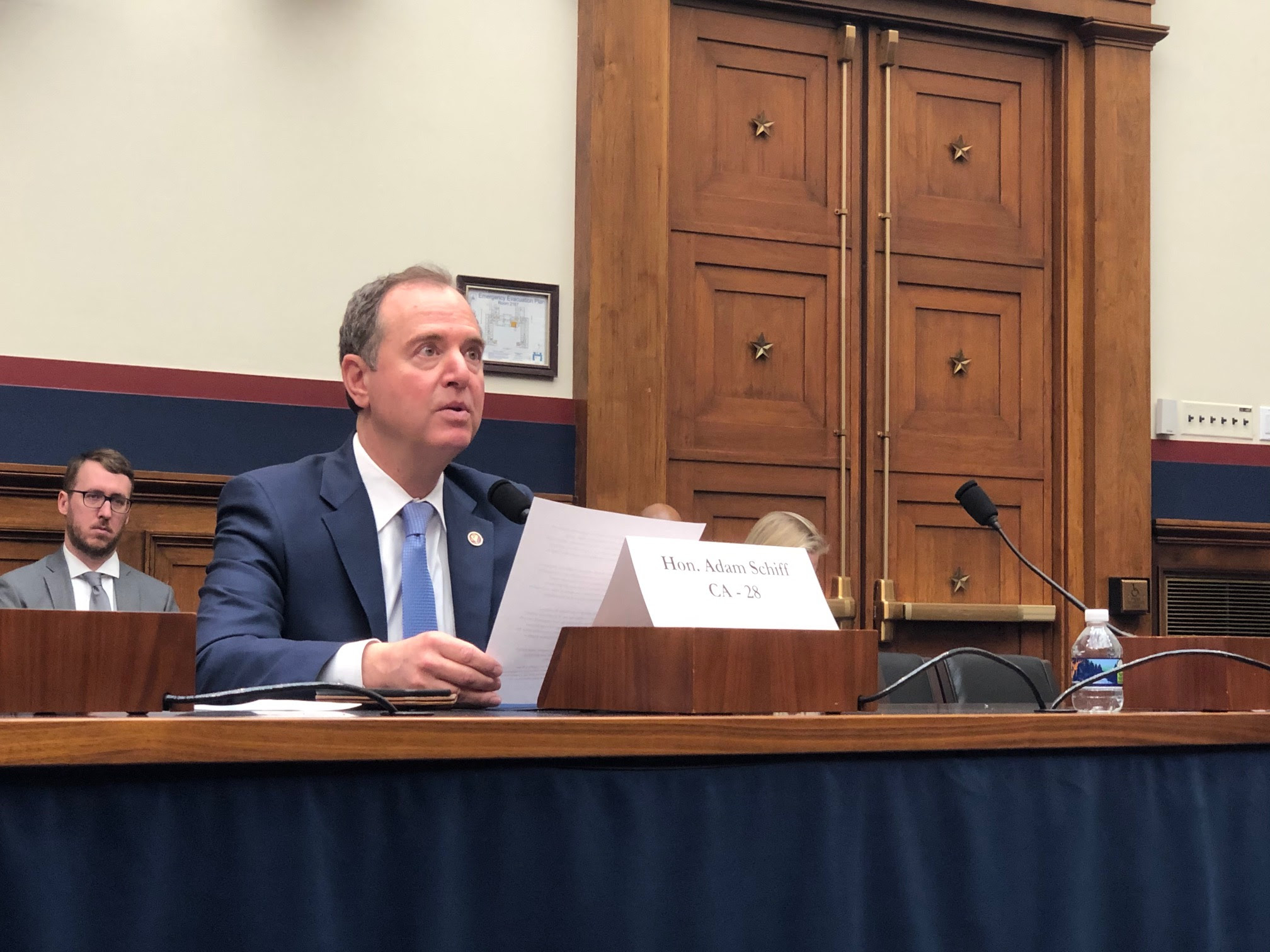 Sen. Adam Schiff, D-Calif.
Trump to weigh China truce extension
Top U.S. trade officials will brief President Donald Trump today on their discussions with Chinese officials earlier this week. The president will then decide whether to extend the tariff détente.
“We’re going to talk to the president about whether that’s something that he wants to do,” U.S. Trade Representative Jamieson Greer said Tuesday. Greer and Treasury Secretary Scott Bessent were briefing reporters following two days of talks with Chinese officials in Stockholm, Sweden.
Take note: Earlier in the day, Chinese negotiator Li Chenggang told reporters that the two sides had agreed to work to extend the pause on higher tariffs past the Aug. 12 deadline. “Nothing is agreed until we speak with President Trump,” Bessent said. Bessent added, however, that the meetings were “very productive.”
Check out this week’s Agri-Pulse newsletter for Oliver Ward’s deep dive into what we know, and don’t know, about Trump’s trade deals when it comes to agriculture. We also report on prospects for ag labor reform in Congress.
Companies are using tariffs as cover to hike prices, new report finds
U.S. firms are raising prices to protect profits, regardless of whether tariffs are affecting their business, or if the president follows through on his largest tariff threats, a new report argues. Progressive think tank Groundwork Collaborative examined earnings calls from the first half of 2025 and found evidence that companies are using tariff uncertainty as cover for price increases.
Lindsay Owens, Groundwork Collaborative’s executive director, told reporters companies are working to “exploit the chaos of tariff announcements.”
“The mere announcement of the tariffs is enough for them to move forward with their price hikes, regardless of where the final level ends up,” she said.
It’s easy to be “in the know” about what’s happening in Washington, D.C. Sign up for a FREE month of Agri-Pulse news! Simply click here
Take note: The report cites one example from the agricultural sector, in which the CEO of Vital Farms told investors that announced price increases would be “more than sufficient to cover the impact of the tariffs.”
EPA plans to scrap greenhouse gas finding
The Energy Department says the government has wasted too much time fighting climate change.
A DOE report finds that carbon dioxide-induced warming “appears to be less damaging economically than commonly believed, and that aggressive mitigation strategies may be misdirected,” according to a department release. “Additionally, the report finds that U.S. policy actions are expected to have undetectably small direct impacts on the global climate and any effects will emerge only with long delays.
”DOE issued the report in conjunction with an EPA proposal to rescind its 2009 finding that climate pollution endangers human health. The proposal would roll back tailpipe emissions rules that sought to reduce pollution from trucks and automobiles, mostly through the production of more electric vehicles.
Environmental groups and lawmakers concerned about climate change are criticizing EPA’s announcement. “This action marks an extraordinary and dangerous abdication of EPA’s statutory duty to protect human health and the environment,” says the Environmental Protection Network, a group of former EPA officials.
Senate drops hemp loophole language in funding bill
Senate appropriators have dropped language from the Agriculture-FDA spending bill that would have closed a hemp loophole for some intoxicating products like Delta-8 THC. The move follows a dispute between Kentucky’s two senators.
Sen. Mitch McConnell, R-Ky., added the loophole fix to the spending bill during the Senate Appropriations Committee debate. The loophole stems from the 2018 farm bill, which legalized hemp production to support industrial hemp but only specified a limit for Delta-9 THC. The fix McConnell secured in the appropriations bill would have reduced the legal limit for THC in hemp products.
But the other Kentucky Republican, Rand Paul, took issue with the language and vowed to oppose the appropriations bill if it contained that provision.
Sen. John Hoeven, R-N.D., who chairs the Senate Ag Appropriations subcommittee, said the two lawmakers shared the same goals but ultimately could not come to an agreement on the language and agreed to remove it.
Hoeven said Republicans don’t want to hold up a package of spending bills Senate leadership hopes to advance before August recess.
Senate Agriculture Committee Chair John Boozman, R-Ark., said he supports efforts to address the loophole, potentially in a new farm bill. “And I think there’ll be a lot of support from the committee,” Boozman said.
Grain industry reps seek more inspection waiver flexibility
A grain industry representative on Tuesday asked senators to allow the USDA to waive inspection and weighing requirements for export grain during natural disasters or disruptions.
Nicholas Friant, who chairs the National Grain and Feed Association’s grain grades and weights committee, wants language in the upcoming Grain Standards Reauthorization Act allowing the Federal Grain Inspection Service to issue waivers during natural disasters or other “force majeure” events. Both buyers and sellers would have to agree to the waivers.
“Establishing a transparent and predictable contingency plan for future disruptions would provide exporters, importers and customers with the confidence that the flow of U.S. grain can continue during unexpected challenges without compromising the overall integrity of the system,” Friant said.
Final word
There has been abundant evidence going back decades that rising CO2 levels benefit plants, including agricultural crops, and that CO2-induced warming will be a net benefit to U.S. agriculture. The increase in ambient CO2 has also boosted productivity of all major U.S. crop types. There is reason to conclude that on balance climate change has been and will continue to be neutral or beneficial for most U.S. agriculture” – Energy Department report.
Rebekah Alvey, Oliver Ward and Noah Wicks contributed to today’s Daybreak
For more news, go to Agri-Pulse.com.


