
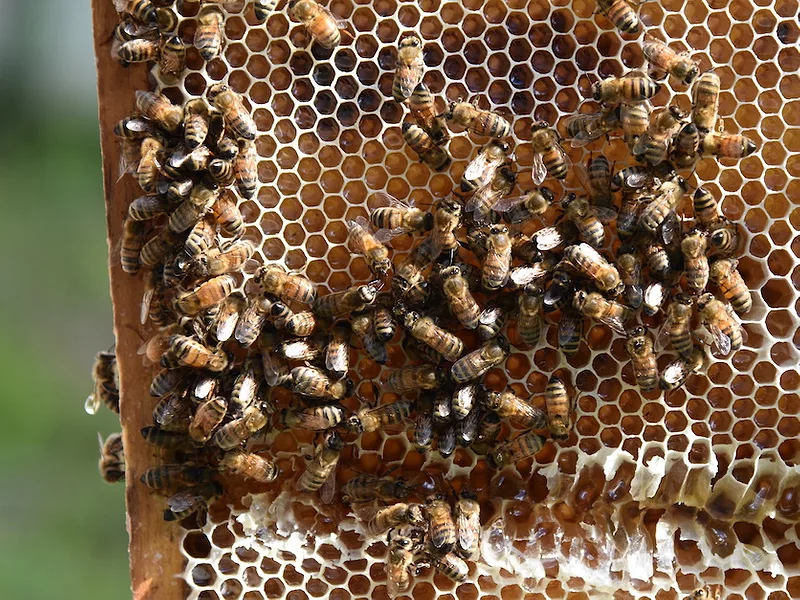
California lawmakers have advanced a bipartisan measure to safeguard pollinators, with Assembly Bill 1042 now on Gov. Gavin Newsom’s desk. The bill would establish the state’s first Managed Honeybee Health Program within the California Department of Food and Agriculture to provide grants, research and technical assistance for beekeepers and growers.
Assemblymember Rhodesia Ransom, D-Tracy, authored the proposal, framing it as a necessity for both farmers and consumers.
“Managed honeybees are crucial for the health of California’s agriculture, with over 100 California crops relying on pollination,” Ransom told the Assembly Agriculture Committee. “That includes the things that we enjoy such as almonds, berries and melons.”
She warned that “without protecting our bees, our little breadbasket will go empty.”
 Asm. Rhodesia Ransom, D-Tracy (Ransom's office photo)
Farmers press the case
Daniel Hartwig, president of the California Fresh Fruit Association, tied pollinator health directly to farm viability.
“Without pollination services, many of our crops, like berries and stone fruits, would simply not exist,” testified Hartwig. “We can’t grow this delicious fruit without pollination, which is essential for the quality and quantity of the fruit we grow.”
Hartwig emphasized the vital role honeybees play in California agriculture.
“To grow crops, we tend to say we need water, soil and sunlight. But as a farmer myself, I know firsthand how critical bees are to the success of our farms,” he said. “Apiarists and managed honeybees are the unsung heroes behind much of our fresh fruit production.”
He warned that while growers are investing in sustainable practices, it will mean little if pollinators are neglected.
“Unfortunately, beekeepers are struggling, and that poses a direct threat to our farmers and the broader agricultural community,” he said. “While California is heavily invested in helping farmers scale sustainable agricultural processes, which we support, it’s all for naught if we don’t have a healthy and thriving beekeeping industry to support us.”
Hartwig praised AB 1042 for addressing those gaps through grants and research “to help maintain hive health and by extension, supports our farming industry.”
Representing several farm groups as a lobbyist at Kahn, Soares & Conway, Taylor Triffo recently stressed to Agri-Pulse that the novel approach behind AB 1042 has gained considerable interest in the agriculture community.
“We've never had a beekeeper-specific incentive program in the state,” said Triffo. “We've got programs that help put hedgerows and cover crops that are pollinator friendly. But our production members depend upon a healthy, robust pollination industry.”
How the program would work
Under AB 1042, the program would act like CDFA’s existing climate and sustainability initiatives funding grants, technical assistance, demonstration projects, research and outreach, with the aim of improving colony health for beekeepers, farmers, tribes, nonprofits and academia.
Don’t miss a beat! It’s easy to sign up for a FREE month of Agri-Pulse news! For the latest on what’s happening in Washington, D.C. and around the country in agriculture, just click here.
An advisory committee — consisting of the state veterinarian, beekeepers, county agriculture commissioners, growers, researchers and public representatives — would set program priorities to ensure targeted and effective use of resources.
Funding would come through a subaccount within CDFA’s climate smart agriculture fund, which could accept federal, private or other nonstate contributions and be continuously appropriated.
Yet CDFA would still need initial legislative budget authorization to make the program operational, and the bill does not include any additional funding. Committee staff found the launch of the program would have a price tag “in the millions of dollars,” with more than $300,000 in ongoing annual expenses from the state’s general taxpayer fund, though CDFA notes the legislation would enable it to tap up to 8% of the grant money to fund administrative costs.
Amendments taken last month would ensure the funding is discretionary.
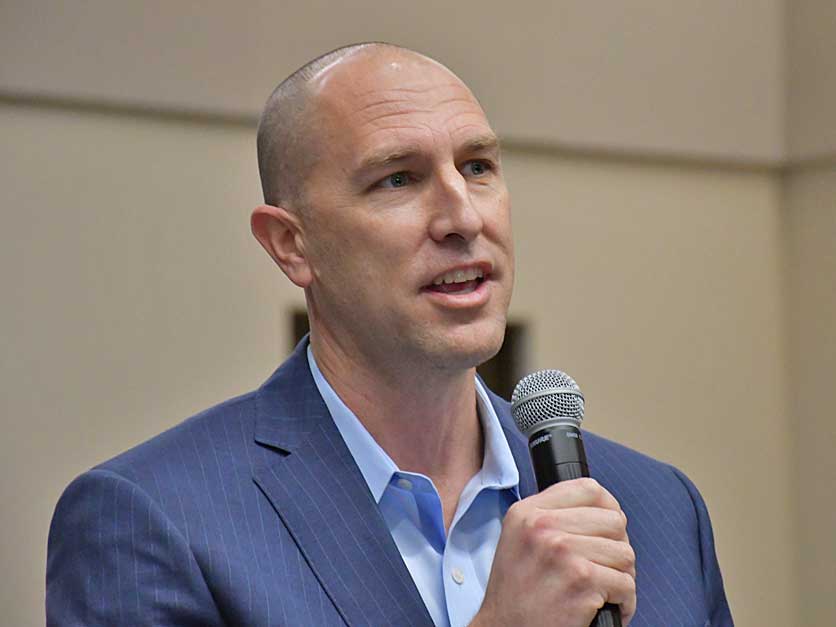 CFFA President Daniel Hartwig. (Agri-Pulse photo/Brad Hooker)
Statewide honeybee crisis
The situation confronting beekeepers this year is dire — and potentially getting worse.
An Agri-Pulse analysis last month found that for decades, beekeepers considered about 15% annual losses normal — but lately losses near 60% seem to be “the new normal.” Combined losses in 2024–2025 could cost the industry $600 million, factoring in lost honey, pollination contracts and replacement hives. University of Illinois agricultural economist Brittney Goodrich estimated replacement costs alone at $208 million, not including revenue losses.
“These are really big numbers for our beekeeping industry in general,” she said.
Between June 2024 and March 2025, commercial beekeepers endured an average of 62% colony loss, totaling roughly 1.6 million colonies lost. The shortage has prompted beehive theft, skyrocketing costs and threats to agricultural yield.
Nationwide, this represents among the largest recorded die-offs on record. California bore a disproportionate brunt of the impact, with almonds, for example, being 100% reliant on honeybees, according to Josette Lewis, the Almond Board of California’s chief scientific officer.
Support for AB 1042 crossed party lines. Asm. Heather Hadwick, R-Alturas, who raises bees on her Lassen County farm, signed on as a coauthor to the bill and stressed that “most Californians don’t know the importance of bees.”
The bill sailed through hearings with unanimous support, leading to little discussion on the proposal throughout the session.
For more news, go to Agri-Pulse.com.

