
The Senate issued its latest rebuke of President Donald Trump’s tariffs, this time in a 52-48 vote to nix duties on Brazil.
The president used emergency powers to slap 40% tariffs on Brazil in July, in addition to a 10% baseline duty already imposed as part of his “reciprocal” tariff plan. The White House said the tariffs were necessary to protect U.S. interests after the Brazilian government opted to prosecute Trump’s political ally, former President Jair Bolsonaro.
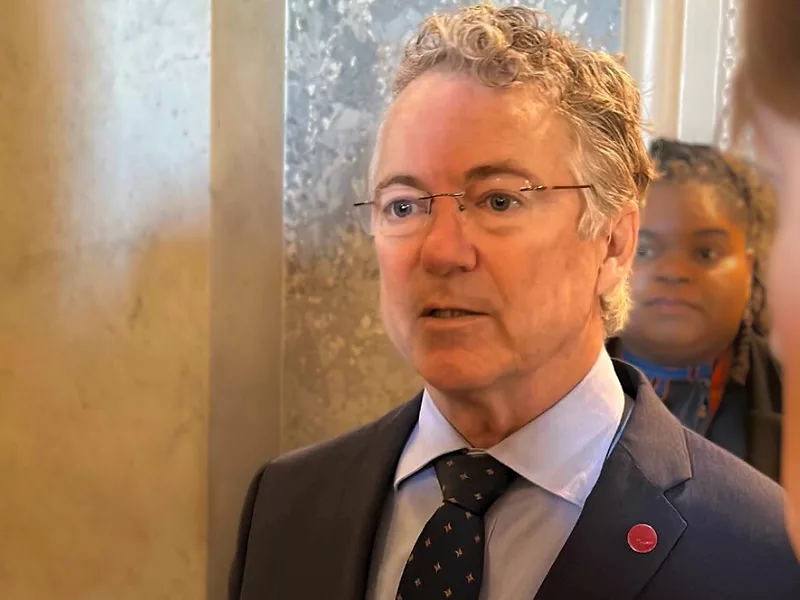
A bipartisan group of lawmakers, including GOP Sen. Rand Paul, Ky., filed a resolution to challenge the underlying economic emergency earlier this month.
That resolution came to the floor on Tuesday night, when five Republican lawmakers joined with Senate Democrats to support nixing the tariffs. In addition to Paul, Sens. Lisa Murkowski, Alaska, Susan Collins, Maine, Mitch McConnell, Ky., and Thom Tillis, N.C., voted for the resolution. Four of the five – Murkowski, Collins, Paul and McConnell – sided with Democrats on an earlier vote to block the administration’s tariffs on Canada.
Tillis, who voted against Trump’s tariffs for the first time on Tuesday, is not seeking reelection next year.
This was the first Senate on vote on the Brazil tariffs. Democrats have also filed resolutions to force second votes on Canada tariffs and on “Liberation Day” tariffs applied to dozens of partners.
A previous Senate vote on the “Liberation Day” tariffs failed, although McConnell and Democratic Sen. Sheldon Whitehouse, R.I, missed the vote.
Tariff votes in the House are blocked until at least January. Any effort to scrap tariffs would also need a veto-proof majority.
Earlier on Tuesday, Vice President JD Vance attended a lunch with Senate Republicans in which he urged the lawmakers to hang together on these tariff votes, according to one senator present.
Cut through the clutter! We deliver the news you need to stay informed about farm, food and rural issues. Sign up for a FREE month of Agri-Pulse here.
“Tariffs give us the ability to put American workers first,” Vance told reporters after the lunch. “They force American industry to reinvest in the United States of America instead of a foreign country. They're also incredible leverage for the United States in negotiating these trade deals overseas.”
In a speech on the Senate floor before the vote, Senate Finance Committee Ranking Member Ron Wyden, D-Ore., argued that the tariffs are causing price increases on many consumer staples and pushed back against arguments that the Brazil tariffs were adopted for economic reasons.
“The real reason Donald Trump is imposing these tariffs, by his own words, is to settle his own personal scores, and pressure the Brazilian government to let their corrupt former president off the hook,” Wyden said. “This is a brazenly illegal and corrupt effort by Donald Trump that is directly hurting Americans.”
Before the vote, Paul had argued that farm-state lawmakers need to be louder in their opposition to tariffs. He told reporters, including Agri-Pulse, that he knows of at least “half a dozen” Republicans who quietly oppose the tariffs, including “farm-state senators, who are still quietly pro-free trade.”
Iowa’s Chuck Grassley, for example, has expressed concerns about tariffs being applied to critical farm inputs like fertilizer.
In comments before the vote, Paul called the Brazilian emergency declaration “contrived” and argued that allowing the president to create manufactured emergencies to bypass Congress and usurp its tariff-setting powers is unconstitutional.

