
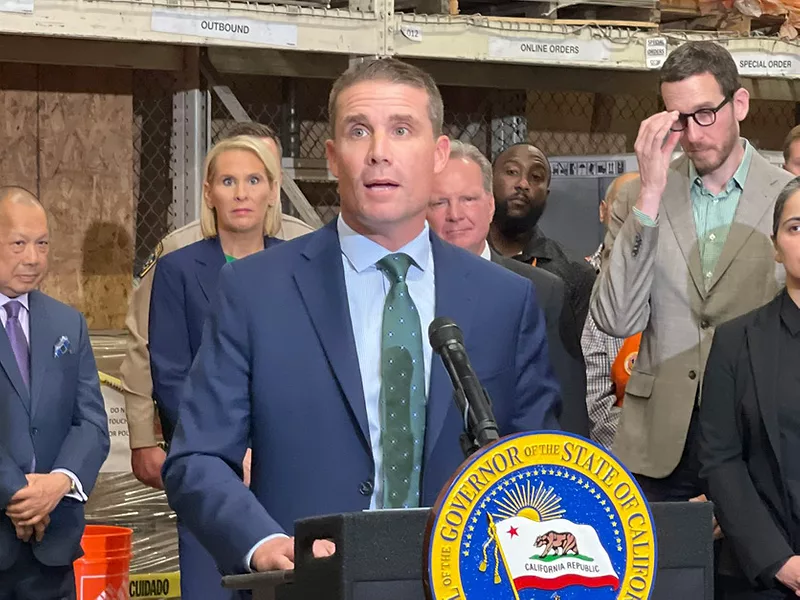
Proposition 50 has redrawn Northern California’s political landscape in ways that reach deeply into the region’s farming, ranching and timber economies, setting up one of the most consequential rural congressional races in years.
The newly formed 1st Congressional District now pits state Sen. Mike McGuire, D-Healdsburg — who stepped down Monday as the Senate leader and terms out of office next year — against incumbent Republican Rep. Doug LaMalfa in a race that merges rice, winegrape, timber and remote ranching regions under one representative.
The new map expanded LaMalfa’s district west into Sonoma, Mendocino and Lake counties, adding progressive Bay Area communities as well as thousands of acres of vineyards and organic dairies. LaMalfa warned in August that the new lines will undermine rural representation, arguing the maps were “crafted for termed-out state legislators to have tailor-made seats in Congress, not equal representation.”
McGuire countered that the expansion strengthens rural ties rather than dilutes them.
It’s easy to be “in the know” about agriculture news from coast to coast! Sign up for a FREE month of Agri-Pulse news. Simply click here.
“This district is big. It’s rural and now — more than ever — it needs a fighter,” he said in a video launching his election campaign last week.
Much of the remote northern stretch of LaMalfa’s district is now represented by Democratic Rep. Jared Huffman, the ranking member of the House Natural Resources Committee, which frustrated LaMalfa as well.
“Do you really think the former senior environmental lawyer for [the Natural Resources Defense Council] is going to protect or represent ranchers, farmers or water users?” said LaMalfa, who serves on the Agriculture Committee.
LaMalfa on water policy and farm aid
LaMalfa’s record in Congress has consistently aligned with the interests of Sacramento Valley growers, foothill ranchers and the timber industry.
A fourth-generation rice farmer, he has been one of the most vocal advocates for increasing water allocations, repeatedly pressing the Bureau of Reclamation for full north-of-Delta deliveries during dry years. He supported the Water Infrastructure Improvements for the Nation (WIIN) Act to build more storage and for multiple extensions to support infrastructure investments. He has backed efforts to raise Shasta Dam, opposed restrictions on Sacramento-San Joaquin Delta flows, and pushed for Endangered Species Act reforms that would ease restrictions on water exports.
“The single-minded focus on providing water to environmental concerns has left California's reservoirs nearly empty,” said LaMalfa, sharing frustrations in 2021 over the Biden administration’s drought response. “Wells are running dry, farmers are having water cut off mid-season, and fires are currently ravaging our forests.”
He has also introduced bills to block Waters of the United States (WOTUS) expansions and has sided with grower groups opposing state wetlands rules.
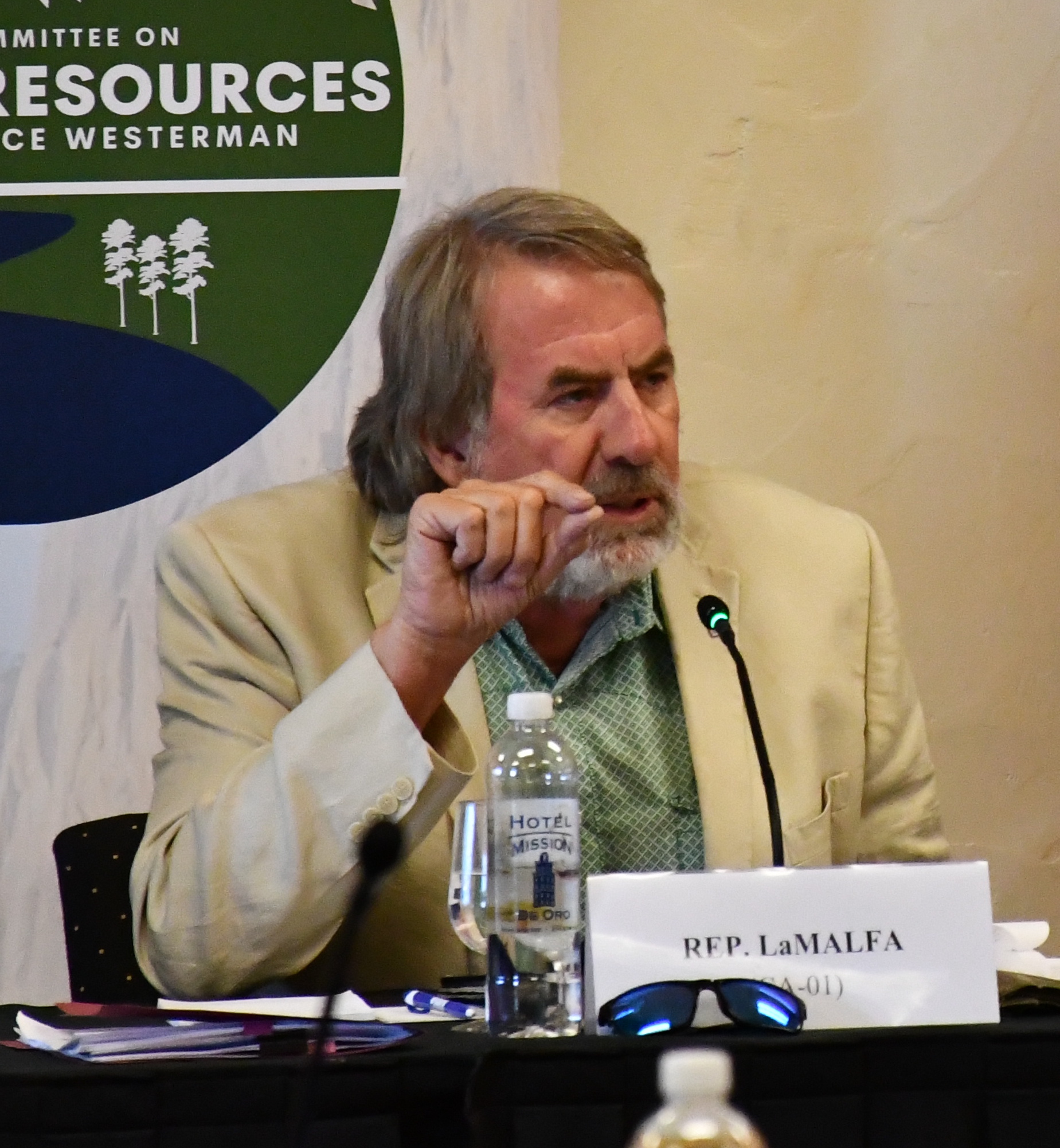 Rep. Doug LaMalfa, R-Calif. (Agri-Pulse)
In the 2018 farm bill he supported provisions that strengthened crop insurance for rice and tree nuts, expanded disaster assistance and protected marketing loan programs critical to Northern California producers. After atmospheric river floods damaged rice and walnut acreage in 2023, LaMalfa secured language in disaster packages to speed payments to growers. He also championed wildfire grazing pilot programs on federal lands to reduce fire fuels and supported tax relief for livestock owners forced to cull herds during drought.
On regulatory fronts LaMalfa has fought California’s truck emissions rules, arguing that clean-truck mandates will increase costs for rural trucking firms and raise prices for moving crops to market.
McGuire on dairy dollars, fire policy and Trump resistance
McGuire’s tenure in the Legislature has evolved from a close relationship with the agricultural operations in his North Coast district to a strong resistance voice against the Trump administration and, after nearly two years as Senate president pro tempore, a more progressive leader on labor and immigration issues.
In 2020 McGuire bashed the Newsom administration’s proposed cuts to grant programs for dairy digesters and alternative manure management practices, arguing it was less than half of what former-Gov. Jerry Brown had allocated and that the state had broken its commitment to farmers.
“We're going to continue to drive out dairy farmers from California if we don't assist them,” he said. “This state promised small family dairy farmers that we're going to help them transition to be able to beat climate change.”
He argued the administration did not consult with farmers in his region ahead of time.
“It's incredibly frustrating and a bit tone deaf,” he added.
As the drought deepened into 2021, McGuire shifted his stance, vigorously defending endangered fish species and the sportfishing industry that relies on healthy fisheries.
“We're witnessing the collapse of this iconic species right in front of our eyes,” said McGuire, as chair of the Joint Committee on Fisheries and Aquaculture. “Never in our nearly 50-year existence has this committee contended with such a dire situation.”
He called it a direct result of the Trump administration easing regulations.
“Federal water policy shifted here in California to push water that was once stored behind California's reservoirs to the Central Valley,” he said. “California — and candidly, the current administration — has maintained this abysmal policy.”
He called the administration’s revised environmental plan for the fish a dark cloud hanging over the survival of the salmon species, and he stood by Newsom’s regulatory and legal battles to counter federal rollbacks.
“The current biological opinion is good for agriculture, bad for fish and bad for the environment,” he said. “That was ramrodded through and made it nearly impossible for this species to be able to survive a pretty bad year.”
McGuire’s district has endured some of the most destructive wildfires in state history, and he has frequently pushed for more state dollars to support mitigation and firefighting efforts, while remaining an ardent critic of the publicly owned utilities often blamed for triggering the fires.
“The bottom line is that over my time in this Legislature — year in and year out — we have seen massive utility-caused wildfires in Northern California,” he said in 2022, while pushing a bill to speed up state approval for undergrounding powerlines.
The traumatic experiences his district has faced in the wake of catastrophic wildfires still resonates with McGuire. This January, after firestorms devastated parts of Los Angeles, he reflected on the 2017 Tubbs Fire, California’s the most destructive at the time.
“So many of us in these chambers have experienced wildfires that have decimated our communities,” he said, in an emotional moment as the Senate recognized the damages and lives lost to Southern California fires.
When he took over as Senate leader early last year, McGuire’s focus shifted to broader Democratic issues. Among the many priorities covered in his inauguration speech, unions, farmworkers and worker rights got the nod. McGuire took pride in California raising the minimum wage, expanding sick time and maternity leave, and tackling income inequality.
“And let's be crystal clear who did this,” he said. “Unions did this in the state of California.”
He recognized labor leaders “who are fighting on behalf of working families day in and day out” as well as farmworkers, “who are the heart of America's agricultural economy.”
Yet at times he leaned into the rural and agricultural concerns of his district, particularly the struggles of vineyard managers to comply with a new nitrogen order.
“Some of the rules, regulations and laws that have been advanced here in California take time to be able to adjust to,” he said, while also sharing anxiety over impoverished communities along the lower Russian River that must replace failing septic tanks under the order. “While there needs to be a long-term solution, being candid, a quick fix simply is not going to work.”
As affordability grew into the top concern for Californians, McGuire partnered with Assembly Speaker Robert Rivas to press for more legislative oversight of the California Air Resources Board to increase transparency and bring down costs. Yet McGuire has been a strong proponent of the state’s aggressive climate goals and helped engineer a $10 billion climate bond voters approved last year.
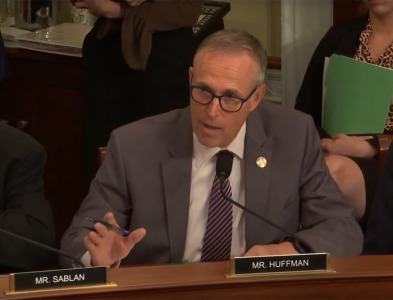 Rep. Jared Huffman, D-Calif. (Agri-Pulse)He sided with environmental groups when he stalled a bill last year to speed up CARB’s process for reviewing the E15 ethanol blend for use in California, arguing he needed a more thorough analysis of the issue and that the bill still needed work. The decision frustrated ethanol producers, fuel retailers and farm organizations who had pushed for E15 to lower fuel costs and expand the market for crop-based biofuels.
As Senate leader, McGuire played a central role in shepherding the legislation that enabled the Proposition 50 special election to move forward this year. He backed the bill from the outset, arguing that California needed to “protect the integrity of California’s elections” and prevent congressional boundaries from being shaped by partisan gerrymanders in Texas and other states.
Reshaping a conservative district to progressive ideals
LaMalfa has already lost influence in his district through the Proposition 50 remapping. It shifted some counties into Huffman’s district, which now begins at the San Francisco boundary and wraps around the far north to incorporate the entire Oregon border and remote Modoc County communities along the Nevada border.
Huffman has long been one of Congress’s most influential voices on preserving water for the environment, rising to chair the Water, Wildlife and Fisheries Subcommittee, where he has shaped debates over Delta pumping, salmon protections and watershed restoration. He has repeatedly opposed raising Shasta Dam and raised skepticism over the proposed Sites Reservoir.
“Attacking environmental laws may be great politics in some places, but it’s not a serious response to complex Western water challenges,” he said in 2023.
He labeled attempts to weaken Endangered Species Act rules science denial and backed flow standards that Sacramento Valley irrigation districts have fought for years.
“We’re back today to consider yet another bill that harms West Coast fisheries and tribal interests,” he said in opposition to a 2015 Republican measure to ease regulatory and environmental constraints on water deliveries, calling it “another bill that undermines state law, another bill that micromanages the most complex water system in the world in a way that benefits a select few at the expense of many others across the state of California.”
Huffman has secured federal funds to restore the Klamath and Eel rivers, pushed for removal of aging dams, and backed large-scale watershed and fishery recovery programs in partnership with the Yurok, Karuk and Hoopa Valley tribes. He supported major forest health and climate provisions in the 2021 infrastructure law and has been a consistent advocate for wildfire recovery funding.
Huffman has also supported specialty crop and small farm assistance tied to wildfire smoke, pandemic losses and supply chain disruptions.
What’s next
In the months ahead growers, water districts and rural counties will be watching how LaMalfa and McGuire tailor their messages to a district now defined by competing demands. LaMalfa has long gained strong backing from agricultural interests and McGuire, who has also built relationships with California farm groups, is already scooping up key labor endorsements.
The remapped district has pulled together parts of California that have rarely shared the same political or economic pressures, and the midterms next year will test which vision resonates: LaMalfa’s push to protect water for farms and ease regulatory burdens or McGuire’s emphasis on worker rights, fish protections and climate policy.

