
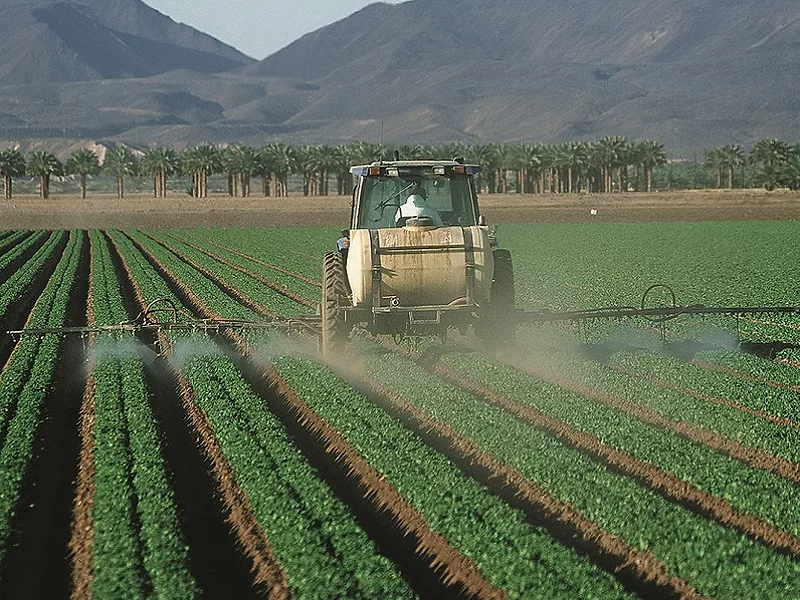
The International Agency for Research on Cancer’s classification of commonly used weedkiller atrazine as “probably carcinogenic to humans” prompted a quick response from the herbicide’s supporters and critics.
Atrazine manufacturer Syngenta says IARC’s “mandate [is] to determine if a substance could cause cancer from a potential hazard perspective. In fact, IARC – which is not a regulatory agency – does not determine the likelihood of cancer occurring at realistic levels of exposure (technically called “risk”).”
Syngenta says “close to 50 regulatory authorities and scientific expert bodies worldwide … have concluded that atrazine does not pose any carcinogenic risk and is safe when used in accordance with the registered label instructions.”
IARC, which is part of the World Health Organization, previously classified the weedkiller glyphosate as a probable human carcinogen. Bayer, which manufactures glyphosate, says that finding is not supported by government regulatory agencies but has been used to support thousands of lawsuits against the company.
IARC says its classification rests in part on combinations of “limited evidence for cancer in humans and sufficient evidence for cancer in experimental animals.” IARC also says “positive associations have been observed for non-Hodgkin lymphoma that is positive for the chromosomal translocation.”
The Center for Biological Diversity said the classification “was determined by a working group of 22 expert cancer researchers from 12 different countries. The researchers identified evidence from human epidemiological studies, animal studies, and laboratory assessments of whether atrazine exhibits key characteristics of a carcinogen, like DNA damage and oxidative stress.”
“It is outrageously irresponsible that we still allow use of this dangerous poison in the United States,” said Nathan Donley, environmental health science director at the Center for Biological Diversity.
Don’t miss a beat! It’s easy to sign up for a FREE month of Agri-Pulse news! For the latest on what’s happening in Washington, D.C. and around the country in agriculture, just click here.
Senior trade officials hold tariff talks in Brussels
Commerce Secretary Howard Lutnick is the latest trade official to go to Brussels, where he will join U.S. Trade Representative Jamieson Greer. Undersecretary of Agriculture for Trade and Foreign Agricultural Affairs Luke Lindberg was there last week.
Lutnick and Greer will meet with trade ministers from EU member states today. Politico EU reported Friday that trade ministers will press the pair for tariff exemptions on sensitive exports, including pasta, cheese, wine, spirits and olive oil.
European officials could find the Trump administration in a receptive mood. Lutnick and Greer’s visit comes after the U.S. recently reduced tariffs on food and agriculture imports from Brazil and other countries. Lindberg told the Financial Times last week that the administration could be open to lifting duties on food products.
But, but, but: U.S. officials are growing impatient at the lack of progress the EU has made in implementing a July trade pact.
Lindberg told Agri-Pulse last week that pushing the EU to swiftly implement the deal was a “critical message” during his visit. Lutnick and Greer are sure to reiterate that call.
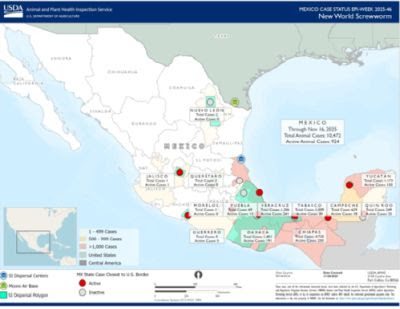
Click here for a larger image of the map. (Source: USDA APHIS)
USDA creates screwworm information hub
The Agriculture Department on Friday launched a central repository for New World screwworm information.
Screwworm.gov has case detection information, as well as details on sterile fly dispersal efforts, and resources for livestock producers and the general public on the parasite. It also offers information for health professionals on how to report suspected cases.
The “new unified website will be a one-stop shop for all screwworm-related information and will help our stakeholders be better informed as new information comes available,” Ag Secretary Brooke Rollins said in a statement.
“This is a national security priority and it has the full attention of our team,” she stressed.
DOJ beef investigation to be ‘grounded in existing law and precedent,’ antitrust head says
Gail Slater, the head of the Justice Department’s Antitrust Division, says it’s making enforcement in agriculture “a top priority” and confirmed that the agency is looking into the beef packing industry.
In a speech at Drake University Law School, Slater said the division’s antitrust cases will “be informed by the President’s order regarding beef” along with memorandums of understanding with the Agriculture Department, which oversees the Packers and Stockyards Act. However, she added that the cases “will of course turn on the facts and evidence and be grounded in existing law and precedent.”
Take note: Slater said much of the work will take place in the antitrust division's Chicago field office, adding that the agency has “already opened several investigations in that office since the start of the administration.” The new career head of the office will be attorney Zachary Trotter, she said.
Tyson to close major Nebraska beef plant
Tyson Foods is planning to close a major beef processing plant in Lexington, Nebraska.
A press release posted by the company on Monday said the changes are designed to “right size” the company’s beef business and “position it for long-term success.” According to news reports, the plant employs roughly 3,000 people and has the capacity to process 5,000 cattle per day.
Tyson did not respond to a request for comment, but its press release also said a beef plant in Amarillo, Texas, will be converted to a single, full-capacity shift, and that production will be increased at other Tyson beef facilities to meet customer demand.
In a statement, Nebraska Governor Jim Pillen said the state’s cattle producers will “still have the Tyson market to sell into as its planned reorganization will boost capacity and jobs at other plants” and that company leaders have “promised to continue to work on future value-added opportunities” in the state.
Final Word
NBC News’ Kristen Welker: “Isn’t the fact that you’re rolling back tariffs an admission that ultimately they do drive up prices for consumers?”
Treasury Secretary Scott Bessent: “Kristen, how much does your arm weigh?”
Welker: “That I do not know.”
Bessent: “Exactly. But you know how much you weigh and you get on the scale every morning. Inflation is a composite number, and we look at everything. So, we are trying to push down the things we can control. … Energy prices are down, and everything flows from that. I think we’re going to see these other prices come down.” – Bessent speaking on Sunday’s Meet the Press on the administration’s recent decision to lift tariffs on food and ag imports.
Oliver Ward and Noah Wicks contributed to today’s Daybreak



