
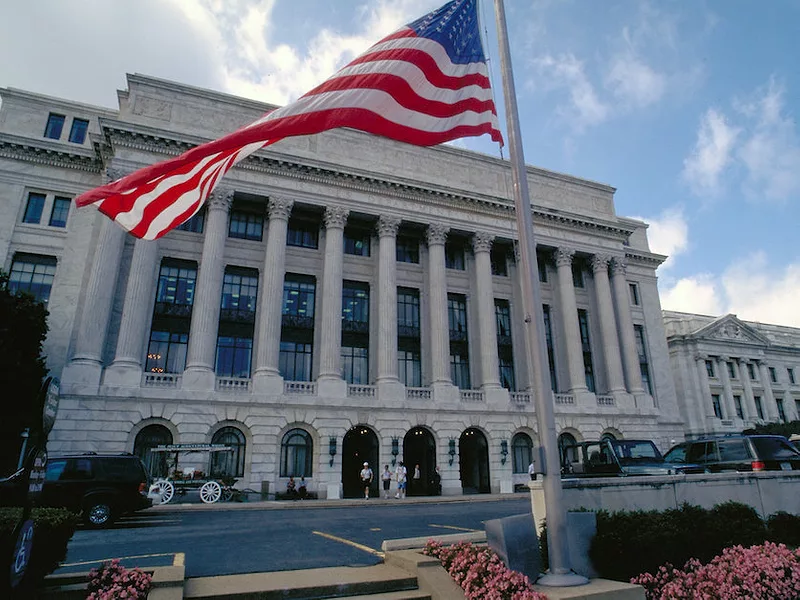
The Agriculture Department’s Food Safety and Inspection Service updated its labeling guidance ahead of the January implementation of new voluntary “Product of USA” rules.
Updated language in FSIS voluntary labeling guidelines reflects that “raised” means “from birth to slaughter,” notes that “Product of North America” claims are voluntarily allowed on products if the claim is truthful and complies with agency rules, and details rules surrounding voluntary multi-country of origin label claims like “Product of USA and Canada."
Take note: The updated guidance is the result of a rule USDA finalized last year that tightened how “Product of the USA” or “Made in USA” terminology could be voluntarily used for meat, poultry and egg packaging, stipulating those claims must apply to products of animals that are born, raised, slaughtered, and processed in the United States.
Milk bill praised, criticized following House passage
U.S. dairy groups praised passage of a bill to allow whole milk back in schools, saying it will bolster nutrition for America's students.
The Whole Milk for Healthy Kids Act cleared the House by voice vote on Monday and is headed to President Donald Trump for his expected signature. The measure will overturn a 2010 law requiring flavored milk to be fat-free and that traditional milk be 1% fat at most. The reversal’s backers say the ban relies on outdated science.
“Common sense has prevailed,” Dairy Farmers of America President and CEO Dennis Rodenbaugh said. “This legislation is a win for children’s health."
Along with full-fat and 2% milks, the measure would allow dairy-free milk alternatives, such as soy, oat and almond. Kids also could get non-dairy beverages if they are lactose-intolerant.
The Center for Science in the Public Interest opposed the bill. The food and health watchdog says saturated fat raises risk of heart disease, and that more than 80% of kids already consume too much saturated fat. Further, it's a “grim irony” the bill's passage follows federal actions weakening programs that provide nutritious food to children, CSPI Federal Child Nutrition Campaign Manager Meghan Maroney said.
Theft puts used cooking oil in spotlight
Used cooking oil theft from restaurants is back in focus as 13 Chinese nationals face federal charges related to stealing and re-selling of old frying grease across multiple U.S. states. Used cooking oil, or UCO, is an ingredient for making low-carbon transportation fuels like biodiesel.
It's the latest chapter in an ongoing saga around UCO. Theft and fraudulent activity tied to the once worthless commodity has been a major concern for at least a decade. Yet the stakes have risen in recent years as UCO becomes sought-after.
Indictments announced last week by the Justice Department are a reminder that more needs to be done to combat UCO theft, the North American Renderers Association (NARA) said on Monday. The trade group says as much as $500 million worth of UCO is stolen in the U.S. each year.
FDA reminds industry to pull recalled products from shelves
The Food and Drug Administration is reminding industry retailers that a product needs to be taken off the shelves when it’s recalled by its manufacturer.
The agency stressed retailers’ legal responsibilities in an announcement Monday. FDA said that ByHeart Whole Nutrition Infant Formula was still being sold weeks after a voluntary recall started.
The formula has been linked to a multistate infant botulism outbreak. As of Dec. 10, “a total of 51 infants with suspected or confirmed infant botulism and confirmed exposure to ByHeart Whole Nutrition infant formula (various lots) have been reported from 19 states.”
Warning letters went out last week to multiple retailers. Since the voluntary recall began Nov. 8, “FDA investigators and state and local partners checked retail stores across the U.S. over 4,000 times to ensure recalled product was not being made available to consumers,” the agency said.
“Through this effort, we found that recalled infant formula continued to be found on store shelves — for over three weeks in one case, in over 175 locations across 36 states.”
Antitrust laws apply to professional societies’ accreditation standards, DOJ says
Professional societies must comply with antitrust laws when establishing accreditation standards and assessing conformance with them, the Justice Department says in a filing in a case involving the American Veterinary Medical Association.
The “statement of interest” has been filed in a case brought by Lincoln Memorial University’s veterinary school. The Tennessee school says an AVMA change to its standards threatens the school’s accreditation “but also prevents new veterinary colleges from opening and unreasonably raises the cost of veterinary education,” the Justice Department said.
In a statement, Jim Weisman, AVMA chief of academic affairs, research, and accreditation, said the organization agrees with DOJ’s statement that “millions of American pet owners and livestock farmers need affordable veterinary medicine.”
However, Weisman continued, “American pet owners and livestock farmers [also] are entitled to … quality veterinary medical services. American pet owners and livestock farmers deserve to expect that graduates of veterinary medical schools are adequately trained to provide appropriate care for their animal patients. The accreditation standards of the [AVMA Council on Education] are designed precisely to achieve that objective.”
“While they help ensure quality veterinary care, COE standards do not violate antitrust laws in any way. Therefore, we are confident that the AVMA will prevail in the litigation that is the subject of the DOJ statement.”
EPA, Corps holding another virtual WOTUS meeting
EPA and the Army Corps of Engineers are holding virtual meetings today to get feedback on their proposed rule defining “waters of the U.S.” in the Clean Water Act.
Attending will be Wes Brooks, EPA deputy assistant administrator for water, and Elliott Carman, water resources regulation and policy adviser for Department of the Army – Civil Works.
The sessions will be held from 12:30-2 p.m. and 2:30-4 p.m. Eastern Time.
Registration is required here.
Final word
“The passage of the Whole Milk for Healthy Kids Act is more than a policy change; it’s a practical tool for promoting health nationwide and ensuring that America’s next generation thrives.” — Secretary of Agriculture Brooke L. Rollins
Kim Chipman and Noah Wicks contributed to today’s Daybreak
.webp?t=1762183428)

