
As the U.S. and Argentina work towards finalizing a new trade pact, produce growers in California are pushing the administration to raise, not lower, trade barriers to curb rising imports.
“The reciprocal tariffs that have been placed on Argentina have provided a benefit to our domestic producers,” said Casey Creamer, president and CEO at California Citrus Mutual, which represents citrus growers in the state. “We want to make sure that those things are preserved, and, hopefully, even increased.”
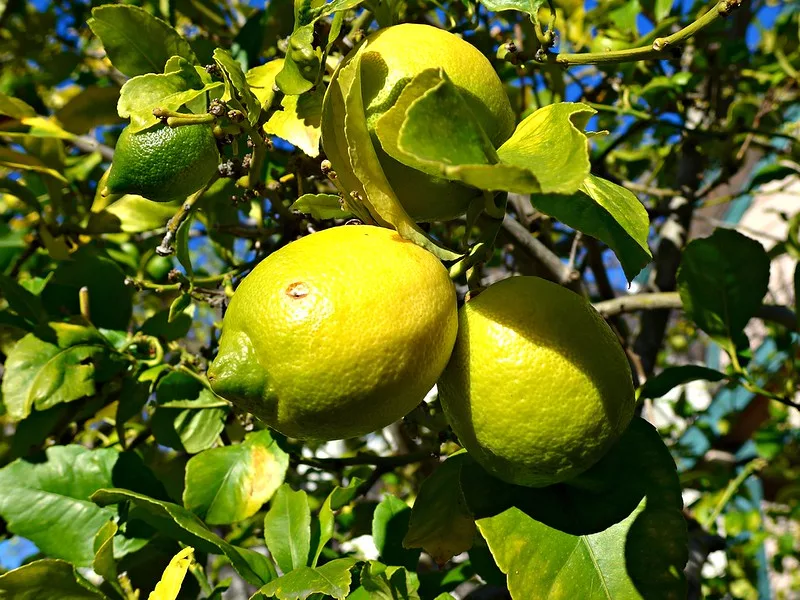
After the first Trump administration lifted a ban on lemon imports from Argentina’s top-producing region in 2017, Creamer said lemon shipments to the U.S. surged, weighing on domestic prices and sparking a contraction in parts of the industry.
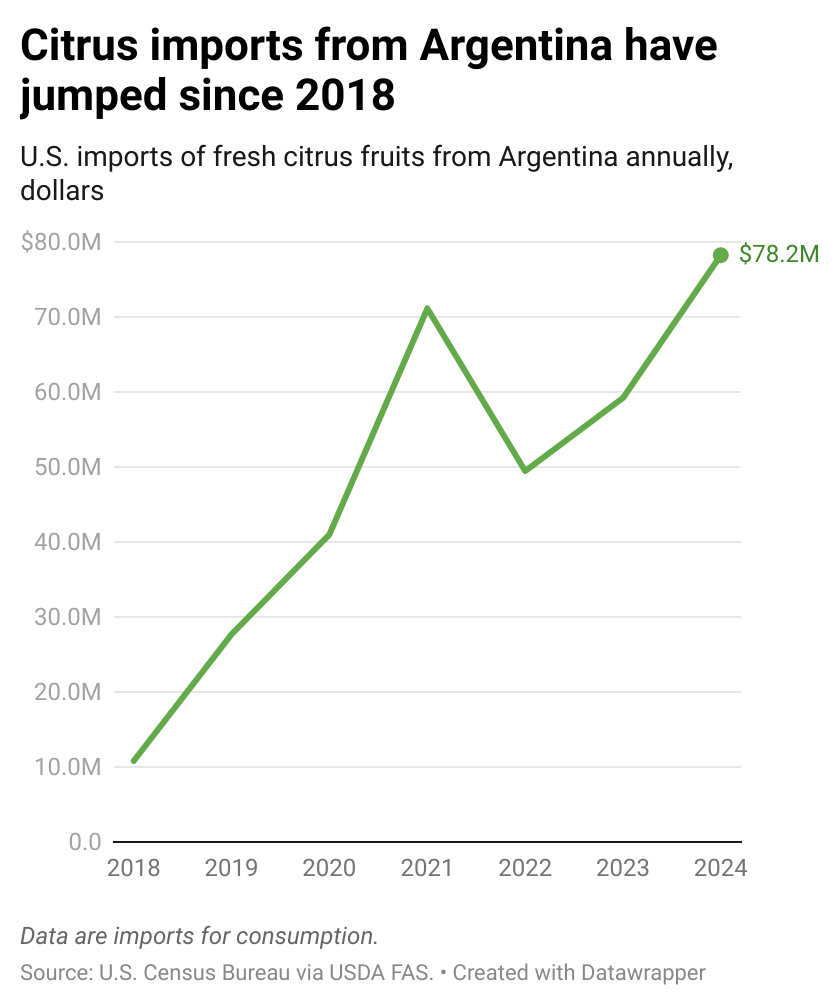
In 2018, the U.S. imported just under $11 million of Argentinian citrus products, according to U.S. trade data. By 2024, this had risen to more than $78 million.
The import glut, Creamer said, is contributing to an already challenging growing environment for U.S. lemon growers. Producers are “heavily underwater,” he said.
For a California grower to see profit, Creamer said, they need to be able to sell their lemons for more than $150 a bin. But prices have been below this level for at least three years, with some bins fetching as little as $50 or $60.
“You're talking about a huge loss of profit,” Creamer added.
Between California’s three different growing seasons, domestic producers sell to the U.S. market year-round. Meanwhile, Argentina’s main export season is in the spring and fall periods, Creamer said, putting it in direct competition with producers in and around California’s Ventura County.
Accordingly, Creamer said, lemon producers in the region are scaling back production, unable to compete with the imported products.
It’s not only citrus growers that are facing intense competition from rising Argentinian exports. The pear industry has been fighting to retain its market share as imported produce begins to encroach on the domestic marketing season.
Interested in more news on farm programs, trade and rural issues? Sign up for a four-week free trial to Agri-Pulse. You’ll receive our content - absolutely free - during the trial period.
Argentina has long shipped pears to the U.S. during the winter months to complement the U.S. growing season. But Argentinian exporters have begun treating their pears with an anti-ripening agent to extend their shelf life and prolong their export season.
Chris Zanobini, executive director of the California Pear Advisory Board, notes that around 70% of Argentinian imports are now arriving in April and May – putting them in direct competition with U.S. producers.
As with the lemon industry, Zanbobini estimates Argentine exporters are selling their pears $8 to $10 a box below the U.S. cost of production.
“It definitely has had an impact on our marketing window,” Zanbobini told Agri-Pulse in an interview. This year was particularly bad, he said. A major retailer delayed its purchases of Californian pears by around three weeks because of a glut of Argentinian product. “It had a very detrimental impact to the to our season,” Zanbobini said.
Beef for brakes?
Representatives from both industries have been meeting with officials from the Office of the U.S. Trade Representative urging them to implement safeguards to protect domestic producers in both industries.
But Zanbobini said his confidence that California pear producers could see relief has been dented by the Trump administration’s eagerness to cozy up to Argentinian President Javier Milei – even when doing so puts it add offs with U.S. ag producers.
In September the administration pledged $20 billion in economic support to the country ahead of its elections, despite outcry from U.S. soybean producers who saw the move as a handout to a strategic competitor. Then in October, President Donald Trump suggested the U.S. would increase its imports of Argentinian beef to lower domestic prices – rankling U.S. ranchers.
Securing concessions from Argentina “is going to be really challenging with the current administration,” Zanbobini said. But he stressed that ongoing discussions on a bilateral trade pact offer a potential opportunity for a quid pro quo.
The two sides issued a joint statement on a trade “framework” in November. While the deal’s specifics are still being finalized, Argentina committed to providing “preferential market access” for a range of U.S. products, including ag products, the statement noted.
“There's an opportunity. If we're going to allow Argentine beef in, and we're going to give them a bunch of money, then maybe there ought to be some other factors where we get something out of it,” Zanbobini argued.
Both Zanbobini and Creamer said that they have appealed to administration officials to impose a tariff-rate quota that would see imports above a certain volume face steep tariffs. The industries have also asked for other restrictions to limit import volumes during windows when domestic producers are selling their product.
“We've asked for a bunch of different things,” Creamer said. “The bottom line is: we need some sort of vehicle to help us out at the current moment to keep us in production and profitable.”
But Creamer is clear-eyed about the challenge. “They're in a tough spot,” Creamer said of administration trade officials. “Trade negotiations are not easy.”
Provisions that may benefit one industry could face stiff opposition from others, he noted. Even U.S. agriculture is often divided on how to proceed on trade issues, as evidenced by recent public comments on the Phase One deal with China.
“We just hope to continue those conversations and hopefully it leads to good outcomes for us,” Creamer concluded.
For more news, go to Agri-Pulse.com.

