
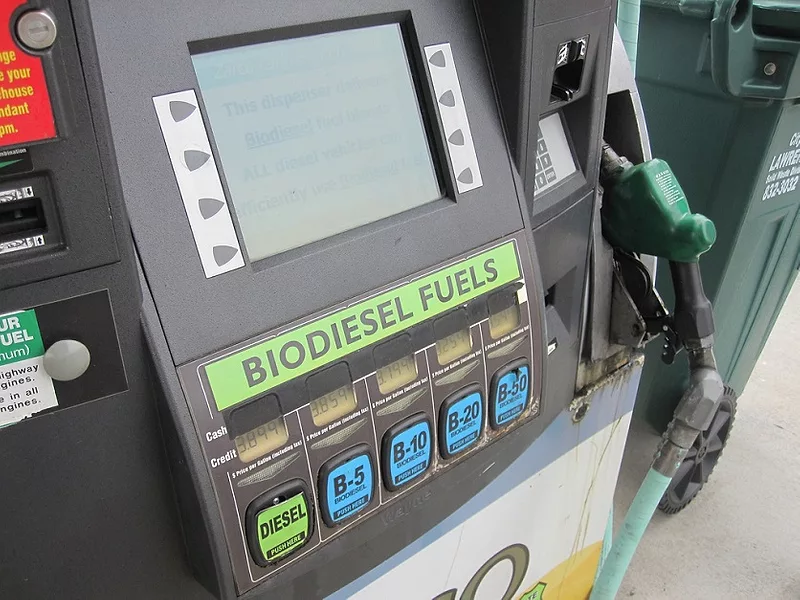
California regulators are scrapping a biodiesel rule related to smog concerns that the industry has long said isn't needed.
As of Jan. 1, the California Air Resources Board (CARB) will sunset requirements that deal with biodiesel fuel blends of up to 20%, or B20, and nitrogen oxides (NOx), a source of air pollution that can harm human health.
The rule being nixed requires producers to blend a minimum of 55% renewable diesel with biodiesel blends from so-called B6 to B20 to curb NOx concerns in older, heavy-duty vehicles.
Trade groups have called for doing away with the restrictions in the Alternative Diesel Fuel (ADF) regulation, arguing that CARB data showed regulatory triggers for lifting the rules had been achieved.
"CARB’s own emissions modeling shows this step is not needed and has contributed to keeping overall biodiesel blends below 10%," a Clean Fuels Alliance America press release says. "Since biodiesel is more affordable than fossil diesel for fleet operators, lifting the ADF restriction enables market growth, marking a significant milestone for the clean fuels industry."
California is the top U.S. market for biomass-based diesel, making up more than two-thirds of the state's overall diesel fuel supply. The bulk of that is due to use of renewable diesel. In contrast, blends of biodiesel, a similar but chemically different fuel, have largely been stuck below 10%, according to Clean Fuels Alliance America, which represents makers of both fuel types. The trade group said CARB's action marks a major milestone for biodiesel.
“This decision provides regulatory clarity and reinforces biodiesel’s value," Jeffrey Earl, director of state governmental affairs at Clean Fuels, said in the release Tuesday.
Many biodiesel companies across the U.S. are fighting to stay in business amid production and federal policy woes. There's optimism, though, that 2026 could mark a revival due to new and proposed national regulations that are seen as beneficial to biofuel makers and the farmers who grow soybeans and other crops used to make renewable fuels.
For more news, go to Agri-Pulse.com.
.webp?t=1762183428)
