
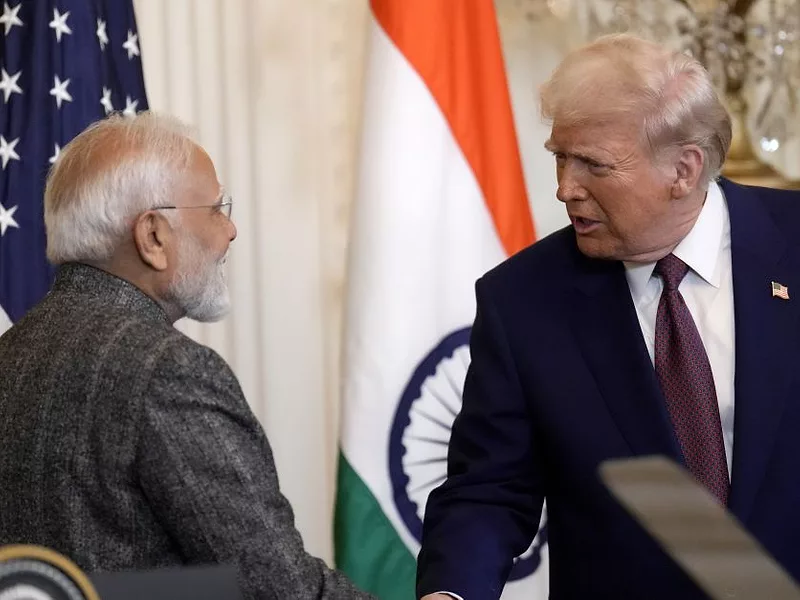
The Trump administration said Friday that a new trade pact with India will reduce tariffs on dried distillers’ grains, red sorghum, tree nuts, fruit, soybean oil, wine and spirits and other agricultural products.
President Donald Trump in a Truth Social post earlier in the week signaled that the two governments had come to an agreement to lower tariffs on each other’s exports. As part of the deal, he said India had agreed to increase its buys of American exports by some $500 billion and stop buying Russian oil.
Trump lifted some tariffs on India on Friday, and the two sides released a joint statement with the key terms of the deal. In exchange for the U.S. reducing its tariffs on India to 18%, Prime Minister Narendra Modi’s government will cut tariffs on select agricultural products and “address long-standing non-tariff barriers” to U.S. ag exports.
The statement did not provide details on which non-tariff barriers would be reduced.
“President Trump’s dealmaking is unlocking one of the largest economies in the world for American workers and producers, lowering tariffs for all U.S. industrial goods and a wide array of agricultural products,” U.S. Trade Representative Jamieson Greer said in a statement. “Today’s announcement demonstrates the deepening ties between the United States and India as we create new opportunities for farmers and entrepreneurs in both countries.”
India maintains an average tariff rate of 64.3% on its agricultural imports, including average duties of upwards of 100% on meat, fruits and vegetables, and cereals and prepared food.
As the most populous country with a rapidly growing economy, the Indian market is a lucrative prize for agricultural exporters. Multiple U.S. agricultural industries have been hoping for improved access to the Indian market. and inclusion in the deal.
But rural voters and India’s agricultural producers are a potent political force in the country, complicating negotiations around agriculture. A recent India-European Union deal, for example, offered only targeted liberalizing measures in a narrow set of industries.
The U.S. whiskey industry, in particular, is angling for tariff reductions in the Indian market to at least match those secured by the EU and United Kingdom. In a statement Friday, the Distilled Spirits Council President and CEO Chris Swonger said he's still holding out hope for its inclusion in the U.S. deal.
"Last year’s tariff reduction on U.S. spirits imports to India was an important first step that opened new opportunities for Bourbon producers in the world’s largest whiskey market," he said. "With India now reaching agreements with the EU and the UK to significantly reduce tariffs on their spirits, we are hopeful that this new U.S.–India agreement will secure comparable tariff reductions across all categories of U.S. distilled spirits, ensuring fair and competitive access to the Indian marketplace.”
Meanwhile, Amy France, chair of the National Sorghum Producers, welcomed the inclusion of sorghum exports in the deal's scope.
"Including U.S. sorghum in this framework agreement with India is a meaningful step forward for growers," France said in a statement. "While details are still emerging, this agreement opens the door to long-term growth in one of the world’s fastest-growing markets, and NSP will stay closely engaged to ensure it delivers real, durable export opportunities for sorghum growers."
For more news, go to Agri-Pulse.com

