
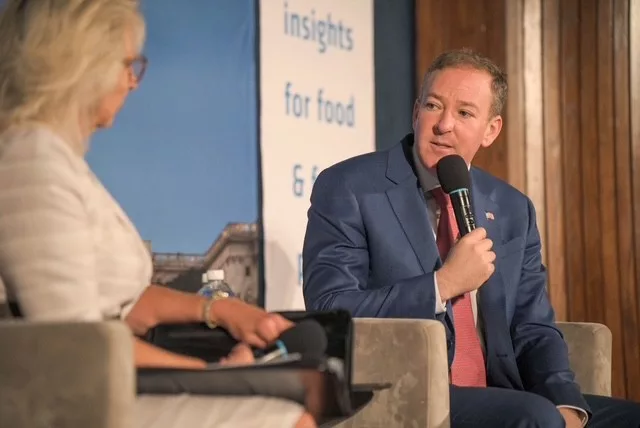
EPA Administrator Lee Zeldin says staff reviewing the safety of glyphosate will follow the science, wherever it takes them.
“I’ve met frequently with our dedicated career scientists, who are working on this issue -- many long meetings,” Zeldin tells Agri-Pulse Newsmakers, which will be available for viewing Friday. “I've made it very clear to them that I do not want to bias their research.”
“I don't want to prejudge for them where I want their results to end up at the end of the review,” Zeldin says. “I actually want to empower them to just be able to do their job, to be able to review the science, to do it fully, and for us to be totally transparent with the public to communicate whatever those scientific findings are."
EPA is currently reviewing the human health effects of glyphosate, the world’s most widely used weedkiller, to comply with a court decision that found fault with the agency’s previous assessment from 2020 that concluded glyphosate is safe and unlikely to cause cancer.
The question of glyphosate’s safety is in the national spotlight as the Supreme Court considers pesticide label laws in a case involving Bayer, maker of the glyphosate herbicide Roundup.
It’s easy to be “in the know” about what’s happening in Washington, D.C. Sign up for a FREE month of Agri-Pulse news! Simply click here
Bayer and a multitude of farming groups say the chemical is safe and that restricting glyphosate would severely reduce crop production and lead to food shortages and higher grocery prices.
The Trump administration is backing Bayer in the case before the U.S. high court.
The issue has divided Republican lawmakers, as many champions of the Make America Healthy Again movement are critical of farm pesticides including glyphosate.
Late last year, a 25-year-old paper widely cited as demonstrating the safety of glyphosate was retracted.
The agency has said it expects to finish its registration this year. EPA withdrew the human health portion of its 2020 interim decision after that section was vacated by the 9th U.S. Circuit Court of Appeals in June 2022.
At that time, the court also remanded, but did not vacate, the agency’s ecological risk assessment after finding that the interim decision should have included an “effects determination” detailing impacts on threatened and endangered species.
Steve Davies contributed to this article.
For more news, go to Agri-Pulse.com.
.webp?t=1762183428)

