
Agriculture industry experts urged the Trump administration at a hearing Wednesday to adjust the number of food and drink products exempt from potential levies on 60 nations for allegedly using forced labor.
The proposed Section 301 tariffs range from 10% to 12.5%, according to a June 5 notice from the Office of the U.S. Trade Representative, with exemptions for bovine products, certain types of coffee and other agricultural products. Witnesses urged a panel of federal officials to trim or add to that list.
"Remove the exemption for all bovine products," Jenna Stanton, director of policy and public affairs for the U.S. Cattlemen's Association, told the panel. "The same illegal standards touch the whole cow. The tariff coverage should too."
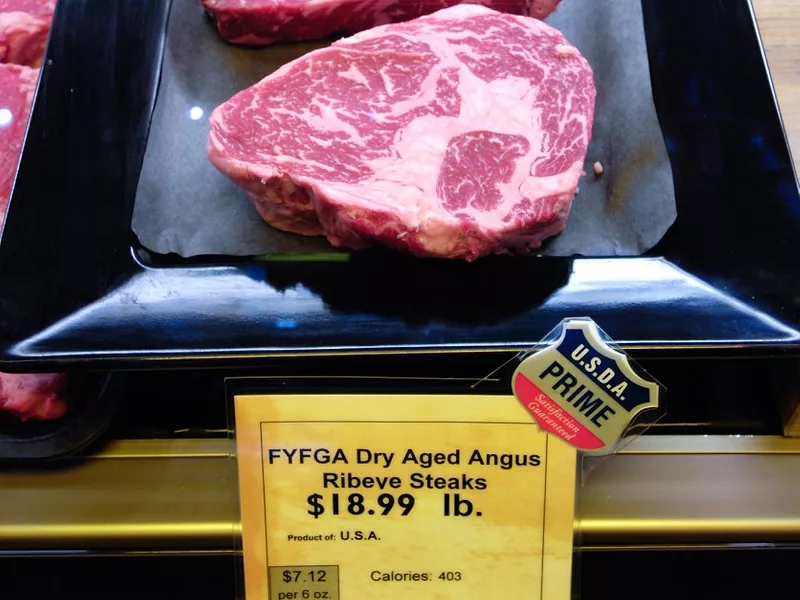
Asked whether U.S. producers can keep up with domestic demand, Stanton said ranchers on their own are unable to solely meet demand, but noted that there are equivalency agreements with trading partners who do not use forced labor. She said, however, that U.S. producers are able to keep up with the domestic demand for premiere muscle cuts like steak.
Stanton raised concerns about the import of Brazilian beef. USCA said in a press release that if USTR is serious about reducing forced labor, beef should be tariffed.
"Brazil’s Ministry of Labor has placed at least 21 cattle operations on its published blacklist of violators for using slavery-like conditions,” Stanton said. Producers on Brazil’s so-called “Dirty List” are banned from receiving credit from state-owned banks, and private banks can refuse service. Violators are kept on the list for two years and are only removed if the offender pays back wages, according to the U.S. Labor Department’s Bureau of International Labor Affairs.
“There’s no real way for U.S. regulators or buyers to say Brazilian beef is free from forced labor risk. [There's] a risk that lowers input costs and the retail sticker price, and that discount lands right in the U.S. market, shelved next to [beef from family farmers] who are doing things the right way,” Stanton said.
She added that Argentina isn't a safe alternative to Brazilian beef. She called it an "extension of the problem," noting that Brazilian beef can be rerouted through Argentina.
The Trump administration has already opened the market to Argentine beef despite concerns from U.S. ranchers. President Donald Trump in February signed an executive order allowing 80,000 metric tons of Argentine lean beef trimmings per year to be imported tariff-free. The administration cited concerns about record-low domestic cattle herds.
Several groups proposed additional exemptions to the tariffs.
The annex list of exemptions includes flavored instant coffee, but omits unflavored instant coffee. The National Coffee Association commented that coffee is not domestically sourced and accounts for 8% of the value of the U.S. food service sector, adding more than $343 billion to the U.S. economy annually.
“Instant coffee is most often produced in countries where coffee is grown,” William Murray, National Coffee Association’s president and CEO, said to the panel. “Value-added manufactures rely on instant coffee as an essential ingredient for cold brew and ready-to-drink coffee – the fastest-growing segments of the coffee market.” He estimated that 20% of the U.S. adult population drink those types of beverages.
The Organic Trade Association asked USTR to exempt certified organic sugar because it’s not an interchangeable product. The American Seed Trade Association asked for an exemption for plantable seeds because the proposed tariffs "disproportionately" impact seed research.
Several associations from Chile requested exemptions, including for Chilean wine and fresh fruits.
“Wine is origin-specific," testified Julio Alonso, Wines of Chile Association’s global commercial director, who compared wine to poetry in a bottle. "The U.S. produces wine, but not Chilean wine."
Pairing with the wine industry, the Cheese Importers Association of America also testified before the panel.
"The question before this committee is whether imported cheese from the EU, UK or Switzerland belongs within the scope of this investigation. And we say it does not," said Laurra Lyden McGregor, president of the Cheese Importers Association of America and owner of the The Peterson Company.
McGregor said CIAA is working with Customs and Border Protection to improve education, communication and compliance. She urged adding imported cheese to the list of exclusions.
The panel asked if U.S. cheeses are suitable substitutes for imported cheese.
“Our country was based on legal immigration, people coming in, and we are a patchwork of cultures, of memories, of families, and people want that from their history. The cheeses made in Europe are made in a different way,” McGregor said. “They won’t be the same.”
The USTR Section 301 hearing began Tuesday and will conclude Thursday.
For more news, go to Agri-Pulse.com.
