
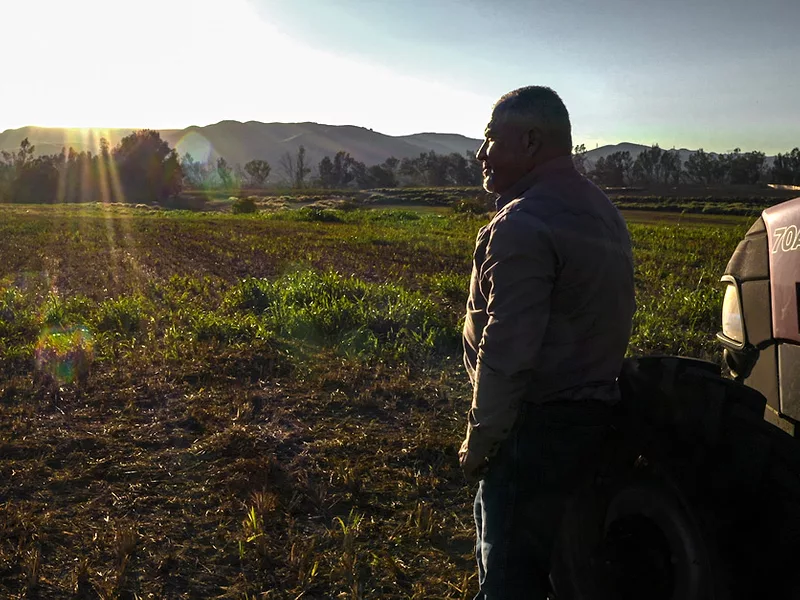
Former ag leaders are calling on Congress to engage in a comprehensive examination of what they call a “crisis” in farm country that has been exacerbated by actions of the Trump administration.
Since February, when many of the same people sent a similar letter to congressional ag leaders, Congress has not done anything “that resembles a systematic, thorough, bipartisan engagement with farmers about what is really happening to their livelihoods and the farm economy,” the latest letter says. There has not been “an extensive, candid assessment about policies that can reverse this crisis.”
Asked what worries him the most, one of the 45 signers, former Renewable Fuels Association President and CEO Bob Dinneen said, “Complacency.”
“There doesn't seem to be any sense of urgency on these issues in Washington these days, and I don't understand that,” he told Agri-Pulse. “When you see bankruptcies rising the way they are, and markets for farmers deteriorating the way they are, and your solution is, well, we'll patch together another bailout. No, that's part of the problem. You can't bail your way out of this problem.”
House-passed reconciliation bill moves to Senate as Thune weighs CR options
The House narrowly passed a $95 billion reconciliation measure on Wednesday thatcalls for fresh funds for the Iran war, new election laws, and as much as $12 billion to help a financially strained agricultural sector.
The concurrent resolution, which passed 216-214, now moves to the Senate.
Senate Majority Leader John Thune said he will hold the legislation until Congress can figure out a path to fund the government beyond September and avert a federal shutdown. If needed, the chamber could “pull that budget resolution passed by the House and use it to fund the government,” the South Dakota Republican told reporters.
The House this week also passed a stopgap funding measure to fund the government from Oct. 1 to Dec. 4. Thune says the Senate is working on its own continuing resolution, with Appropriations Committee Chair Susan Collins, R-Maine, consulting with Democrats.
While the House and Senate efforts are similar, the Senate needs to build a “bipartisan coalition,” Thune said Wednesday. “Everybody’s going the same direction, it’s just we have a slightly different process. We need Democrats over here.”
Wyden proposes congressional trade oversight bill
Senate Finance Committee Ranking Member Ron Wyden, D-Ore., introduced the Congressional Trade Powers Act that would reassert congressional authority over trade by eliminating Sections 122 and 338. The Trump administration used Sec. 122 to impose the global 10% tariffs and Sec. 338 to impose a 50% tariff on Canada.
“Trump’s first-ever use of Section 338 of the Smoot Hawley Act to slap 50% tariffs on Canada at the expense of U.S. consumers, farmers and businesses is only the latest example of his reckless abuse of tariffs,” Wyden said in a press release.
The bill would require congressional approval of any levies imposed using Sections 301, 232 and 201. It also would establish a bicameral Joint Committee on Tariffs and Trade to conduct congressional oversight over trade, among other actions, according to the bill's fact sheet.
USDA opens agribusiness applications for trade trip to Vietnam
USDA’s Foreign Agricultural Service is accepting applications for a Nov. 9-12 agribusiness trade mission to Vietnam — the seventh largest market for U.S. agriculture. The application window will be open through July 31.
“Vietnam is a clear example of how the administration’s policies are leading to real successes, opening up markets, breaking export records, and reducing historically high agricultural trade deficits,” USDA Undersecretary for Trade and Foreign Agricultural Affairs Luke Lindberg said in a statement.
U.S. exports to Vietnam are valued at $5.6 billion in 2025, according to the USDA. The country has export potential for a variety of agricultural products, including fresh fruits and vegetables, poultry products, feed and cotton, ethanol, seafood and forestry products.
Interior targets next week for release of key Colorado River analysis
The Interior Department is looking at next week to release its final Environmental Impact Statement for operating two key Colorado River reservoirs once current guidelines expire later this year, according to a press release.
The final EIS will guide Interior’s decisions when it comes to making water allocations into the future in the absence of consensus from all seven Colorado River states over the future of a series of agreements guiding management of the river. While leaders of all seven Colorado River states have spent the last few years trying to find consensus, they still appear to be in gridlock over the best path forward.
Take note: Interior Secretary Doug Burgum met with governors of all seven states on Tuesday to discuss "strategies for future river management,” according to the release.
Keep in mind: Earlier this year, lower basin negotiators proposed using 3.2 million acre-feet less Colorado River water in 2027 and 2028 to stave off the threat of low water levels at Lakes Powell and Mead, the river’s principal reservoirs.
Arizona battlegrounds for House seats take shape as November looms
Arizona is home to two highly competitive congressional races central to the partisan battle for majority control of the House next year.
In primaries on Tuesday, voters elevated former Arizona Cardinals kicker Jay Feeley to be the Republican nominee for the open House seat in the state’s 1st Congressional District that includes Scottsdale and parts of Phoenix. On the Democratic side, physician and former state senator Amish Shah was in the lead as of early Wednesday evening.
“This will be a top Democratic target in November,” according to the nonpartisan Inside Elections with Nathan L. Gonzales, which has a toss-up rating on the contest.
The race is open due to GOP Rep. David Schweikert opting not to run for re-election to pursue a run for governor. He lost on Tuesday to fellow House Republican Rep. Andy Biggs, who will face Democratic Gov. Katie Hobbs in November.
Another Arizona battleground is the 6th district that includes parts of the Tucson area. Republican Rep. Juan Ciscomani, co-chair of the congressional Colorado River Caucus, will face Democrat JoAnna Mendoza in the general election.
“Republicans believe Mendoza is out of step with the district and too green as a candidate, but the political environment is very different than 2024, when Trump finished narrowly ahead of Kamala Harris,” said Inside Elections, which rates the race a toss-up.
Final Word
“While the Administration and Congress are fixated on ballrooms, taxpayer-funded monuments and bailouts for insurrectionists, the agricultural crisis in our country continues to affect real people – farmers and ranchers, their families and their communities.” — July 23 letter from former agricultural leaders to House and Senate Ag committee leaders.
.webp?t=1762183428)

