
.webp?height=700&t=1771606094&width=800)
The Trump administration defended its plan to partially fund Supplemental Nutrition Assistance Program benefits for November after receiving swift criticism from Democrats and anti-hunger groups.
On X Monday night, Ag Secretary Brooke Rollins said President Donald Trump “is doing everything he can to help our most vulnerable mothers and babies while Radical Left Democrats continue to obstruct.”
The administration responded Monday to separate court orders in Rhode Island and Massachusetts by indicating it would distribute more than $4 billion in a SNAP contingency fund to states to cover benefits for about half the month of November.
Use of the full contingency fund “means that no funds will remain for new SNAP applicants certified in November, disaster assistance, or as a cushion against the potential catastrophic consequences of shutting down SNAP entirely,” Patrick Penn, deputy undersecretary of the Food, Nutrition, and Consumer Services, said in a declaration filed in both courts.
Rollins said Senate Democrats “need to quit the games … and REOPEN THE GOVERNMENT,” Rollins said on X.
Democratic lawmakers and anti-hunger groups were critical of the criticized the Trump administration’s decision Monday to provide partial benefits.
The decision to provide partial benefits and not supplement the funding with money from other nutrition programs “forces state agencies to scramble under unclear guidance, which will further delay benefits,” said Crystal FitzSimons, president of the Food Research & Action Center.
House Agriculture Committee Ranking Member Angie Craig, D-Minn., said despite being “forced to do what is legally and morally right [and] use the contingency funds,” the administration is “cutting food assistance to hungry seniors, children, veterans and people with disabilities this month by refusing to use its authority to extend full benefits.”
Democracy Forward, which represents plaintiff cities and nonprofit groups in one of the cases in Rhode Island, said it would continue to press for full benefits.
USDA nominees move to floor vote
The Senate Agriculture Committee advanced three USDA nominees, including John Walk to be inspector general, replacing former-IG Phyllis Fong, who was removed by the Trump administration in January. Walk is a senior adviser to Ag Secretary Brooke Rollins.
Mindy Brashears was also approved to be undersecretary for food safety, a position she held in Trump’s first term, and former New Mexico Rep. Yvette Herrell was approved to be assistant secretary of USDA’s Office of Congressional Relations. The nominees likely will get a full Senate vote for confirmation this month, Committee Chairman John Boozman told reporters.
Minnesota Democratic Sen. Amy Klobuchar, the panel’s ranking member, voted against the nominees. Klobuchar said her decision reflected broader frustration over a lack of bipartisan briefings during the government shutdown and the Trump administration not transferring money to more fully fund lapsed SNAP benefits.
Grain bill gets do-over
Senate Ag also unanimously advanced an amended version of House-passed H.R. 4550, a five-year reauthorization of the U.S. Grain Standards Act. A vote on the bill last month had to be redone due to a technical procedural issue. The committee bill would require USDA to prioritize adoption of new grain grading technologies and to publish an analysis of deficiencies in current technology.
The House could vote on the amended measure as one of their first acts when the full chamber returns.
Chinese interest in U.S. commodities picks up as industry awaits finalized deal
China has bought U.S. sorghum and is reportedly interested in buying wheat, even as final details of a U.S.-China deal are yet to be settled.
Amy France, chairwoman of the National Sorghum Producers, told Agri-Pulse that China made a small purchase last week. NSP is trying to determine the volume and companies involved.
Don’t miss a beat! It’s easy to sign up for a FREE month of Agri-Pulse news! For the latest on what’s happening in Washington, D.C. and around the country in agriculture, just click here.
“We're hopeful,” France said. Chinese buyers were in Kansas and Texas recently to see the harvest, she added. “We're eager to get boats moving, and we know we've got buyers that are eager.”
Bloomberg reported Monday that a major Chinese grains importer asked about U.S. wheat cargoes for delivery from December to February.
“If this is indeed true, this is a positive move,” Sam Kieffer, CEO of the National Association of Wheat Growers, told Agri-Pulse. “We have not seen any, at least confirmed, purchases from China in over a year,” Kieffer said, adding that he hopes Chinese demand could help shore up prices.
Meanwhile, representatives from the beef, pork and cotton industries told Agri-Pulse they haven't seen increased Chinese interest yet but stressed it's still early.
Lawmakers urge rail regulator to consider agricultural impacts of proposed rail merger
A bipartisan group of 18 senators wants the Surface Transportation Board to consider the impacts on ag shippers as it decides on a proposed merger between rail giants Union Pacific and Norfolk Southern.
In a letter, the senators said agricultural producers already face "limited competitive options” for rail service and warned that further consolidation “could compound these challenges by reducing routing flexibility, constraining network fluidity, increasing market power, and limiting access for both producers and processors.”
They said the two railroads combined would handle more than 40% of all U.S. freight rail traffic and that service interruptions “could have severe consequences” for producers.
“Time-sensitive shipments during harvest could be delayed or spoiled, export windows could be missed, and access to global markets could be sharply reduced,” they said.
NASS plans to release November WASDE and other key reports
USDA’s National Agricultural Statistics Service is planning to release a World Agricultural Supply and Demand Estimates report in November along with other key surveys, according to a press release.
The agency will release milk production reports on Nov. 10 and 21, according to the statement. On Nov. 14, it will release the WASDE and a crop production report. It is also scheduled to release a cattle on feed report on Nov. 21.
New York AG announces settlement with JBS resolving climate marketing dispute
New York Attorney General Letitia James said Monday that JBS Foods has agreed to pay $1.1 million to settle a lawsuit she filed over the company’s climate marketing claims.
According to the settlement, the money will support climate-smart agriculture projects through the Soil Health and Resiliency Program operated by Cornell University’s College of Agriculture and Life Sciences. JBS also agreed to update its environmental marketing practices and provide annual reports to the AG’s office for three years.
A JBS spokesperson said in a statement that the settlement “does not reflect an admission of wrongdoing, and JBS USA remains driven to advance sustainable agriculture. … We maintain a continued focus on investing in practical solutions that strengthen the resilience of the food system.”
Background: James challenged JBS’s claims of reaching “net zero” greenhouse gas emissions by 2040 in a lawsuit earlier this year, alleging the company violated New York consumer protection laws.
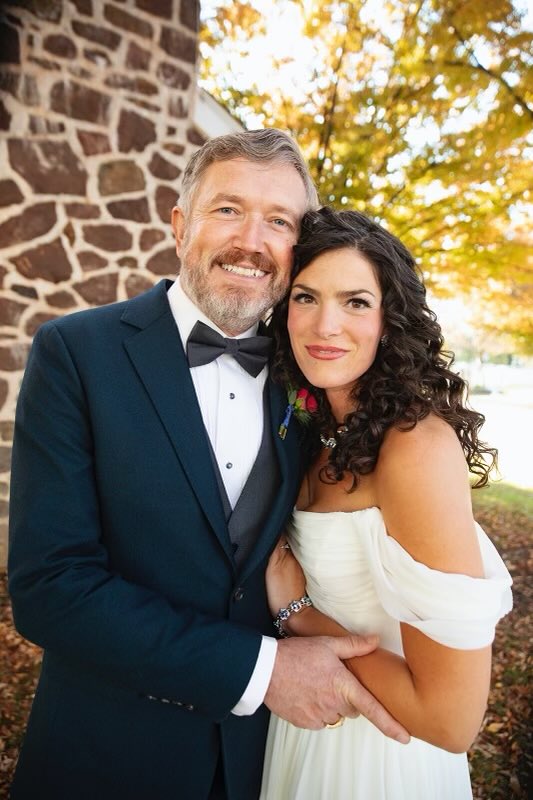 Rep. Thomas Massie and wife Carolyn Grace Moffa (Massie photo)
Kentucky representative Massie ties the knot
Rep. Thomas Massie, the Kentucky Republican who has been a thorn in the Trump administration’s side, has gotten married.
He announced the nuptials on X, saying he and Carolyn Grace Moffa, a former agricultural staffer for Sen. Rand Paul, R-Ky., tied the knot Oct. 19.
“Of course we served raw milk with the wedding cake and margaritas made with frozen peaches from our farm!” Massie said. Massie likes raw milk and has introduced a bill to “prohibit federal interference with the interstate traffic of unpasteurized milk and milk products that are packaged for direct human consumption,” according to a news release.
Massie’s first wife Rhonda, whom he was married to for over 30 years, passed away last year.
Final word
“So I guess the question is, why, if they're legally obligated, or at the very least have the authority to let the food assistance go, why are they not? That's the question, and the reason is that they want to inflict unnecessary pain on the American people rather than sit down and negotiate.” – Sen. Chris Van Hollen, D-Md., speaking to reporters at the Capitol Monday.
Kim Chipman, Oliver Ward and Noah Wicks contributed to today’s Daybreak
The lead item has been corrected to note that Walk is a senior adviser to Ag Secretary Brooke Rollins.
.webp?t=1762183428)


