
|
California food and agriculture interests scored a win last week when the Legislature’s fiscal gatekeepers shelved a sweeping food additive bill that had become the latest flashpoint over how far the state should go in regulating processed foods, ingredient disclosures and the federal GRAS process.
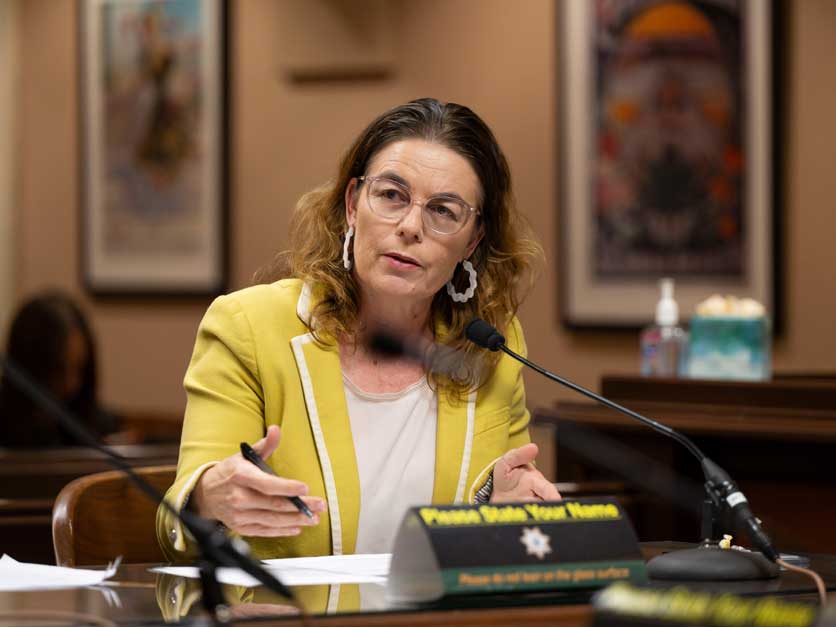 Asm. Dawn Addis (office photo)
Assembly Bill 2034 by Asm. Dawn Addis, D-Morro Bay, was held in the Assembly Appropriations Committee after clearing two policy committees. For food manufacturers, processors, dairy companies, beverage makers, grain and feed interests, grocers and restaurant groups, the bill represented more than another consumer disclosure proposal. It would have created a California-specific system for tracking ingredients and safety information in packaged foods sold in the state, raising the prospect of new compliance costs across the food supply chain.
AB 2034 targeted the federal “generally recognized as safe,” or GRAS, pathway, which allows food companies to determine that certain ingredients are safe without mandatory premarket review by FDA. The bill would have required companies using certain food additives or dietary ingredients to submit safety notices to the California Department of Public Health beginning in 2027. CDPH would have been required to publish those notices in a public database.
The bill also would have required packaged food manufacturers to report products sold in California that list ingredients under broad terms like “natural flavor,” “artificial flavor,” “artificial color” or “spice,” then identify the specific ingredients behind those categories for a consumer-facing database. Firms with less than $1 million in annual aggregate food sales would have been exempt.
Food and ag groups warn of ripple effects
Addis and supporters framed the measure as a transparency bill aimed at closing a loophole in federal law.
“We're getting dangerous chemicals in our food that are linked to heart and brain defects, infant leukemia, suppression of estrogen, and liver and kidney and intestinal toxicity,” she told a policy committee last month.
The Center for Science in the Public Interest sponsored the bill, with support from health, consumer and environmental organizations. Supporters argued that California should act because some companies can self-affirm GRAS status without notifying FDA or the public. They also pointed to growing concerns around ultraprocessed foods and California’s recent efforts to regulate certain additives and dyes in food.
Nancy Buermeyer, director of program and policy at Breast Cancer Prevention Partners, argued the bill would close a gap between California’s treatment of consumer products and food.
“Today Californians have more transparency about what's in their shampoo than what's in their food,” she told lawmakers.
The opposition coalition was broad and notably included major food and ag-sector players, including the Agricultural Council of California, California League of Food Producers, Dairy Institute of California, California Grocers Association, California Restaurant Association, Consumer Brands Association, American Beverage Association, National Confectioners Association and others.
It’s easy to be “in the know” about what’s happening in Washington, D.C. Sign up for a FREE month of Agri-Pulse news! Simply click here
Their core argument was that California was moving too fast and building a duplicative regulatory structure at a time when the state is already implementing other food additive laws. Opponents pointed to last year’s AB 1264, which directs CDPH to define ultraprocessed foods of concern and restrict their use in school foods starting in 2028. They also cited California’s food dye restrictions in schools and the 2023 law banning brominated vegetable oil, potassium bromate, propylparaben and Red Dye No. 3 in foods sold in the state.
Erin Raden, who directs state affairs at the Consumer Brands Association, said the bill was being marketed as transparency but functioned as a second ingredient review program. She called it “a grocery tax” that would increase costs for the state, businesses and families.
 Erin Raden (Consumer Brands)
Dennis Albiani, representing the Consumer Brands Association as well as the American Beverage Association, estimated put the cost at $10 million just to set up the database and program for the bill. He also argued a 3% grocery cost increase would cost each Californian about $310 a year and increase state food purchasing costs by $57 million to $70 million.
For the ag sector, the bill’s most immediate impact would have landed not on raw commodity production but on the processors, ingredient suppliers, packers and branded food companies that turn California crops, dairy products and other farm goods into retail products. Industry groups warned that a state-only additive review and disclosure system could ripple through purchasing, labeling, formulation and distribution decisions for products sold in California.
A costly fight that is likely to return
CDPH concerns also weighed on the debate, noting that it lacked the expertise and resources to conduct detailed toxicological assessments for food additives, including reviews of carcinogenic, reproductive and developmental risks. CDPH also raised concerns about whether it could compel out-of-state firms to comply and whether state reviews could conflict with FDA determinations.
The fiscal analysis gave appropriators another reason to pause. CDPH costs were “likely in the millions of dollars per year.” Committee staff warned the bill would require the department to establish a new program, evaluate food additive notices, assess safety and build a searchable public database. The database work alone could trigger a state technology planning process costing more than $1 million.
Addis had moved to narrow the bill, with amendments stripping out state licensing and scientific assessment provisions and focusing instead on transparency for self-affirmed GRAS substances and ingredients hidden behind generic label terms.
While the bill stalled, the fight is unlikely to fade. At the federal level, Health and Human Services Secretary Robert F. Kennedy Jr. directed FDA last year to explore rulemaking to eliminate the pathway allowing companies to self-affirm food ingredients as safe without notifying the agency, reflecting the same concerns that drove AB 2034.

