
EU reaches agreement on U.S. trade pact
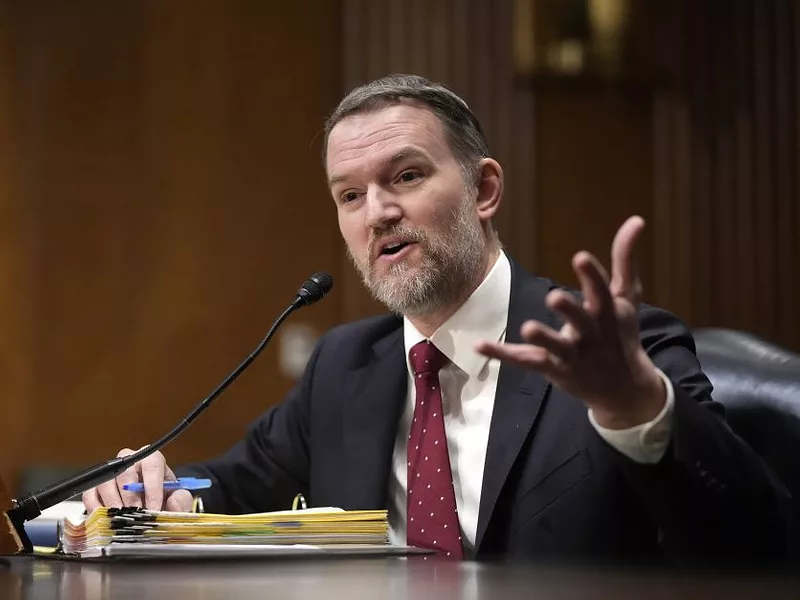
The European Council and Parliament have hashed out an agreement on the path forward for a U.S.-European Union trade pact agreed to last year.
The EU has still not ratified the deal, despite pressure from President Donald Trump and senior administration officials to begin implementing the provisions.
Early Wednesday, after several hours of discussions, the two bodies agreed to move the deal forward with several additional measures approved by the Parliament. A statement from the Council says the EU can suspend parts of the deal if U.S. tariffs on European metals go above 15%, and if increased imports are injuring EU industries.
Both bodies also agreed to keep the “sunset clause” proposed by the Parliament, which would scrap the deal at the end of the Trump presidency unless the EU takes further action.
Take note: U.S. Trade Representative Jamieson Greer has previously criticized the additional safeguard and sunset mechanisms, arguing the U.S. did not agree to any such measures in the Turnberry negotiations.
In a social media post Wednesday, Greer’s office said it “will continue to review certain limiting amendments,” but welcomed the “progress” the EU has made toward implementation.
Massie loss puts MAGA math in spotlight as campaign season revs up
Rep. Thomas Massie’s primary loss in Kentucky has Republicans, Democrats and independents recalibrating their political assumptions as the midterm campaign season moves into high gear.
Massie’s loss to fellow Republican Ed Gallrein, a former Navy SEAL, marks the second time in four days that a GOP candidate backed by President Trump beat an incumbent to advance to November.
“He’s now helped topple two GOP incumbents, Massie and Louisiana Sen. Bill Cassidy, and his refusal to endorse a third, Texas Rep. Dan Crenshaw, likely contributed to his defeat as well,” according to the nonpartisan Inside Elections with Nathan L. Gonzales.
“For the president’s backers, Trump’s wins serve as a rebuke to questions about whether an unpopular war, high gas prices and the lack of transparency surrounding the Epstein files has weakened his iron-clad grip on his base,” said nonpartisan Cook Political Report publisher Amy Walter. “It’s a convenient narrative for Trump — but one that oversimplifies his party’s difficult path in November.”
GOP pollster Kristen Soltis Anderson wrote in the New York Times earlier this month that the biggest hurdle for Republicans trying to keep control of Congress are the “normies,” those voters who are neither full MAGA nor “Never Trumpers.”
“If some of these ‘normies’ stay home in November, and independent voters continue to give the president dismal marks, even a robust turnout from the president’s most committed supporters won’t be enough to save vulnerable Republicans,” Walter said in an online post.
Ricketts mounts push to reduce ag trade vulnerabilities
Sen. Pete Ricketts, R-Neb., has introduced legislation to reduce U.S. reliance on China as an export market and identify potential economic vulnerabilities.
The Moving Away from Risk to Key Export Targets (MARKET) Act would require USDA and USTR to assess market access for nine key commodities in adversaries’ markets and the potential disruption from a trade dispute. It would also direct USDA to make recommendations for mitigating potential threats and reducing trade barriers in alternative markets.
“Communist China, at the end of the day, is a bad trading partner,” Ricketts said in comments on the Senate floor this week. Accordingly, he said he wants officials to “look at ways that we can mitigate our dependence on Communist China and look for new markets.”
The American Soybean Association is backing the bill, according to a statement from Ricketts’ office.
Take note: China’s retaliation against U.S. agricultural exports cost producers some $15 billion in lost sales, a new analysis from North Dakota State University published Wednesday argues. Soybeans, beef and cotton bore the brunt of the measures, the report notes.
Read more at Agri-Pulse.com
Lawmakers call for sugar trade probe
A bipartisan group of more than 100 lawmakers is calling on the Trump administration to launch a probe into unfair trade practices from sugar-producing countries.
It’s easy to be “in the know” about what’s happening in Washington, D.C. Sign up for a FREE month of Agri-Pulse news! Simply click here
In a letter to U.S. Trade Representative Jamieson Greer first shared with Agri-Pulse,109 lawmakers led by Sens. John Hoeven, R-N.D., and Elissa Slotkin, D-Mich., and Reps. Julie Fedorchak, R-N.D., and Troy Carter, D-La., argue that imports of foreign, subsidized sugar are threatening U.S. producers.
“We write to strongly urge you to utilize Section 301 of the Trade Act of 1974 to investigate unfair and discriminatory trade practices by foreign sugar-producing countries,” the letter reads, urging Greer to “protect American sugarbeet and sugarcane farmers, processors, refiners, and factory workers.”
More than two dozen industry groups are endorsing the letter, including the American Sugar Alliance, the American Farm Bureau Federation, National Farmers Union and the National Council of Farmer Cooperatives, according to a statement from Hoeven's office.
House Appropriations Committee releases Interior funding bill
House appropriators have proposed a “U.S. Wildland Fire Service” inside of the Interior Department as part of a proposed fiscal year 2027 appropriations bill released Wednesday.
The bill would provide $1.54 billion for the new service, which would unify the agency’s firefighting activities. Separately, the bill also provides $8.79 billion to the U.S. Forest Service for wildland fire management.
Some ESA proposals: The bill would also require Interior to delist gray wolves and Greater Yellowstone grizzly bears under the Endangered Species Act. It also would bar agency funding from being used to implement listings of the greater sage-grouse, the lesser prairie chicken and the wolverine.
Grocery giant agrees to stop using synthetic pesticides on produce in Texas stores
Texas grocery stores owned by Albertsons Safeway LLC will stop misting produce with a synthetic pesticide called ProduceMaxx to extend their shelf life under an agreement with the Texas Attorney General’s office.
Under the agreement, Albertsons denies any wrongdoing but will voluntarily cease using the pesticide in its Texas stores within 90 days.
The agreement comes after an investigation by the AG’s office into concerns over grocery stores spraying USDA-certified organic produce without consumers’ knowledge.
Iowa ethanol group sounds alarm on rival carbon pipelines
The Iowa Renewable Fuels Association is urging regulators in Iowa to set a hearing date for Summit Carbon Solutions’ long-delayed project to capture and store carbon emissions from ethanol plants.
Summit requested a permit with the Iowa Utilities Commission six months ago, IRFA noted Wednesday in a filing with the IUC.
The biofuels trade group says Iowa is at risk of falling behind nearby states economically due to lack of progress on the carbon pipeline proposal.
“For 25 years, Iowa has benefited greatly from being the most profitable place in the world to convert corn into ethanol,” IRFA’s filing says. “That is no longer the case because a carbon capture project in Nebraska began operations last fall. There is not a question on the economic benefits: carbon capture and sequestration is happening, and it is happening right here in the Midwest. The only question is whether Iowa will be left behind for months or forever.”
Houston joins AFBF, succeeding Salmonsen
The American Farm Bureau Federation is adding Virginia Houston as senior director of government affairs, “where she will lead the organization’s work on agricultural trade and tax policy,” AFBF says.
Houston succeeds Dave Salmonsen, who retired at the end of March after nearly 30 years at Farm Bureau.
Final word
“I want to clear that up. We’re not selling [the Chinese] steaks and hamburgers, we’re selling them offal. You know what offal is? That’s the stuff Americans don’t eat. So it’s not going to have any impact on beef prices here in America.” – White House Senior Counsel for Trade and Manufacturing Peter Navarro speaking on Newsmax about China’s renewal of more than 400 beef export facility registrations.
.webp?t=1762183428)


