
A bipartisan group of more than 100 lawmakers on Wednesday called on the Trump administration to launch a probe into unfair trade practices from sugar-producing countries.
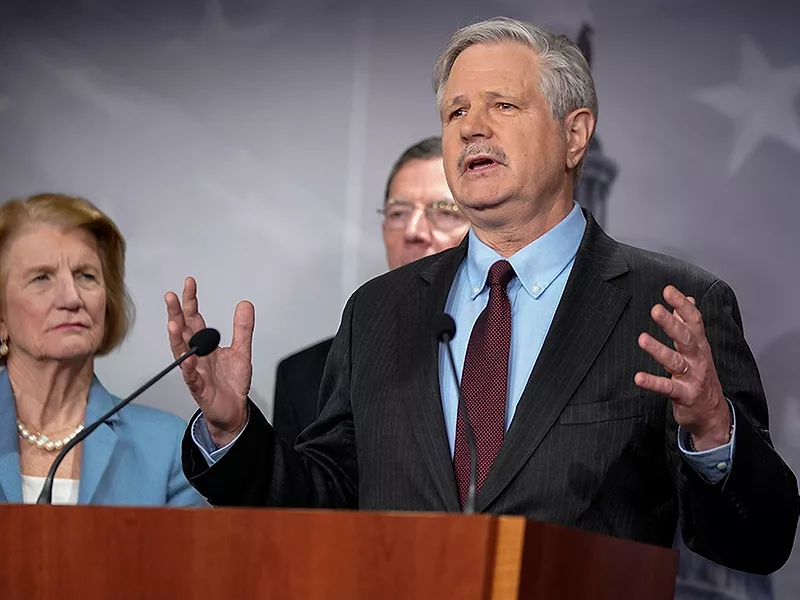
In a letter to U.S. Trade Representative Jamieson Greer first shared with Agri-Pulse,109 lawmakers led by Sens. John Hoeven, R-N.D., and Elissa Slotkin, D-Mich., and Reps. Julie Fedorchak, R-N.D., and Troy Carter, D-La., argue that imports of foreign, subsidized sugar are threatening U.S. producers. Three additional lawmakers signed on to the letter after this story's publication, bringing the total signatories to 112.
“We write to strongly urge you to utilize Section 301 of the Trade Act of 1974 to investigate unfair and discriminatory trade practices by foreign sugar-producing countries,” the letter reads, urging Greer to “protect American sugarbeet and sugarcane farmers, processors, refiners, and factory workers.”
Section 301 probes allow the administration to counter unfair trade practices by imposing tariffs or revoking trade privileges, following an investigation.
The top Democrats on both agriculture committees, Minnesota’s Sen. Amy Klobuchar and Rep. Angie Craig, are among the letter’s signatories, as is former House Speaker Nancy Pelosi, D-Calif.
The U.S. imports more than 3 million tons of raw sugar annually but uses tariff-rate quotas to protect domestic producers and control how much can enter at a reduced tariff rate.
In recent years, however, U.S. sugar prices have been much higher than world prices, creating an economic environment where importers can justify importing out-of-quota sugar and eroding the protection offered to U.S. producers by the tariff-rate quotas.
Overall, sugar imports have held steady in recent years. But out-of-quota imports have risen by around 700%, the letter notes.
“Global excess capacity of foreign subsidized sugar” and rising out-of-quota imports are “causing direct harm to our constituents,” the lawmakers argue.
The out-of-quota duty rates, which are 15.36 cents per pound of imported sugar, “have unfortunately become wholly ineffective in protecting our domestic industry from excess foreign supply,” the lawmakers continue. “In fact, the 15.36 cents per pound tier two tariff has lost nearly half of its real value due to inflation.”
Further, the lawmakers argue that the rising out-of-quota imports are acting as a weight on U.S. sugar prices. A study from North Dakota State University economists in April, which was commissioned by Hoeven, found that out-of-quota imports led to 2025-2026 prices five to eight cents a pound lower than they would have otherwise been.
It’s easy to be “in the know” about what’s happening in Washington, D.C. Sign up for a FREE month of Agri-Pulse news! Simply click here
They also make the case that higher tariffs on sugar would not translate into significantly higher prices for U.S. consumers, noting that sugar accounts for less than 3% of the retail price of the average sugar-containing item.
“Prices for candy, baked goods, cereals, and sugar-sweetened beverages are driven by disposable income, firm earnings pressure, and product characteristics — not by the cost of sugar,” the letter reads.
More than two dozen industry groups are endorsing the letter, including the American Sugar Alliance, the American Farm Bureau Federation, National Farmers Union and the National Council of Farmer Cooperatives, according to a statement from Hoeven's office.
Since the Trump administration said it would use Section 301 duties to replace some of the emergency tariffs struck down by the Supreme Court in February, several U.S. agricultural industries have been appealing for a probe into unfair trade practices in their sectors, or a broader agriculture-focused investigation.
Representatives from the U.S. rice industry were in Washington earlier this month to lobby for a Section 301 probe into rice-producing countries – which USTR Greer has previously expressed interest in. Representatives from the peach, dairy and the wine grape industry also used a recent public comment period on two Section 301 probes into manufacturing overcapacity and forced labor to highlight unfair trade practices in their sectors.
Editors note: This story has been updated to reflect three additional lawmakers that signed onto the letter after publication.
For more news, go to Agri-Pulse.com.

