
|
California ranchers already struggling with wolves could soon be asked to prepare for a much bigger predator.
A bill directing the state to map out the possible return of grizzly bears is advancing through the Legislature despite fierce opposition from cattle producers and rural Republicans, who argue California has yet to prove it can protect livestock or compensate ranchers for losses caused by the predators already roaming the state.
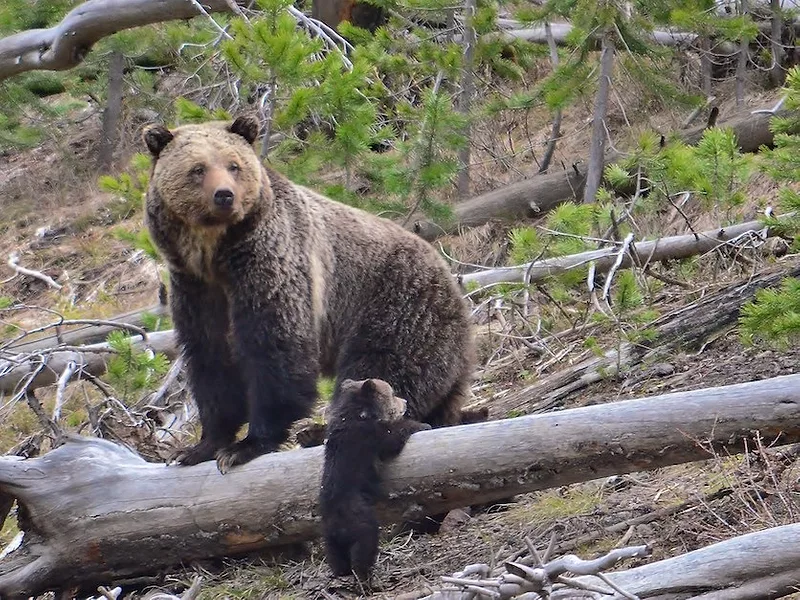
Senate Bill 1305 would not authorize officials to release grizzlies but direct the California Department of Fish and Wildlife to complete a roadmap by June 2030, examining whether reintroduction would be biologically feasible and advisable, where bears could live and what California would need to spend to manage them.
Ranchers fear the roadmap would place the state on a path toward restoring a powerful predator that could kill livestock and impose new costs on landowners across Northern California and the Sierra Nevada. Their experience with wolves has left little confidence the state would have the staffing, money or authority to intervene before losses mount.
 Sen. Laura Richardson (office photo)
California’s wolf problems
The California Farm Bureau, California Cattlemen’s Association and California State Beekeepers Association oppose the legislation, along with the Rural County Representatives of California, the California State Association of Counties, and officials from Siskiyou and Shasta counties.
Republican Asm. Heather Hadwick of Alturas explained to the committee that ranchers in her sprawling northeastern California district are “very, very scared” about where the measure could lead.
Hadwick said California has not adequately funded wildlife officers, wolf deterrence programs or compensation for livestock killed by wolves.
“Why should the state focus on this and fund a study to bring another apex predator in?” Hadwick asked, warning that it would further stretch an agency already struggling to perform its basic duties.
The debate has centered less on the historical case for restoring grizzlies than on California’s recent experience managing wolves after they returned to California naturally in 2011 and spread across Hadwick’s district. While most packs have not regularly preyed on livestock, some have inflicted concentrated losses on individual ranches.
Researchers at the University of California, Davis, have found cattle made up more than half the summer diet of gray wolves in the region. A single pack killed at least 64 calves between July and October 2025 and was blamed for more than 90 livestock deaths last year. State officials spent more than $2 million on hazing, human presence, diversionary feeding and other deterrence measures before killing four wolves from the pack.
For cattle producers, the episode demonstrated how quickly a predator conflict can overwhelm both a ranch and the state’s preferred nonlethal management tools.
Ranchers have complained that compensation arrives slowly, deterrence programs are inconsistently funded and wildlife officers often lack the authority or resources to remove problem animals before losses become severe. They also argue that producers bear costs extending beyond confirmed kills, including injured cattle, scattered herds, lower weight gains and additional labor.
Grizzlies would present an even more complicated challenge.
Opponents say the risks would extend beyond cattle, since grizzlies are opportunistic feeders. The California State Beekeepers Association warns that black bears already cause severe damage to apiaries critical to crop pollination. Federal wildlife officials say grizzlies sometimes prey on sheep, goats and other livestock.
Ranchers further question whether state planners could accurately predict where released bears would travel. Wolves have repeatedly moved beyond areas where ranchers initially expected them, dispersing across county and state lines, migrating as far south as Los Angeles County.
A roadmap may designate suitable habitat far from farms and communities, opponents argue, but bears would not recognize those boundaries.
“Our California today is not ready for a grizzly bear,” said Hadwick.
Asm. Juan Alanis, R-Modesto, said the wolf program has damaged trust between livestock producers and the state. Urban Californians might embrace the idea of restoring an iconic species, he said, while ranchers and rural communities would be left to live with the consequences.
The bill has also pitted wildlife conservationists against each other, with the California Deer Association leading the opposition. Hunting groups are raising alarms over the potential loss of game animals.
Bill stops short of reintroduction
Grizzlies were driven out of California by hunting, trapping and poisoning, with the last confirmed wild animal killed about a century ago. The bear remains the state’s most recognizable wildlife symbol, appearing on California’s flag and seal.
The bill’s author, Democratic Sen. Laura Richardson of San Pedro, and the tribal sponsors argue that history deserves a closer examination. The Yurok and Tejon tribes view grizzlies as relatives with deep cultural, spiritual and ecological significance and contend their extermination severed relationships stretching back thousands of years.
Richardson has emphasized that the measure requires only an evaluation. Before any bears could be released, CDFW would have to conclude reintroduction is both biologically viable and advisable.
The roadmap would examine habitat, land ownership, wildlife corridors, community support and potential effects on agriculture, forestry and recreation. It would also estimate the staffing and equipment needed for monitoring, relocation, public education and conflict response.
 Asm. Heather Hadwick (Agri-Pulse)
The state would have to consider livestock protections, compensation programs and rules governing when officials or landowners could kill a problem bear.
Assembly amendments removed language that would have immediately exempted grizzlies from certain existing bear hunting, trapping and depredation laws. The bill’s implementation would also depend on future funding from the Legislature.
Supporters argue those requirements ensure California would not move ahead without first evaluating the costs, risks and concerns of affected communities.
But the safeguards have done little to reassure ranchers. They see the roadmap itself as the practical foundation of a future reintroduction program. Once the state identifies habitat, develops management protocols and calculates program costs, they argue the most difficult planning work will already be completed.
Funding fight moves to Appropriations
The bill’s next challenge will center on whether California can afford the work.
A Senate fiscal analysis estimated CDFW would need 15 additional positions and more than $4 million annually to carry out the measure. Yet the department is funded to perform only about 38% of its overall mission, according to an Assembly analysis.
For ranchers, those figures raise the prospect that California could spend millions of dollars building a grizzly program while wolf compensation, wildlife enforcement and existing coexistence efforts remain underfunded.
Asm. David Alvarez, D-San Diego, pressed Richardson to ensure the roadmap identifies the full cost of reintroduction and where the money would come from. He acknowledged that lawmakers representing communities unlikely to encounter grizzlies should pay close attention to those whose districts could become habitat.
Asm. Steve Bennett, D-Ventura, similarly questioned whether the state should pay for a detailed implementation roadmap before making a preliminary determination that restoring grizzlies is realistic.
Both lawmakers ultimately supported the bill.
SB 1305 now heads to the Assembly Appropriations Committee, where its multimillion-dollar price tag could pose its next major obstacle.

